Tools
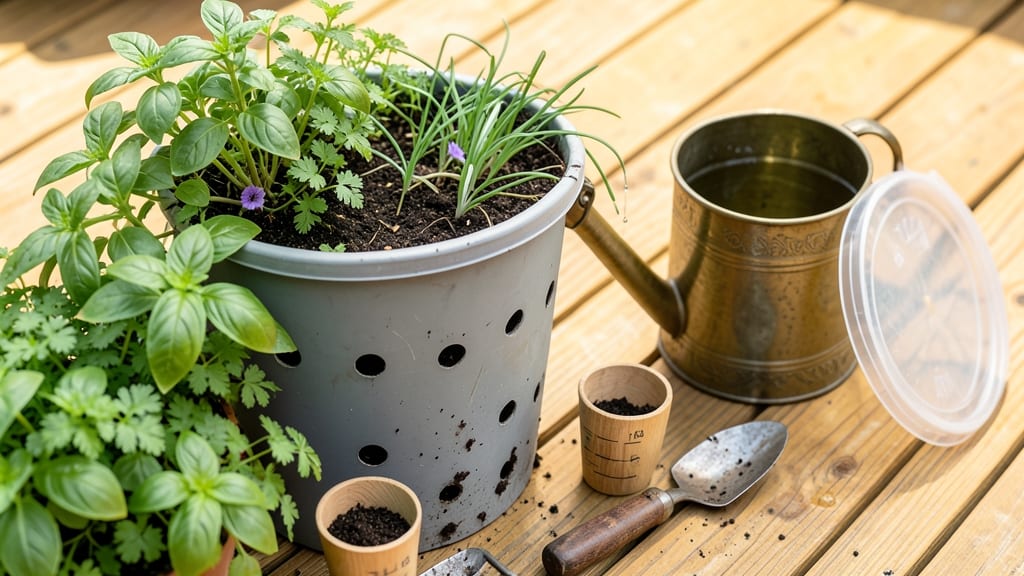
Learning bucket gardening 101 turns your smallest space into a productive garden—no sprawling yard needed.
Tired of dreaming about a garden but limited by space? Bucket gardening turns even the tiniest balcony or patio into a thriving green oasis—no yard required. With just a few containers, some soil, and a sunny spot, you can grow fresh herbs, veggies, or flowers year-round.
This beginner-friendly approach is perfect for renters, urban dwellers, or anyone short on outdoor space. You’ll discover how to choose the right containers, prep soil for maximum growth, and keep your plants happy with simple care routines.
From selecting easy-to-grow plants to avoiding common mistakes, this guide makes starting your bucket garden easier than you think. Let’s get growing!
Bucket gardening basics: what you need to start growing vertically
Bucket gardening is one of the easiest ways to grow plants in small spaces without needing a traditional garden bed. All you need are a few basic supplies and a little creativity to transform ordinary buckets into thriving vertical gardens.
The key to success lies in selecting the right containers, soil mix, and understanding your plants' sunlight needs. With the right setup, you can grow everything from herbs to compact vegetables in just a few square feet.
Before you start, focus on three core components: container selection, drainage solutions, and soil preparation. Each of these elements directly impacts your plants' health and growth.
For example, a 5-gallon bucket is ideal for most herbs and leafy greens, while larger buckets (10+ gallons) work better for tomatoes or peppers. Let’s break down what you’ll need to get started right away.
| Component | Details | Notes |
|---|---|---|
| Containers | 5-gallon buckets, fabric grow bags, or plastic pots | Choose food-grade buckets for edibles; ensure they’re durable and lightweight. |
| Drainage | Drill 5-10 holes in the bottom | Prevents root rot; add a mesh screen to keep soil in place. |
| Soil Mix | Lightweight potting mix + perlite | Avoid garden soil; mix should be well-draining and nutrient-rich. |
| Sunlight | 6-8 hours of direct sun | South-facing windows or balcony spots work best; use grow lights for indoor setups. |
| Essential Tools | Trowel, watering can, gloves, and pruners | Keep tools clean to prevent disease spread between plants. |
Start by selecting food-grade buckets if you plan to grow edibles like basil or lettuce. Plastic buckets are lightweight and affordable, while fabric grow bags offer better airflow to roots. Always drill drainage holes at the bottom—this is non-negotiable for preventing waterlogged soil.
A simple drill bit and a few minutes will save your plants from root rot later. For extra protection, line the holes with a mesh screen or hardware cloth to keep soil from washing out.
Next, focus on the soil mix. Avoid garden soil—it’s too dense and can compact in containers, suffocating roots. Instead, use a blend of lightweight potting mix and perlite (or vermiculite) for better drainage. A good rule of thumb is to mix 60% potting mix with 40% perlite.
This combination ensures your plants get the oxygen they need while retaining enough moisture. For nutrient-boosting, add a handful of compost or worm castings to the mix.
Sunlight is another critical factor—most bucket-grown plants need 6-8 hours of direct sun daily. If you’re gardening on a balcony, position your buckets near a south-facing window or use a portable grow light for indoor setups.
Leafy greens like spinach or kale can tolerate partial shade, but herbs like thyme or rosemary thrive in full sun. Pay attention to how your plants react in the first few weeks; wilting leaves often signal insufficient light.
Don’t overlook the importance of essential tools. A small hand trowel helps with planting and transplanting, while a watering can with a narrow spout ensures you water the soil—not the leaves.
Gloves protect your hands from prickly plants or sharp edges, and a pair of pruners keeps your garden tidy by trimming dead or overgrown foliage. Keep these tools clean and stored in a dry place to extend their lifespan.
Finally, consider how you’ll mount your buckets for vertical growing. Use a sturdy wall-mounted bracket or a freestanding bucket tower system to maximize space. For heavy buckets, ensure your mounting system can support 20+ pounds per container.
If you’re stacking buckets, place the heaviest ones at the bottom and use non-slip pads to prevent shifting. This setup not only saves space but also makes harvesting easier—no more bending over!
With these basics in place, you’re ready to dive into bucket gardening. Start small with easy-to-grow plants like basil or cherry tomatoes, and gradually expand your collection as you gain confidence.
The best part? You’ll have fresh herbs and veggies year-round, no matter how limited your space is. Happy planting! 🌱
Top 5 easy plants perfect for beginner bucket gardeners
If you're new to bucket gardening, starting with low-maintenance plants is key. These compact varieties thrive in containers and require minimal effort. I’ve tested these five beginner-friendly plants in my own 5-gallon buckets, and they’ve never disappointed!
From flavorful herbs to crunchy greens, these plants deliver quick rewards. They’re perfect for balconies, patios, or even windowsills. The best part? You’ll see results in just 4-8 weeks—no waiting months for harvests!
Bucket Gardening 101: Quick Start Guide
✅ Pros
- 🌱 Portable: Move buckets to optimize sunlight
- 💧 Less water: Containers dry faster, reducing waste
- 🛡️ Pest control: Fewer soil-borne pests than ground gardens
- 🌿 No weeds: Eliminates weeding entirely
❌ Cons
- 🌡️ Temperature swings: Buckets heat/cool faster than ground
- 💧 Frequent watering: Smaller soil volume dries quicker
- 🪴 Container weight: Full buckets can be heavy to move
- 🌱 Root restriction: Some plants max out in small containers
First up is basil, the ultimate beginner herb. This sun-loving plant grows quickly in 5-gallon buckets with 6+ hours of sunlight. Pinch back the flowers to keep leaves lush—you’ll have fresh pesto in 6-8 weeks!
Next, try lettuce or spinach for fast-growing greens. These leafy vegetables thrive in 3-gallon buckets with partial shade. Harvest outer leaves to encourage regrowth—perfect for salads straight from your balcony!
For something different, cherry tomatoes are a bucket gardening favorite. Use dwarf varieties like 'Tiny Tim' in 7-gallon buckets with cage support. They need full sun and regular pruning, but the sweet tomatoes are worth it!
Don’t forget marigolds for colorful flowers that repel pests. These drought-tolerant plants grow in 3-gallon buckets with 4-6 hours of sun. Their bright blooms add beauty while keeping bugs away—double duty!
Finally, green onions are the easiest edible for beginners. Plant in 2-gallon buckets with well-draining soil. Snip what you need, and they’ll keep growing—harvest in just 30 days!
With these five foolproof plants, you’ll gain confidence fast. Start small, experiment, and watch your bucket garden thrive—one harvest at a time! 🌱