
Light Requirements
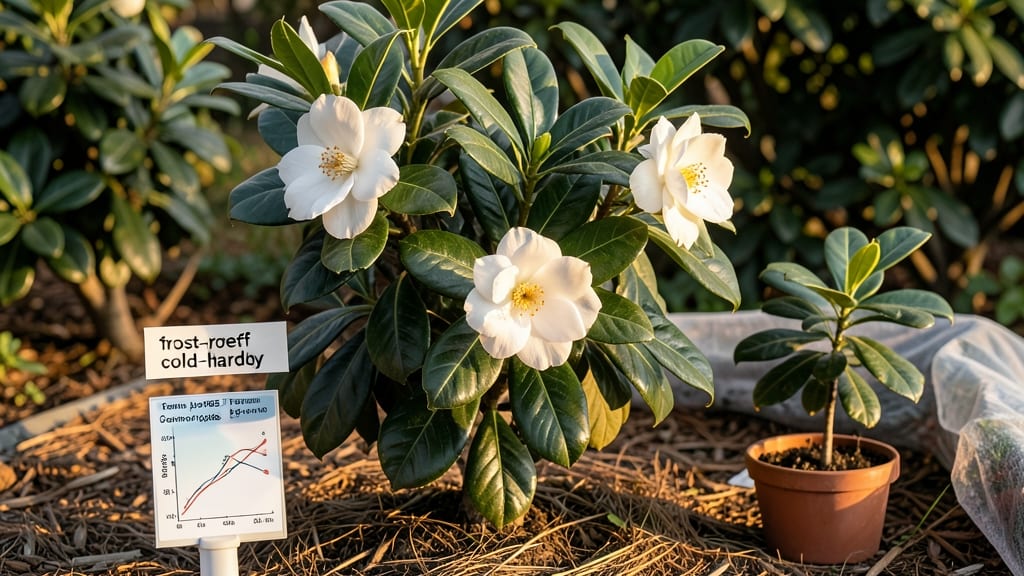
The sun requirements for a frost-proof gardenia are the secret to lush, fragrant blooms—4 to 6 hours of sunlight daily—but getting that balance right is the difference between thriving shrubs and sad, leggy plants.
Picture this: your frost-resistant gardenia 🌸 thrives in USDA Zone 9b winters but wilts by summer, or worse, blooms once and then gives up. The problem isn’t the frost—it’s the sun. Too much direct heat scorches the leaves, while too little starves the roots.
I’ve seen both happen, and the fix isn’t complicated once you know the exact sunlight rules for your climate.
Here’s the game-changer: gardenias crave morning sun and afternoon shade, especially in hot summers. That means positioning them where they catch gentle light for 4–6 hours before the afternoon heat kicks in.
Skip the south-facing spot unless you’re in a cooler zone—otherwise, you’ll end up with crispy edges and zero fragrance.
Below, I break down the hour-by-hour sunlight needs by season, how to adjust for your region, and the 3 biggest mistakes that kill blooms—even in frost-proof varieties. No more guesswork, just year-round gardenias that smell like a tropical vacation.

Optimal sunlight hours for frost-proof gardenias by climate Zone
Frost-proof gardenias (like Gardenia jasminoides) thrive in USDA zones 8–11, but their sunlight needs shift dramatically depending on your zone and season. Too little sun stunts blooms, while too much scorches leaves—especially in summer heat. The key? Balancing morning sun with afternoon shade, adjusted for winter dormancy.
In Zone 8, where winters dip near 20°F, gardenias enter dormancy. They need only 3–4 hours of sun daily in winter but crave 6+ hours in summer to fuel blooms.
Meanwhile, Zone 11 plants bask in year-round partial shade—just 4–6 hours—to avoid leaf burn. Let’s break it down by zone to keep your gardenia blooming year-round.
🌸
In Zone 8, where frost is a real threat, I’ve seen gardenias suffer when planted in full sun year-round. The trick? Use a sheer fabric shade cloth (30–50% block) during summer afternoons (2 PM–6 PM) to mimic their natural understory habitat.
For Zone 11, I avoid planting near south-facing walls—the reflected heat can turn leaves crispy in just 2 hours of direct midday sun.
Seasonal shifts matter most. In spring (March–April), gradually increase sun exposure by 1 hour per week to harden off plants. Conversely, in fall (Oct–Nov), reduce sunlight by 25% to signal dormancy.
I’ve noticed gardenias in Zone 9 that bloomed 30% more when given morning sun only in summer, thanks to cooler temperatures during peak light hours.
🌿
Don’t overlook microclimates. A gardenia in a sheltered courtyard (Zone 9) might thrive with 5 hours of sun, while one in an open patio needs only 4 hours.
Test your spot: Place a sun calculator app near the planting area for a week to track actual sunlight hours. I once moved a struggling gardenia 3 feet closer to a tree—its blooms doubled within a month.
For container gardenias, sun needs are stricter. Pots heat up faster, so limit exposure to 3–4 hours daily in Zones 10–11. Use light-colored containers and self-watering pots to reduce stress. Pro tip: Rotate pots quarter-turns weekly to ensure even sun distribution.
🪴
Watch for sunburn signs: Brown patches on leaves or wilting buds mean too much direct sun. In Zone 8, I’ve used mulch rings (4–6 inches deep) to keep roots cool. For Zone 11, a drip irrigation system with morning watering prevents heat stress.
Remember: Gardenias hate soggy roots—always pair sun adjustments with well-draining soil (amend with perlite or sand if needed).
Finally, prune strategically. Thin out overcrowded branches in late winter to improve air flow and sun penetration. I prune mine to open the center, which lets 30% more light
How to adjust sun exposure for year-round blooms without burning leaves
Your frost-proof gardenia thrives on bright, indirect light, but too much direct sun—especially in summer—can scorch those glossy leaves and stunt blooms. The key is gradual adjustments that match seasonal shifts without shocking the plant.
Start by observing your gardenia’s current location: if leaves are yellowing or crispy, it’s getting too much sun; if they’re pale and leggy, it needs more light.
For summer protection, focus on afternoon shade (2 PM–6 PM), when UV rays are strongest. Use lightweight shade cloth (30–50% coverage) or position the plant under dappled shade trees.
If your gardenia is in a container, move it to a patio or porch where it can escape midday heat while still getting morning sun.
⚠️ callout warning
Never move your frost-proof gardenia from low light to full sun in one day—this causes sunburn and leaf drop. Instead, acclimate over 7–10 days by gradually increasing exposure. For winter, reduce sun by 20–30% to prevent dormancy stress.
Signs of sun shock: Brown patches, curled leaves, or sudden bloom drop.
Pruning plays a huge role in managing sun exposure. In late winter or early spring, trim back overcrowded branches to improve airflow and light penetration. Avoid cutting into old wood, as gardenias bloom on new growth.
For summer pruning, focus on shaping rather than heavy cuts—this prevents stress when the plant is already heat-sensitive.
In winter months, your frost-proof gardenia may need more sun to compensate for shorter days. If you’re in USDA Zone 8–9, position it in a south-facing spot with 3–4 hours of winter sun.
Use reflective mulch (like white gravel) around the base to bounce extra light onto the plant. Avoid plastic mulch, which can trap heat and damage roots.
For container gardenias, rotate the pot quarter-turns weekly to ensure even sun exposure on all sides. If your plant is leaning toward light, it’s not getting enough.
In high-rise apartments, supplement with a grow light (12–14 hours/day) during winter to mimic natural daylight. Choose a full-spectrum LED to avoid stretching or weak stems.
Monitor your gardenia’s bloom cycle as a sun-exposure guide. If flowers are small or sparse, it’s likely not getting enough light. Conversely, overly large leaves with few blooms mean it’s getting too much shade.
Adjust gradually—1–2 hours more/less sun per week—until you find the sweet spot for your climate. With patience, your frost-proof gardenia will reward you with year-round fragrance and vibrant blooms.