Planting
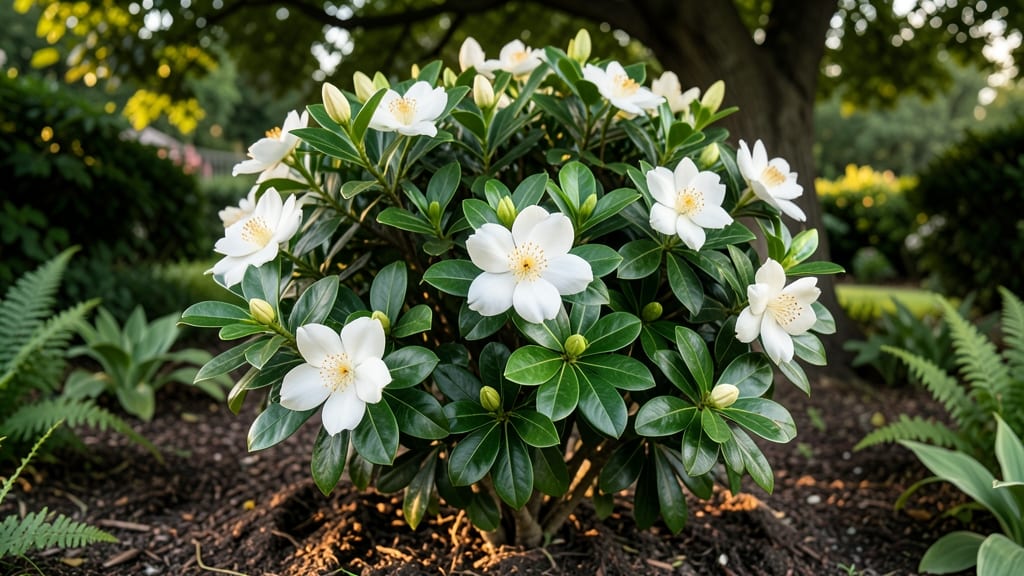
Gardenia plants grow to 4 to 6 feet tall at maturity, but their size depends entirely on the variety you choose—and how you prune them.
Picture this: a 3-foot-tall ‘Kleim’s Hardy’ gardenia 🌸 spilling over a balcony railing, its glossy leaves and intoxicating blooms just within arm’s reach, or a 6-foot-tall ‘Radicans’ dominating your backyard like a fragrant small tree.
The same plant can become either, depending on where you plant it and how you shape it.
Size isn’t just about aesthetics—it dictates how much space you need to plant, whether you can grow one in a container, and even how often you’ll need to prune.
In this guide, I’ll break down the exact mature heights of the most popular varieties, how their growth habits change with sunlight and soil, and the pruning secrets that keep them from outgrowing their welcome.
Ready to pick the perfect gardenia for your space? Let’s start with the dwarf varieties that fit on a patio—and how to coax a bloom-heavy shrub out of even the smallest container.


Gardenia plant size by variety: from dwarf to giant bloomers
Choosing the right gardenia variety starts with understanding their mature sizes—some stay compact enough for containers, while others become small trees. The Gardenia jasminoides species alone offers 15+ varieties with heights ranging from 2 feet to 8 feet.
Your space, climate, and pruning habits will determine which thrives best in your garden.
Dwarf varieties like ‘Radicans’ max out at 3 feet tall, making them perfect for patios or windowsills, while ‘Veitchii’ can reach 8 feet in tropical climates. Even within the same species, growth rates vary—some bloom earlier but stay smaller, while others take years to mature but grow taller.
Let’s break down the most popular varieties by size and care needs.
If you’re limited to containers, stick to ‘Radicans’ or ‘Mystery’—both thrive in 15–20 gallon pots with regular pruning. For landscaping projects, ‘Fortuniana’ or ‘Veitchii’ create stunning focal points but need 6+ feet of clearance.
Always check your USDA zone: ‘Kleim’s Hardy’ tolerates zones 7–9, while tropical varieties like ‘Veitchii’ struggle below zone 10.
Growth rates also depend on light exposure. Gardenias in partial shade (like morning sun) grow 20% slower but produce more blooms than those baked in full sun.
For example, a ‘Kleim’s Hardy’ in zone 9 with 6 hours of indirect light may take 3 years to reach 4 feet, while the same plant in zone 11 with full sun could hit 5 feet in 2 years.
Pruning plays a huge role in managing size. ‘Veitchii’, for instance, can be topped annually to keep it under 6 feet, while ‘Radicans’ benefits from pinching back new growth to encourage bushiness.
Always prune after flowering (late summer) to avoid cutting off next year’s blooms. Use sterilized shears and seal cuts with pruning paste to prevent disease.
For indoor gardeners, ‘Radicans’ is the top pick—its compact size and sweet fragrance make it ideal for living rooms. Place it near an east-facing window for bright indirect light and rotate the pot monthly for even growth.
Avoid drafty areas, as gardenias hate temperature swings. In containers, they’ll stay 2–3 feet tall if pruned twice yearly.
One common mistake is assuming all gardenias grow the same. ‘Kleim’s Hardy’, for example, is 2 feet shorter than ‘Veitchii’ but 30% more cold-hardy. If you’re in zone 7, ‘Kleim’s Hardy’ is your best bet—it survives 20°F temps, while tropical varieties die back to the ground.
Always mulch heavily in winter to protect roots from freeze
How to control gardenia size through pruning: step-by-step guide
Pruning your gardenia isn’t just about keeping it tidy—it’s the secret weapon for controlling its height, spread, and blooming potential. Without pruning, even dwarf varieties can become leggy and overgrown, while standard types may outpace your patio.
The good news? With the right techniques, you can shape your gardenia to fit any space while encouraging more fragrant blooms and healthier foliage.
Timing is everything. Most gardeners make the mistake of pruning at the wrong time, which can stunt blooms or stress the plant. The best time to prune is right after flowering (late spring to early summer) for most varieties, or in early spring before new growth for tropical types.
Avoid heavy pruning in fall—this can leave your gardenia vulnerable to winter damage or fungal issues.
Here’s your step-by-step pruning guide to maintain your gardenia’s ideal size while keeping it lush and blooming:
- 1 Gather the right tools: Use sterilized pruning shears (for small stems) and bypass pruners (for thicker branches). Disinfect tools with rubbing alcohol to prevent disease spread.
- 2 Remove dead or diseased branches: Cut back any brown, mushy, or blackened stems to the nearest healthy growth node. This improves airflow and prevents rot.
- 3 Shape for height control: To reduce height, cut back 1/3 of the tallest stems just above a leaf node or bud. For bushier growth, trim back outer branches to encourage inner branching.
- 4 Encourage more blooms: Prune spent flowers (deadheading) to redirect energy into new blooms. For heavy bloomers, trim back overly leggy stems to promote compact growth.
- 5 Clean up and mulch: Remove all pruned debris and mulch around the base with 2-3 inches of organic mulch (like pine bark) to retain moisture and suppress weeds.
If you’re growing a container gardenia, pruning is even more critical to prevent root-bound stress. Trim back roots gently during repotting (every 2-3 years) and prune stems to encourage bushier growth in tight spaces.
Just avoid cutting more than 1/3 of the plant’s foliage at once—this can shock your gardenia and reduce blooming.
Watch out for these common pruning mistakes that can backfire: pruning too late in the season (after October), cutting at wrong angles (which invites disease), or over-pruning (which stresses the plant). With the right approach, your gardenia will stay compact, healthy, and blooming beautifully for years.
🌸