
Planting
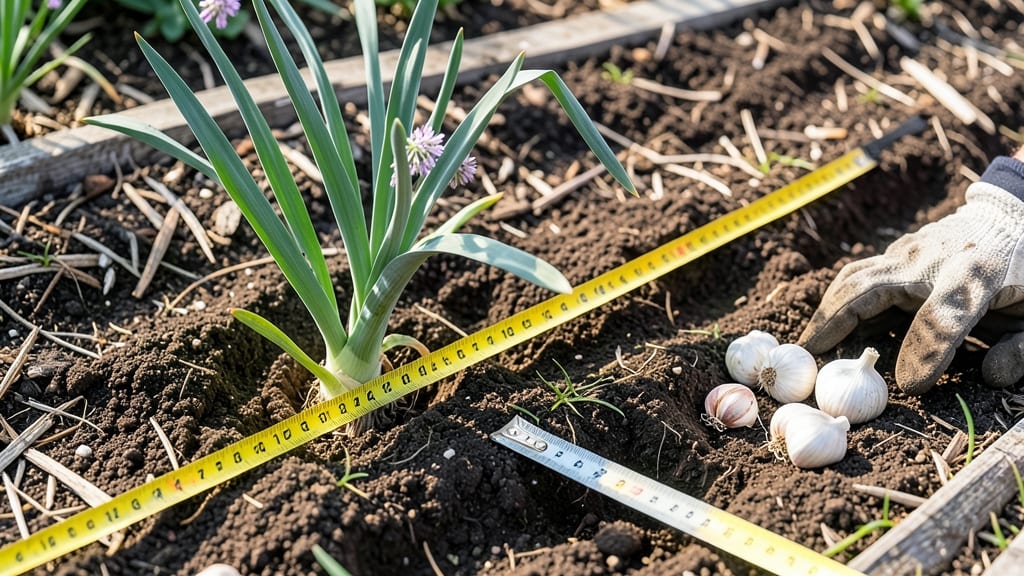
Spacing garlic in your garden determines whether you’ll harvest plump, flavorful bulbs or end up with stunted, weak ones.
Struggling to grow garlic that lives up to its potential? The secret isn’t just in the soil—it’s in the spacing. Plant too close, and you’ll end up with stunted cloves; too far apart, and you waste precious garden space.
Here’s the exact planting math professional growers use to maximize yield without competition.
Garlic 🧄 thrives when given room to breathe, but most gardeners either overcrowd their beds or leave too much space. The right distance ensures better air circulation, which prevents mold and pests, while also allowing each bulb to develop fully.
Whether you’re working with hardneck or softneck varieties, the spacing rules are the same—and they’re simpler than you think.
In this guide, you’ll learn the ideal distances between cloves and rows, how to adjust for different garden sizes, and how to spot (and fix) common spacing mistakes before they ruin your harvest. Let’s get your garlic growing like a pro.
Optimal garlic spacing by variety type (cloves vs. bulbs)
Garlic spacing isn't one-size-fits-all—it depends on whether you're growing hardneck or softneck varieties. These two types have different growth habits and bulb sizes, which directly impact how much space they need. Hardneck garlic produces larger individual bulbs but fewer per plant, while softneck varieties create smaller bulbs in clusters.
Getting this right means the difference between stunted cloves and plump harvests.
Proper spacing ensures air circulation to prevent fungal diseases like white rot and basal rot. It also maximizes sunlight exposure and nutrient access per plant. In my own garden, I once planted garlic too closely, and my harvest yielded tiny, misshapen bulbs—a lesson I won’t repeat!
Let’s break down the exact measurements for each variety.
For hardneck garlic, the 4-6 inch spacing between cloves allows room for their larger bulb development and scape growth. I plant mine in 18-inch rows to give them plenty of elbow room.
This spacing also prevents competition for nutrients, which is crucial during the spring growing season when roots are establishing.
When planting softneck garlic, you can afford to be slightly more generous with density. The 4-5 inch spacing between cloves and 10-12 inch rows still provide adequate airflow while maximizing your harvest per square foot.
This variety thrives in warmer climates and benefits from the closer proximity to maintain consistent soil moisture.
If you're growing elephant garlic, treat it like the gentle giant it is. The 6-8 inch spacing between cloves and 18-24 inch rows give these massive bulbs the room they need to develop properly.
I’ve seen elephant garlic bulbs reach the size of a softball when given this much space—absolutely worth the investment!
One mistake I see often is ignoring row spacing in favor of squeezing in more plants. Tight rows reduce air circulation and increase the risk of fungal diseases.
For example, planting hardneck garlic in 12-inch rows might save space, but you’ll likely end up with smaller bulbs and more leaf blight issues.
For container growing, adjust spacing to 3-4 inches between cloves and keep rows 8-10 inches apart. This compact setup works well for softneck varieties in pots but isn’t ideal for hardneck garlic, which needs more room to thrive. Always use well-draining soil in containers to prevent root rot.
Remember, these are general guidelines. If your garden has poor soil drainage or high humidity, increase spacing by 20-30% to improve airflow. I once grew garlic in a shady spot and had to widen my rows to 24 inches to compensate for slower growth.
Proper spacing isn’t just about numbers—it’s about creating an environment where each garlic plant can thrive without competing with its neighbors. When done right, you’ll harvest larger, healthier bulbs with minimal effort. Happy planting! 🌱
How to adjust garlic spacing for different garden conditions
When you’re working with limited space or tricky growing conditions, garlic spacing becomes your secret weapon. The standard 4-6 inches apart works for most gardens, but compact spaces, raised beds, or high-humidity climates demand adjustments.
Let’s break down how to tweak your spacing for maximum yield without sacrificing bulb size—no matter your setup.
First, consider your garden’s unique challenges. Are you dealing with poor soil drainage, high humidity, or just a tiny backyard? Each scenario requires a different approach.
For example, in raised beds, you can plant garlic closer together (3-4 inches apart) because the soil warms faster and drains better. Meanwhile, in containers, you’ll need to space cloves even tighter (2-3 inches) to make the most of limited real estate.
Garlic Spacing Adjustments by Garden Type
| Garden Type | Spacing Adjustment | Pros | Cons |
|---|---|---|---|
| Standard In-Ground | 4-6 inches apart, 12 inches between rows | Balanced air flow, easy to maintain | Wastes space if garden is large |
| Raised Beds | 3-4 inches apart, 8-10 inches between rows | Faster warming soil, better drainage | Risk of overcrowding if not monitored |
| Containers/Pots | 2-3 inches apart, 1 clove per 6-inch pot | Maximizes small spaces, great for balconies | Limited root growth, smaller bulbs |
| High-Yield Systems | 6-8 inches apart, staggered rows | Larger bulbs, reduced competition | Requires more space upfront |
| Poor Soil/Drainage | 5-7 inches apart, raised beds preferred | Reduces waterlogging risks | May need extra compost |
Note: Adjust row spacing based on your garlic variety type (hardneck vs. softneck). Hardnecks benefit from slightly more space for scape growth.
For high-humidity climates, increase spacing to 6-8 inches apart to prevent fungal diseases like white rot. The extra room improves air circulation, which is critical when moisture lingers.
If you’re planting garlic near onions or lettuce, keep spacing consistent (4-6 inches) but avoid planting garlic too close to alliums like chives—they compete for nutrients.
In compact gardens, think vertically! Use staggered rows (plant one row, then offset the next by 6 inches) to fit more cloves without overcrowding. For container growing, limit yourself to 1-2 cloves per 6-inch pot—any more, and you’ll end up with tiny, underdeveloped bulbs.
Pro tip: Use well-draining potting mix with added compost to compensate for the limited root space.
Don’t forget to rotate your crops if you’re reusing space. Garlic is heavy on soil nutrients, so follow it with light feeders like lettuce or radishes to replenish the soil naturally.
And if your garlic starts looking crowded mid-season, thin out the smallest plants immediately—it’s better to sacrifice a few than risk disease spread from overpacked foliage.
Experiment with these adjustments in small batches first. Keep a harvest journal** to track which spacing yields the largest bulbs in your specific conditions. With the right math, you’ll turn even the trickiest garden into a garlic-growing powerhouse! 🧄