Watering
To determine how much water your garden needs, start with 1 to 2 inches per week—but that’s just the beginning. The real secret lies in understanding your soil, plants, and climate, because what works for a thirsty tomato isn’t enough for a drought-tolerant lavender.
Struggling to balance overwatering and underwatering your garden? The right watering formula isn’t guesswork—it’s science. I’ll show you how to calculate precise water needs for every plant type, so you can save time, money, and your garden’s health.
Most gardeners overcomplicate watering, but the key is simple: deep, infrequent soaks that encourage strong roots. Whether you’re growing veggies, flowers, or shrubs, this guide breaks down the science so you can water like a pro—no more wasted water or wilted plants.
You’ll learn how to read your soil, adjust for heatwaves, and even automate your watering for maximum efficiency. Ready to transform your garden’s health with the perfect watering routine?
The science-backed watering formula: how to calculate daily needs by plant type
Watering your garden isn’t about following a one-size-fits-all schedule. Instead, it’s about understanding three critical factors: your soil type, the plant species, and your local climate.
These determine how much water your garden truly needs—whether it’s 1 inch per week for tomatoes or just ½ inch for drought-tolerant lavender. Ignoring these factors leads to root rot from overwatering or wilting from thirst. Let’s break down the formula to get it right every time.
Start with your soil type, which holds the biggest clue. Sandy soil drains fast, needing frequent light watering, while clay soil holds moisture longer, requiring deeper but less frequent watering. Loamy soil—the gardener’s gold—balances both.
Test yours by squeezing a handful: if it crumbles easily, it’s sandy; if it sticks, it’s clay. Adjust your watering based on what you find.
Next, consider the plant species. A succulent like aloe thrives on sparse watering, while leafy greens like lettuce need consistent moisture. Even within categories, needs vary: roses demand 1-2 inches weekly, but hydrangeas prefer soaked soil every 2-3 days.
Always check the plant tag or a trusted guide—it’s your blueprint for success.
Climate plays the final role. In hot, dry zones like Arizona, most plants need daily watering in peak summer, while cooler regions like the Pacific Northwest might only require weekly deep watering.
Even within one season, morning watering reduces evaporation, while evening watering risks fungal diseases. Time it right for healthier roots.
| Plant Type | Water Needs (Inches/Week) | Best Time to Water | Signs of Over/Under-Watering |
|---|---|---|---|
| Vegetables (Tomatoes, Peppers) | 1.5–2 inches | Morning (6–9 AM) | Wilting (under), yellow leaves (over) |
| Herbs (Basil, Cilantro) | 1–1.5 inches | Evening (if no rain) | Drooping (under), mold (over) |
| Flowers (Roses, Hydrangeas) | 1–2 inches | Early morning | Brown edges (under), black spots (over) |
| Shrubs (Boxwood, Lavender) | 0.5–1 inch | Deep soak, weekly | Stunted growth (under), root rot (over) |
| Succulents/Cacti | 0.25–0.5 inches (biweekly) | Late morning | Shriveling (under), soft stems (over) |
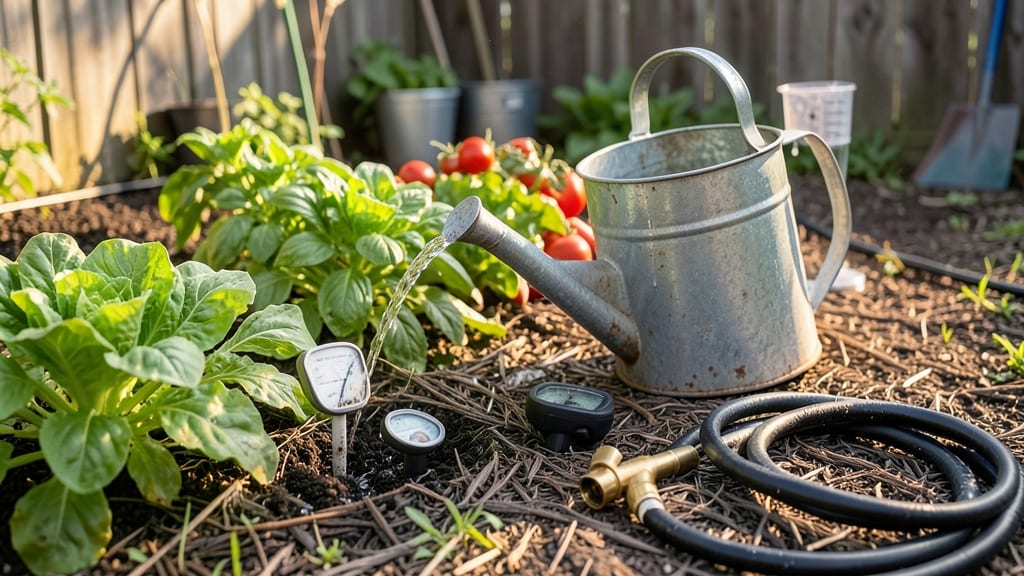
To apply this formula, start by measuring your soil’s moisture with a trowel or moisture meter. Stick it 2 inches deep—this is where roots actively drink. If the soil feels dry, water until it’s moist but not soggy.
For container gardens, check daily since pots dry out faster. Pro tip: Mulch with straw or wood chips to lock in moisture and cut watering needs by 30%.
Seasonal shifts demand adjustments. In spring, young plants need gentle, frequent watering to establish roots. By summer, increase depth to encourage deep root growth. Fall slows watering as plants prepare for dormancy, and winter often means minimal watering unless you’re growing cold-hardy greens.
Always observe your plants—they’ll tell you when they’re thirsty or drowning.
Mistakes like watering on a schedule (without checking soil) or ignoring leaf signals (yellowing = overwatering, crispy edges = underwatering) can kill your garden. Instead, water based on need, not time. Use a rain gauge to track weekly totals and adjust for rainfall.
For new gardeners, start with 1 inch per week as a baseline, then tweak based on your soil and plants.
Remember, efficient watering saves resources and keeps your garden thriving. By mastering this formula, you’ll grow stronger plants, reduce waste, and enjoy a healthier, happier garden with less guesswork. Start today—your plants will thank you with vibrant blooms and bountiful harvests!
Watering mistakes that kill plants: signs you’re overdoing or underwatering
Even with the best intentions, most gardeners struggle to strike the perfect watering balance. Overwatering drowns roots while underwatering stresses plants—both can kill your garden faster than pests or diseases. The key is learning to read your plants' signals instead of relying on rigid schedules.
I’ve made this mistake with my tomatoes and lavender, turning lush growth into sad, wilted messes.
Yellowing leaves, moldy soil, and limp stems aren’t just random bad luck—they’re your plants screaming for help. Each symptom tells a different story about whether you’re drowning your garden or letting it thirst.
Let’s decode these warning signs so you can adjust before it’s too late. Trust me, your roses and herbs will thank you.
⚠️ Callout-Warning: The Hidden Costs of Wrong Watering
Overwatering wastes 1,200+ gallons/year per 1,000 sq ft while suffocating roots. Underwatering reduces yields by 30-50% and invites pests. The fix? Water when the top 1-2 inches of soil feels dry—no guesswork. Use a moisture meter for accuracy, especially in clay soils that trap excess water.
Let’s start with the most common red flag: yellowing leaves. If the yellow appears on older leaves first, your plant is likely thirsty. But if the yellowing starts at the bottom with crispy edges, you’re overdoing it.
My pepper plants gave me this exact lesson last summer—turns out they hated my daily watering habit. The fix? Water deeply but infrequently, letting the soil dry slightly between sessions.
Wilting is another tricky symptom. Unlike thirsty wilting (which bounces back when watered), overwatered plants stay limp even after a drink. Check the soil: if it smells sour or feels soggy, you’ve created a root rot party.
My fuchsia plants taught me this the hard way—now I always dig a finger into the soil before watering. If it’s damp below the surface, wait another day.
Mold or fungus on leaves or soil is a clear SOS from your plants. This usually means you’re watering at night or keeping leaves wet too long. I learned this with my hostas, which developed slime mold after my evening watering routine.
The solution? Water in the morning so foliage dries quickly. And always water at the base, not overhead, to prevent fungal spores from hitchhiking on leaves.
Another subtle sign is stunted growth or small leaves. Plants conserve energy when stressed, whether from too much or too little water. My basil nearly gave up on me last year until I adjusted to watering only when the soil felt like a wrung-out sponge.
The moral? Pay attention to new growth—it’s your best indicator of whether your watering routine is working.
Finally, watch for leaf curl or brown tips. These often mean underwatering, but in some plants like succulents, they’re normal! The trick is to know your plant’s native environment.
Desert plants (like aloe) love dry conditions, while tropical plants (like calatheas) need consistent moisture. When in doubt, mimic their natural habitat—your garden’s health depends on it. 🌱