How To
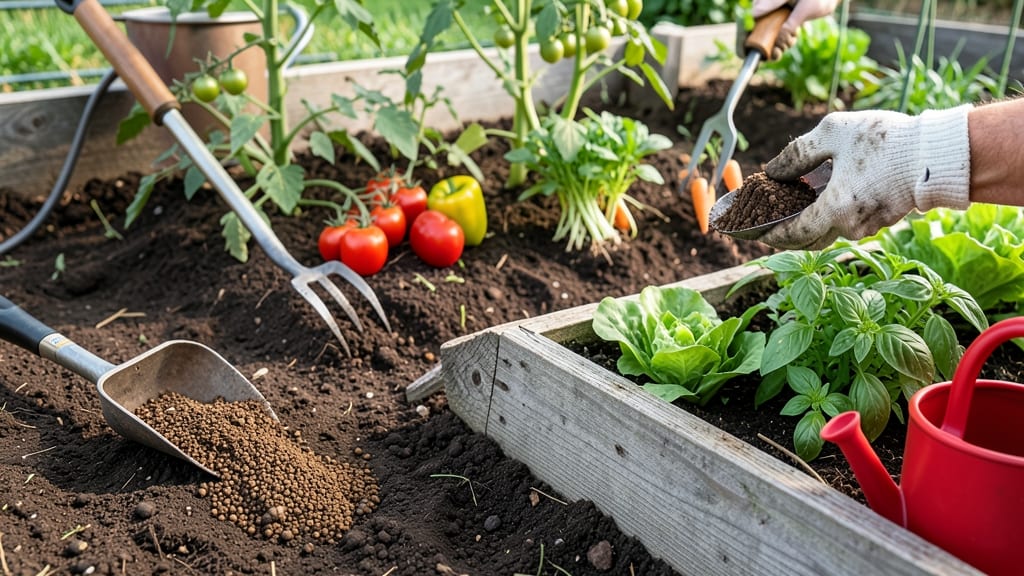
To fertilize a vegetable garden properly, you’ll need a schedule that matches your plants’ needs and the season—too little stunts growth, while too much burns roots and wastes money.
Picture this: You’ve spent hours prepping your 🥬 vegetable garden, only to see your tomatoes struggle mid-summer or your lettuce bolt before harvest. The fix isn’t guessing—it’s timing.
Most gardeners overlook how plant types (leafy greens vs. fruiting crops) and soil health change what, when, and how much to feed them.
In this guide, I’ll break down the exact fertilization frequency for common crops, from early-season boosts to late-summer support, plus how to spot over- or under-feeding before it’s too late.
You’ll leave here with a customizable schedule that keeps your soil rich without the guesswork—no more wasted fertilizer or sad, stunted plants.

Seasonal fertilization schedule for common vegetable plants
Fertilizing your vegetable garden isn't a one-size-fits-all task—each plant type has unique needs that change with the seasons. Leafy greens like spinach and kale thrive with gentle, frequent feedings, while fruiting plants such as tomatoes and peppers demand heavier doses during their flowering phase. Root vegetables, including carrots and potatoes, prefer a more balanced approach to avoid deformities.
Adjusting your schedule based on your climate—whether you're in a cool Zone 5 or warm Zone 9—will maximize yields and prevent nutrient burn.
Start with a soil test to determine baseline nutrient levels. Most vegetable gardens benefit from a balanced 10-10-10 fertilizer at planting, followed by targeted feedings throughout the growing season. Cool-season crops (like broccoli and peas) need early-season boosts, while warm-season crops (like cucumbers and squash) should receive mid-to-late season support.
Below, I’ve broken down the ideal fertilization timeline for each plant category, including adjustments for climate zones.
| Plant Type | Early Season (Planting) | Mid Season (Growth) | Late Season (Harvest) | Climate Adjustments |
|---|---|---|---|---|
| Leafy Greens (Spinach, Lettuce, Kale) | Balanced 5-5-5 at planting | Light feed (3-4-6) every 3 weeks | None (harvest before winter) | Cool zones: Start earlier; warm zones: Extend to fall |
| Fruiting Plants (Tomatoes, Peppers, Cucumbers) | 10-10-10 at planting + side-dress with compost | High-phosphorus (5-10-10) every 4 weeks | Low-nitrogen (2-4-2) for root strength | Warm zones: Add mulch to retain moisture; cool zones: Use row covers |
| Root Vegetables (Carrots, Potatoes, Beets) | Balanced 10-10-10 at planting | Low-nitrogen (2-4-2) every 6 weeks | None (stop 4 weeks before harvest) | Cool zones: Plant early; warm zones: Succession plant |
| Alliums (Onions, Garlic, Leeks) | Low-nitrogen (3-4-6) at planting | None (avoid excess nitrogen) | Potassium boost (0-0-50) for storage | Cool zones: Plant in fall; warm zones: Use shade cloth |
For leafy greens, focus on nitrogen-rich fertilizers early in the season to encourage rapid leaf production. Spinach and lettuce benefit from a light feeding every 3 weeks during active growth, but avoid overdoing it—too much nitrogen leads to bitter flavors. Kale, on the other hand, can handle slightly more frequent feedings, especially in cool climates where growth slows in summer heat.
Always water fertilizers in thoroughly to prevent root burn.
When it comes to fruiting plants, timing is everything. Tomatoes and peppers need a phosphorus boost when flowers appear to promote fruit set.
I recommend switching to a 5-10-10 fertilizer once blooms form and continuing every 4 weeks until harvest. Cucumbers and squash follow a similar schedule but may need extra potassium (0-0-52) in hot climates to prevent blossom-end rot. Always side-dress with compost to improve soil structure and retain moisture.
Root vegetables like carrots and potatoes are finicky about fertilization—too much nitrogen leads to forked roots or excessive foliage at the expense of edible tubers. Start with a balanced 10-10-10 at planting, then switch to a low-nitrogen fertilizer like 2-4-2 every 6 weeks.
Stop fertilizing entirely 4 weeks before harvest to allow roots to mature. Beets follow a similar schedule but can tolerate slightly more nitrogen early on for leafy greens.
In cool climates (Zones 3-6), extend your fertilization schedule into early fall for cool-season crops like broccoli and cabbage. These plants benefit from a light feeding in September to encourage late-season growth before frost.
In warm climates (Zones 7-10), focus on succession planting and adjust fertilizers to match the heat. For example, tomatoes in Zone 9 may need weekly foliar sprays of diluted fish emulsion during peak summer to prevent nutrient lockout caused by heat stress.
One common mistake I see
Signs your vegetable garden needs fertilizer (and when to skip it)
Your vegetable garden sends clear signals when it's hungry for nutrients. Yellowing leaves, especially on older foliage, often indicate a nitrogen deficiency, while purple stems or small, pale leaves suggest phosphorus or potassium shortages. These visual cues help you diagnose what your plants truly need before reaching for fertilizer.
Don't confuse nutrient hunger with overwatering or poor drainage, though. Both can cause yellowing leaves too—so always check soil moisture first. I've learned the hard way that assuming my plants need fertilizer when they're actually drowning in water leads to wasted resources and stressed plants.
🚨
Most vegetables only need fertilizer every 4-6 weeks during active growth (spring-fall). Overdoing it causes leaf burn and root damage. Light feeders like lettuce and radishes often need none—their roots are shallow and sensitive to excess salts. Heavy feeders like tomatoes and peppers benefit from monthly applications but never during flowering or fruiting unless soil tests confirm deficiencies.
Watch for stunted growth or weak stems—these are classic signs your plants aren't getting enough nutrients to support their structure. I once had my tomato plants growing like twigs because I skipped the mid-season fertilizer boost, and the yield suffered dramatically.
Compare your plants to healthy examples in catalogs or with experienced gardeners to spot subtle differences.
Another red flag is slow recovery after harvesting. If your plants take weeks to bounce back after picking produce, they're likely depleted. Leafy greens like spinach recover quickly, while fruiting plants need more support.
I now keep a small notebook to track plant responses—it's helped me adjust timing perfectly for my zucchini and peppers.
Before adding fertilizer, test your soil—many gardeners overcorrect because they assume their soil is barren. A simple home test kit (around $10) checks pH and basic nutrients. If your soil tests high in nutrients, skip the fertilizer entirely.
I discovered my raised beds were already nutrient-rich from years of composting, saving me from over-fertilizing my carrots and beets.
When in doubt, organic options like compost or worm castings are gentler than synthetic fertilizers. They release nutrients slowly, reducing the risk of overfeeding. I've switched to a 5-5-5 organic fertilizer for my heavy feeders, and my eggplant yields have doubled while avoiding any burn issues.
Always water thoroughly after applying fertilizer to help nutrients reach roots.