Watering
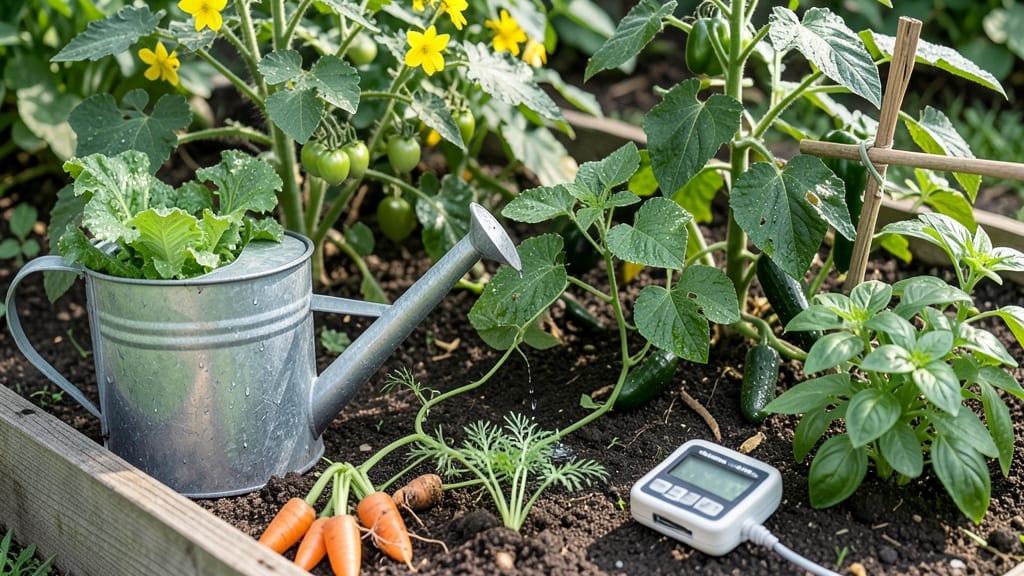
Watering your vegetable garden the right way means knowing how often to water it—not guessing.
Too much or too little water can ruin your harvest, yet most gardeners end up over- or under-watering without realizing it. The deep-soil test method reveals exactly when your veggies need hydration, saving water and stressing plants less.
Soil type, climate, and even the season change how often you should water. For example, sandy soil drains faster than clay, and summer heat demands more frequent deep watering than spring showers. Below, I’ll show you how to adjust your schedule for perfect results.
You’ll learn the science behind soil moisture, how to spot over- or under-watering, and a simple chart to match your veggies to your local climate. No more wasted water or wilted plants—just thriving produce.
How to perform the deep-soil test for vegetable garden watering
Most gardeners water their vegetables based on a schedule or when the soil looks dry—but this guesswork often leads to overwatering or underwatering. The deep-soil test reveals the true moisture level at the root zone (2-3 inches deep), where your plants actually drink.
By mastering this simple technique, you’ll water smarter, save resources, and grow healthier veggies with less stress.
Why does the root zone matter? Vegetable roots absorb 90% of their water from the top 2-3 inches of soil. Surface moisture (from light watering or rain) can fool you into thinking your plants are hydrated, while deeper layers remain bone-dry.
The deep-soil test cuts through this illusion, giving you precision hydration data tailored to your garden’s unique conditions.
Timing is everything. Test your soil’s moisture early in the morning (6-9 AM) when evaporation is minimal. Avoid testing after rain or irrigation—wait 2-4 hours for excess water to drain.
Evening tests are less reliable because humidity and cooler temps can make soil feel damper than it is, leading to overwatering mistakes.
Gather your tools: a hand trowel, gardening gloves, and a small notebook to track results. Optional but helpful: a soil moisture meter (for beginners) or a wooden dowel (for a DIY approach). Pro tip: Use a clean trowel for each test to avoid cross-contaminating soil pathogens between plants.
Step-by-Step Deep-Soil Test Guide
- Step 1: Choose a representative spot near your vegetable’s base (avoid mulch or dense foliage).
- Step 2: Insert your trowel or dowel vertically into the soil 2-3 inches deep. Use gentle pressure—no need to force it.
-
Step 3: Pull out the tool and observe the soil:
- Dry: Crumbles easily, no moisture (water immediately).
- Moist: Holds shape slightly, slight dampness (wait 1-2 days).
- Wet: Sticky, clumps together (reduce watering).
- Step 4: Record your findings in your notebook. Note the vegetable type, soil type (sandy/loamy/clay), and weather conditions for future reference.
- Step 5: Water only if the soil is dry. For most vegetables, aim to keep the root zone consistently moist but not soggy. Deep water 2-3 times per week (adjust based on your test results).
💧 Pro Tip: Test multiple spots in your garden—soil moisture varies by location, even in the same bed!
Let’s break down what your soil’s texture tells you. Sandy soil drains quickly and feels gritty—it may need watering every 1-2 days in hot weather. Clay soil holds moisture longer and feels sticky; it might only need watering every 3-5 days. Loamy soil (the gold standard) balances drainage and retention, requiring 2-3 waterings per week on average.
New to gardening? Start by testing one plant type (like tomatoes or lettuce) for a week to establish a baseline. For example, my cherry tomatoes need watering every 2 days in 75°F weather when the soil at 2 inches feels dry.
Once you’ve gathered data for 5-7 days, you’ll spot patterns—like how afternoon rain extends the time between waterings or how mulch slows moisture loss.
Common mistakes to avoid: testing soil after watering (wait 4+ hours), using the same spot repeatedly (soil compacts and dries unevenly), or ignoring seasonal changes.
In summer, I test daily because evaporation rates double, while in spring, I test every other day as the soil warms up. Always adjust your watering schedule based on real-time soil conditions, not a rigid calendar.
For container gardens, the deep-soil test works too—but check 1 inch deep instead of 2-3 inches, since roots are shallower. If your potted basil or peppers feel dry at 1 inch, water thoroughly until it drains from the bottom.
Containers dry out 3x faster than in-ground soil, so monitor them twice daily during heatwaves.
Mastering the deep-soil test transforms your watering routine from guesswork to science. Within a month, you’ll notice fewer wilting leaves, healthier roots, and better yields—all while using 30% less water.
The key is consistency: test the same depth, same time of day, and same spot each time to build an accurate picture of your garden’s hydration needs.
Ready to dive deeper? Next, we’ll explore a watering frequency chart for 15+ common vegetables, tailored to your climate zone. Until then, grab your trowel and start testing—your tomatoes will thank you! 🌱
Watering frequency chart by vegetable type and climate
Mastering the art of watering your vegetable garden isn’t about following a one-size-fits-all schedule—it’s about understanding your plants’ unique hydration needs while adapting to your local climate.
In arid zones, deep watering every 3-5 days prevents evaporation, while humid climates may require daily shallow checks to avoid fungal risks. The key? A deep-soil test at the root zone (2-3 inches down) to determine when to water.
Below, I’ve broken down watering thresholds for 15+ common vegetables across three climate zones, using the deep-soil test method.
For example, tomatoes in a temperate climate need water when the soil feels dry 1 inch down, but in arid regions, wait until it’s bone-dry 2 inches down—this prevents root rot while conserving water.
Why does this chart work? Because it accounts for soil evaporation rates in each climate. For instance, arid-zone zucchini can wait longer between waterings because the soil retains moisture deeper underground, while humid-zone lettuce needs frequent shallow watering to prevent bolting (going to seed prematurely).
Pro tip: Morning watering is ideal—it reduces evaporation and gives foliage time to dry before nightfall, cutting down on fungal risks like powdery mildew.
For container gardens, halve these intervals since pots dry out faster. And if your soil feels spongy (not just dry), it’s overwatered—let it dry out before testing again. Consistency is key: uneven moisture stresses plants more than occasional deep soaks.
Use this chart as your starting point, but always adjust for your garden’s microclimate. A north-facing bed stays wetter longer, while a south-facing one may need extra water. By mastering the deep-soil test and climate-specific thresholds, you’ll grow healthier veggies with less waste—no guesswork required! 🌱