
Planting
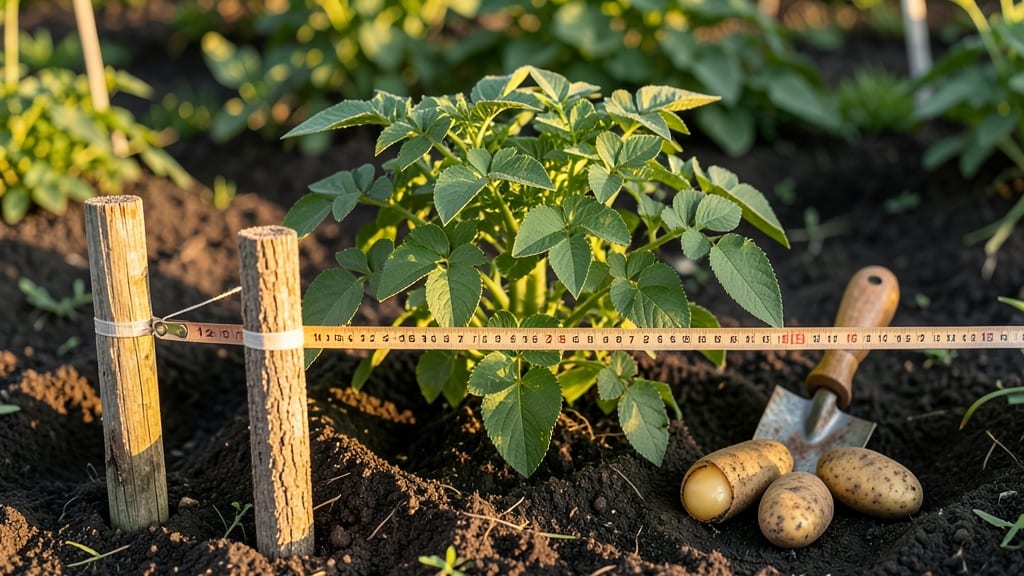
Getting potato spacing in your garden right is the difference between a bountiful harvest and a struggle to pull out a handful of underdeveloped tubers.
You’ve prepped the soil, chosen the perfect varieties, and even marked your planting rows—but if the spacing is off, your potatoes will compete for nutrients, leaving you with small, misshapen yields.
The right distance between plants and rows isn’t just about fitting more in; it’s about giving each 🥔 the room it needs to grow big and disease-free.
Whether you’re working with compact fingerlings or sprawling russets, the math behind spacing affects everything from airflow to tuber size. Too close, and you’ll invite rot; too far, and you’ll waste precious garden real estate.
I’ll break down the exact measurements for rows, hills, and plant-to-plant gaps, plus how to adjust for raised beds or small-space gardens.
By the end, you’ll know how to space potatoes for maximum yield, whether you’re growing early harvesters or late-season keepers—and why a little extra planning now saves you from digging up half-baked spuds later.
Optimal potato spacing by variety: math for early, mid-season, and late harvests
Potatoes aren’t one-size-fits-all when it comes to spacing. The variety you grow determines how much room each plant needs to develop large, disease-free tubers. Compact varieties like Yukon Gold thrive in tight quarters, while sprawling types like Russet Burbank demand more elbow room.
Getting this right means fewer crowded tubers and higher yields per square foot.
Spacing affects more than just tuber size—it impacts air circulation, which reduces blight risk, and soil access for root development. Early-season varieties (like Red Pontiac) can handle closer spacing, while late-season types (like Kennebec) need extra room to mature fully.
Let’s break down the exact measurements for rows, hills, and plant-to-plant distance by variety type.
| Variety Type | Plant-to-Plant Distance | Row Spacing | Hill Spacing | Best For |
|---|---|---|---|---|
| Early (Red Pontiac, Early Girl) | 10–12 inches | 24–30 inches | 12–18 inches apart | Small gardens, quick harvests |
| Mid-Season (Yukon Gold, Kennebec) | 12–14 inches | 30–36 inches | 18–24 inches apart | Balanced yield, storage quality |
| Late (Russet Burbank, Fingerlings) | 14–18 inches | 36–42 inches | 24–30 inches apart | Large tubers, long-season gardens |
| Compact (Fingerlings, Purple Viking) | 8–10 inches | 24–30 inches | 12–16 inches apart | Containers, small spaces |
For early-season varieties, tighter spacing (10–12 inches apart) works because they mature quickly and don’t need as much room to spread.
Think of them like sprinters in the garden—they’re in and out fast. Red Pontiac, for example, can handle 10-inch spacing in rows just 24 inches apart, perfect for gardeners with limited space.
Mid-season varieties like Yukon Gold strike a balance. Their 12–14 inch spacing gives them enough room to develop medium-sized tubers without overcrowding. These are the workhorses of the potato world—reliable, versatile, and great for everything from mashing to roasting. Row spacing of 30–36 inches ensures good airflow and easier harvesting.
Late-season varieties, like Russet Burbank, are the marathon runners of the potato patch. They need 14–18 inches between plants and 36–42 inches between rows to develop their signature large, fluffy tubers. Skimp on space, and you’ll end up with small, misshapen potatoes or worse—disease-prone foliage from poor airflow.
If you’re growing fingerling potatoes or other compact varieties, you can get creative with spacing. These 8–10 inch spacings make them ideal for containers or raised beds.
Just be sure to hill soil around the stems as they grow to encourage more tuber formation. A 12-inch hill spacing works well for these varieties.
Pro tip: Adjust spacing based on your soil type. In clay-heavy soil, give plants an extra inch or two—they’ll struggle more with root competition. In sandy soil, you can tighten up spacing slightly since tubers won’t spread as aggressively.
Always measure from the center of each plant to the next for consistency.
Remember, hilling (piling soil around the stems) is just as critical as spacing. Hills should be 12–18 inches tall and spaced 12–24 inches apart depending on the variety. This encourages more tuber development and protects against greening (toxic solanine buildup from sunlight exposure).
For container growing, stick to compact varieties like Fingerlings or Purple Viking and use 5-gallon buckets or fabric grow bags. Space 2–3 plants per container with 8-inch spacing between them. Just ensure the container is at least 12 inches deep—shallow pots limit tuber growth.
Row depth and spacing mistakes that kill yields (and how to fix them)
Even experienced gardeners make critical errors with potato spacing that sabotage yields—often without realizing it. One of the biggest mistakes? Planting too close together, which forces tubers to compete for nutrients and space.
This leads to smaller, misshapen potatoes and invites diseases like blight by trapping moisture. I’ve seen gardens where overcrowding reduced yields by 40%—and it’s completely avoidable with the right math.
Another silent killer is planting seed potatoes at the wrong row depth. Burying them too shallowly exposes them to light, causing greening (toxic solanine buildup), while planting too deep wastes energy for the sprouts to reach the surface.
The ideal depth is 4 inches, but this varies slightly by soil type. Sandy soil needs deeper planting to retain moisture, while clay holds water better and can accommodate shallower depths.
For small-space gardens, the stakes are even higher. In raised beds or containers, incorrect spacing can turn a high-yield system into a disappointment. Fingerling potatoes, for example, need 6-inch spacing but can’t tolerate the same density as russets.
I’ve adapted my 5-gallon bucket potato experiments by using just 3-4 plants per container, which maximizes yield without overcrowding.
🚨 Potato Spacing Pitfalls
These 3 mistakes are silently killing your harvests—fix them now:
- Overcrowding: Plants 12+ inches apart in rows 3 feet apart (not 6 inches apart!).
- Wrong depth: 4 inches is ideal—shallower = greening; deeper = weak sprouts.
- Ignoring soil: Sandy soil needs deeper rows; clay can be shallower.
Pro Tip: Use hilling to encourage deeper tuber growth—add soil around stems every 2 weeks.
Let’s talk about airflow, the unsung hero of potato yields. Crowded plants create a humid microclimate that breeds fungal diseases like late blight. I once lost an entire russet potato patch to blight because I packed them too tightly in a humid summer.
The fix? Space rows 3 feet apart (not 2 feet) to improve circulation. For containers, ensure at least 12 inches between plants and elevate them for airflow.
Soil type dictates your spacing strategy. In sandy soil, tubers spread wider but grow shallower, so increase row spacing to 36 inches and plant deeper (5 inches). In clay soil, compact roots mean tighter spacing (24-inch rows) but shallower planting (3 inches).
I test my soil’s drainage by filling a jar with water—if it drains in 10 minutes, it’s sandy; if it takes hours, it’s clay.
For small-space gardens, think vertically. Train vining varieties like Purple Majesty up trellises to save horizontal space. In my 4x8-foot raised bed, I dedicate one side to potatoes with 12-inch spacing and the other to fast-growing greens like lettuce.
This intercropping keeps yields high while maximizing every square inch. Even in 5-gallon buckets, I use just 3-4 potatoes per container with a 6-inch spacing grid.
Remember: spacing isn’t static. As plants grow, their foliage spreads, so adjust your layout. If you notice leaves touching, thin out or prune gently to maintain airflow. And always hill soil around stems every 2 weeks—this encourages deeper tuber growth and prevents greening.
With these fixes, you’ll see 20-30% larger potatoes and fewer diseased plants. Happy digging! 🥔