Tools
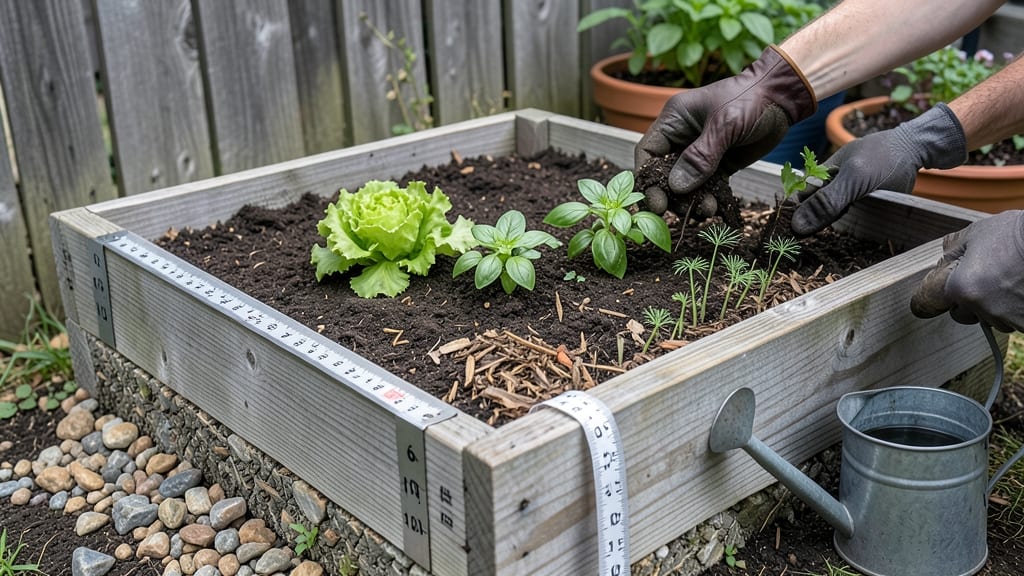
The right raised garden bed soil depth is the foundation of strong roots and bountiful harvests — and getting it wrong can leave your plants gasping for space.
Picture this: You’ve spent hours building the perfect raised bed, only to watch your tomato plants sprawl outward instead of digging down. Or maybe your herbs thrive, but your carrots refuse to grow straight because the soil isn’t deep enough.
The truth? Root growth depends on depth, and every plant has its own needs.
Most gardeners assume 6-12 inches of soil is enough, but deep-rooted crops like asparagus or potatoes demand 18+ inches to thrive. Meanwhile, shallow-rooted herbs and lettuce can flourish in just 6 inches—if the mix is right.
The key isn’t just how deep your bed is, but how you layer it for drainage, aeration, and nutrients.
In this guide, I’ll break down the exact soil depth for vegetables, herbs, and flowers, how to adjust for different bed heights, and the 5 mistakes that sabotage root growth before you even plant. No more guesswork—just science-backed measurements to grow like a pro.
Optimal raised garden bed soil depth by plant type: root depth requirements
Getting your raised garden bed soil depth right is the foundation for healthy plants. Too little soil restricts root growth, while too much creates wasted space and invites pests. The key is understanding each plant’s root depth requirements and matching your bed’s depth accordingly.
Most vegetables thrive in 6-12 inches of soil, but some deep-rooted crops need 18+ inches—which might require layered beds or deeper containers.
For shallow-rooted plants like lettuce or radishes, even 4-6 inches of loose, fertile soil works perfectly. Meanwhile, deep-rooted perennials such as asparagus or fruit trees demand 18-24 inches to establish properly.
The good news? With smart planning, you can optimize every inch of your raised bed for maximum yield without overfilling it.
When planning your raised garden bed soil depth, start by identifying your plants’ root depth categories. For example, leafy greens and radishes are happy in just 4-6 inches, freeing up space for deeper-rooted crops like tomatoes or peppers.
If you’re working with a small raised bed, consider vertical gardening or interplanting shallow and deep-rooted varieties to maximize efficiency.
For deep-rooted vegetables such as carrots or parsnips, loosen the soil to 12 inches before planting to prevent root distortion. Use a garden fork to aerate compacted layers, especially if your bed sits on hard-packed ground.
Adding compost or aged manure to the bottom 6 inches of soil provides nutrients for roots as they grow downward.
One common mistake is assuming more soil equals better growth. Overfilling beds can lead to poor drainage and root rot, especially in clay-heavy soils. Aim for a maximum depth of 18 inches unless you’re growing deep-rooted perennials.
Instead of depth, focus on soil quality: a mix of topsoil, compost, and perlite ensures roots get both nutrients and oxygen.
For container gardening or small raised beds, prioritize shallow-rooted plants like bush beans, strawberries, or herbs. If you must grow deeper crops, choose determinate varieties (like bush tomatoes
How to adjust soil depth for different raised bed materials and planting methods
Adjusting soil depth in raised beds isn't one-size-fits-all—it depends on your bed's material, planting method, and even the crops you grow. For example, wooden raised beds with 6-inch sides need different depth adjustments than fabric grow bags or container gardens.
Let’s break down how to optimize depth without overfilling your space or inviting pests.
First, consider your bed height. A standard 12-inch deep bed works for most vegetables, but if you're growing deep-rooted crops like asparagus or artichokes, you’ll need to extend the depth or use layered soil techniques.
For container gardening, prioritize depth over width—even a 5-gallon bucket can grow herbs if you use fast-draining mixes.
⚠️ PROS-CONS BOX: Adjusting Soil Depth by Material
• Sturdy for deep roots
• Customizable depth (6"-18")
• Long-lasting if treated properly
• Heavy when filled
• Rot risk if untreated wood
• Limited mobility
• Lightweight and portable
• Excellent drainage
• No rot risk
• Limited depth (12"-18")
• Requires frequent watering
• Not ideal for deep roots
• Space-efficient for patios
• Controlled soil quality
• Great for herbs
• Shallow roots limit growth
• Dries out fast
• Limited crop selection
For layered soil techniques, start with a 3-inch drainage layer of gravel or broken pottery at the bottom. Next, add 6 inches of compost-rich topsoil for root growth, then top with 2-3 inches of mulch.
This method maximizes depth while preventing compaction. For companion planting, pair shallow-rooted crops like lettuce with deep-rooted plants such as tomatoes to utilize space efficiently.
If your bed is too shallow, consider stacking beds or using vertical gardening techniques. For example, trellises for cucumbers or hanging baskets for strawberries free up ground space.
Always leave 1-2 inches from the top for watering and mulching. Overfilling beds can lead to soil compaction and poor drainage, which stunts root growth.
Test your soil depth by measuring from the top of the bed to the bottom of the planting hole. For root vegetables, aim for 12-18 inches of loose, aerated soil.
For herbs and greens, 6-10 inches is sufficient. Adjust by adding compost or coconut coir to extend depth without overburdening the structure.
Remember, soil quality matters more than depth. Even a 6-inch deep bed with rich, organic soil will outperform a 12-inch deep bed filled with compacted clay. Amend your soil with worm castings or peat moss to improve structure and drainage.
With these adjustments, your raised bed will support healthy roots and bountiful harvests—no matter the material or method.