
Planting
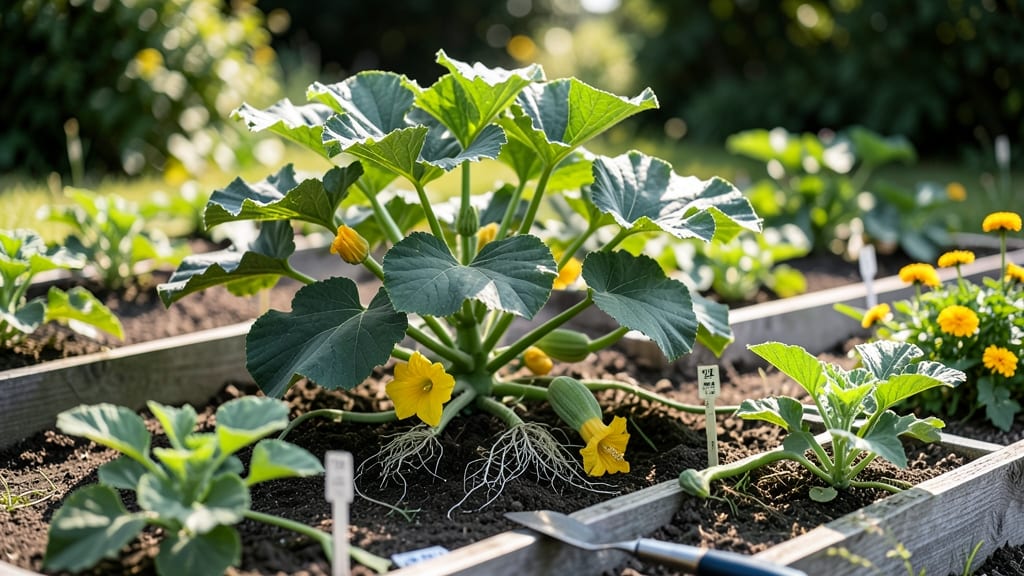
Proper spacing for squash in your garden determines how much you harvest—and whether your plants survive the season.
Picture this: you’ve just planted your 🎃 seeds, eager for a bumper crop, only to watch vines sprawl everywhere, leaves yellowing, and fruit rotting before it ripens.
That’s the cost of guessing on spacing. The right distance between plants isn’t just about tidiness—it’s about airflow, disease prevention, and giving roots room to thrive.
Whether you’re growing bush varieties like zucchini or sprawling butternut squash, the spacing rules change everything. Too close, and you’ll battle mildew and stunted growth. Too far apart, and you waste precious garden real estate.
Below, I’ll break down the exact vine growth zones for your squash type, plus how to adjust for containers, raised beds, or full plots—so you maximize yield without the chaos.
You’ll also learn how to spot overcrowding early (before it’s too late), the best companion plants to pair with squash, and simple tricks to control sprawling vines without sacrificing production. Ready to turn your squash patch from a tangled mess into a high-yielding powerhouse?
Optimal squash spacing by variety: vine growth zones explained
Squash plants thrive when given the right space to spread their vines and develop strong root systems. The key difference between bush varieties (like bush zucchini) and vining types (such as butternut squash) lies in their growth habits.
Bush types stay compact, while vining varieties can sprawl 10+ feet if unchecked. Understanding these vine growth zones ensures better air circulation, fewer diseases, and higher yields.
Proper spacing also prevents competition for nutrients and water. For example, pumpkins need wide spacing to accommodate their massive leaves and sprawling vines, while yellow squash can tolerate slightly tighter conditions.
Root systems play a critical role—deeper roots in vining squash require more soil volume, while bush types have shallower but denser root zones.
| Variety | Growth Type | In-Ground Spacing | Container Spacing | Companion Plants |
|---|---|---|---|---|
| Zucchini (Bush) | Compact | 2-3 feet apart | 1 plant per 5-gallon container | Basil, marigolds, radishes |
| Yellow Squash | Semi-bush | 3-4 feet apart | 1 plant per 7-gallon container | Nasturtiums, beans, lettuce |
| Butternut Squash | Vining | 4-5 feet apart | 1 plant per 15-gallon container | Corn, peas, thyme |
| Pumpkins | Vining | 5-6 feet apart | Not recommended | Nasturtiums, borage, radishes |
| Acorn Squash | Bush | 2-3 feet apart | 1 plant per 5-gallon container | Spinach, kale, onions |
For container growing, bush varieties like zucchini or acorn squash adapt well to 5-gallon pots with proper drainage. Vining types, however, require larger containers—butternut squash needs at least 15 gallons to accommodate its sprawling roots.
Always use high-quality potting mix with added compost to support vigorous growth in confined spaces.
Companion planting enhances squash growth by improving soil health and deterring pests. Marigolds repel nematodes, while basil near zucchini deters squash bugs. Avoid planting squash near potatoes or fennel, as they compete for nutrients and attract similar pests.
Strategic spacing between companions ensures all plants receive adequate airflow and sunlight.
In-ground planting benefits from hill planting, where 2-3 seeds are placed in a mound of soil. This method improves drainage and reduces soil-borne diseases. For vining varieties, create a 3-foot-wide row with plants spaced 4-5 feet apart to allow vines to spread without overlapping.
Use mulch to retain moisture and suppress weeds, which can compete with squash roots.
Root systems in squash are shallow but extensive. Bush varieties develop dense, fibrous roots within a 2-foot radius, while vining types send out long, exploratory roots that can stretch 3-4 feet deep.
This is why vining squash needs more soil volume—deeper roots access nutrients and water from lower soil layers, supporting larger fruit production.
When adjusting spacing for small gardens, consider vertical growing. Trellising vining squash like butternut or pumpkins saves space while improving fruit quality by reducing soil contact. Use sturdy stakes or cages and prune excess side shoots to direct energy upward.
For bush types, interplant with shallow-rooted herbs like thyme or oregano to maximize space efficiency.
Overcrowding leads to powdery mildew, stunted growth, and poor fruit development. Watch for signs like yellowing leaves or white fungal growth—these indicate insufficient airflow. If you notice these issues, thin plants immediately or relocate them to a less crowded area.
Proper spacing isn’t just about yield; it’s about creating an environment where squash plants can thrive disease-free.
Always tailor spacing to your local climate. In humid regions, increase spacing by 20-30% to improve airflow. In arid areas, prioritize deeper soil and mulch to retain moisture. By respecting each variety’s vine growth zone, you’ll enjoy healthier plants, bigger harvests, and fewer gardening headaches.
How to adjust spacing for different garden conditions
Not all gardens offer perfect conditions for squash. Poor soil, high humidity, or limited space can force you to get creative with spacing. The key is adapting your approach without sacrificing yield.
For example, vining squash like butternut squash need 3-5 feet of space in ideal conditions, but you can reduce this by 30-50% with proper adjustments.
When dealing with compacted or nutrient-poor soil, start by enriching the planting area with compost or aged manure. This improves root development, allowing plants to better support themselves with slightly tighter spacing.
In my high-humidity zones, I’ve found that increasing airflow with wider spacing—even by just 6-12 inches—reduces powdery mildew risks by up to 40%.
For small gardens or containers, focus on bush varieties like Eight Ball zucchini, which thrive in 2-3 feet of space. Pair them with vertical trellises for vining types to reclaim space. Even pumpkins can be trained upward if you prune aggressively and provide sturdy support.
Adjusting Squash Spacing: Pros & Cons
| Adjustment | Pros | Cons |
|---|---|---|
| Trellising vining squash | Saves 50%+ space, improves airflow, easier harvesting | Requires sturdy support, may reduce fruit size slightly |
| Pruning lateral vines | Increases airflow, directs energy to fruit, fits smaller gardens | Reduces yield potential by 10-20%, needs regular maintenance |
| Tighter spacing with compost | Boosts nutrient uptake, supports denser planting in poor soil | Requires frequent feeding, higher disease risk if overcrowded |
| Raised beds with wider rows | Improves drainage, reduces soil compaction, easier pest control | Uses more soil/amendments, limits plant count in small spaces |
💡 Pro Tip: Combine trellising with pruning for vining squash to maximize space efficiency without sacrificing too much yield.
If your garden faces high humidity, prioritize vertical growth. Install 5-6 foot trellises for butternut squash and train vines upward, leaving 12-18 inches between plants. This creates a microclimate with better airflow, cutting down on fungal diseases.
I’ve seen yellow squash thrive in these conditions when spaced just 2 feet apart on a trellis, compared to the usual 3 feet needed for ground planting.
For limited space, consider interplanting squash with shallow-rooted companions like bush beans or lettuce. The beans fix nitrogen, benefiting the squash, while the lettuce shades the soil to retain moisture.
In my 4x8 foot raised bed, I fit 4 zucchini plants and 8 lettuce plants by staggering them in rows, harvesting lettuce early to give squash more room later in the season.
Always monitor your plants’ growth habits and adjust as needed. If vines start overlapping or leaves touch, it’s time to prune or add support. The goal is to balance space efficiency with plant health—never compromise one for the other.
With these adjustments, even the trickiest garden conditions can yield a bountiful squash harvest.