Watering
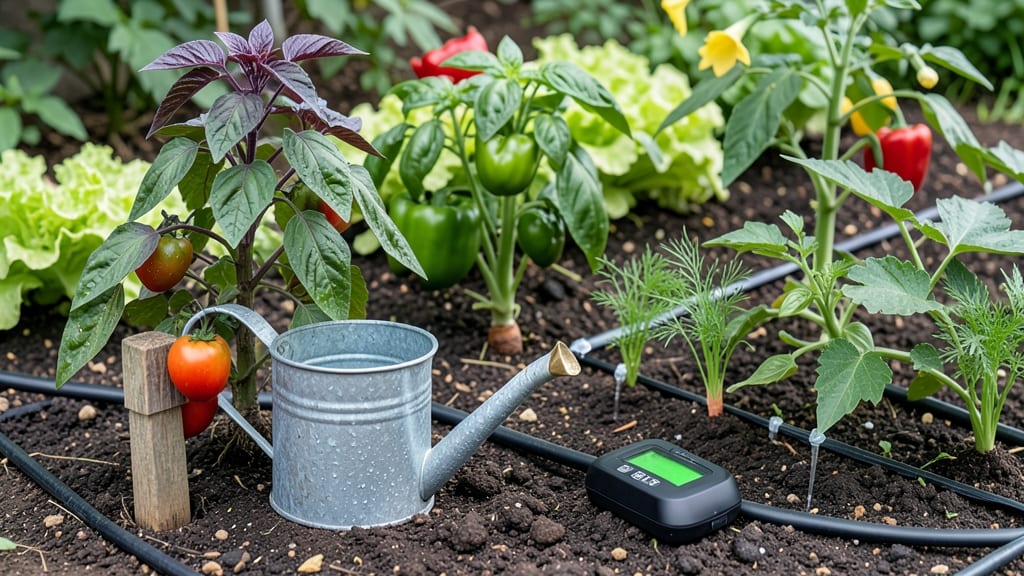
Your vegetable garden's watering frequency is the single factor that controls whether your plants thrive or struggle—especially when some need daily soaks while others hate soggy soil.
Struggling to keep your 🌱 vegetable garden thriving without drowning roots or wasting water? The right watering schedule can mean the difference between bumper crops and wilted disappointment—especially when different plants have wildly different needs.
Think about it: Tomatoes demand deep, consistent moisture, while root vegetables like carrots or radishes prefer drier soil to stay crisp. Then throw in heatwaves, clay soil, or a sudden rainstorm, and suddenly your "once-a-week" rule becomes guesswork.
Below, I break down the science-backed watering intervals for 15+ common vegetables, how to adjust for your local climate, and the telltale signs when you're either overdoing it or leaving your plants parched.
Optimal watering frequency by vegetable type: what your plants Really Need
Watering your vegetable garden isn't one-size-fits-all—each plant has unique needs that can make or break your harvest. Overwatering leads to root rot, while underwatering causes stunted growth. The key is understanding how often each vegetable needs hydration to thrive.
I’ve tested these schedules in my own garden, and the difference between guesswork and science-backed care is night and day.
Most vegetables prefer deep watering (1-2 inches per week) rather than frequent shallow drinks. This encourages roots to grow deeper, making plants more drought-resistant. Start by checking soil moisture with your finger—if the top inch feels dry, it’s time to water.
For leafy greens, consistency is critical, while root crops like carrots need evenly moist soil to prevent splitting.
For tomatoes, I’ve found that watering deeply every 2-3 days in summer prevents blossom end rot—a common issue when plants experience moisture fluctuations. Always water at the base and avoid wetting foliage to reduce fungal diseases like early blight.
My peppers thrive on a consistent schedule of every 3-4 days; letting them dry out even slightly can trigger blossom end rot, which ruins harvests.
Leafy greens like lettuce and spinach need frequent, light watering—think of them like a sponge that dries out quickly. I water mine daily in summer or every other day with deeper soaks. Overwatering causes yellowing leaves, while underwatering leads to bitter flavors and bolting. For root vegetables like carrots and radishes, the goal is even moisture without waterlogging. Uneven watering causes splitting, and my radishes once looked like tiny, deformed potatoes because I skipped watering during a heatwave!
Summer brings extra challenges, especially for heat-loving crops like cucumbers and zucchini. These plants wilt faster and
How weather and soil affect your watering schedule: adjusting for heatwaves, rainy days, and drought
Your vegetable garden's watering needs aren't set in stone—they shift dramatically with weather patterns and soil composition. A 90°F heatwave can turn your usual schedule into a daily ritual, while clay soil holds moisture far longer than sandy soil.
Understanding these variables helps you avoid overwatering (which rots roots) or underwatering (which stresses plants).
Start by checking your soil type—sandy soils drain quickly, needing frequent light waterings, while clay soils stay soggy for days. Humidity also plays a role: high humidity slows evaporation, while dry air demands more water. Even rainfall can disrupt your routine, so always adjust based on recent weather.
Adjusting Watering Frequency by Condition
| Condition | Adjustment | Tools to Help |
|---|---|---|
| Heatwave (90°F+) | Increase frequency to daily or every other day; water deeply in early morning. | Moisture meter, mulch |
| Rainy Season | Skip watering; check for 1 inch of rain as a guideline. | Rain gauge, finger test |
| Drought | Water deeply 2-3x/week; group plants by water needs. | Drip irrigation, mulch |
| Sandy Soil | Water more frequently (every 1-2 days); use mulch to retain moisture. | Soil test kit, drip irrigation |
| Clay Soil | Water less often (every 5-7 days); avoid soggy conditions. | Moisture meter, raised beds |
Use the finger test to gauge soil moisture: Stick your finger 1 inch deep. If it feels dry, water; if damp, wait. For sandy soils, this might mean watering every 1-2 days, while clay soils may only need water every 5-7 days.
A moisture meter ($15-$20) takes the guesswork out of this.
During heatwaves, prioritize deep watering in the early morning to reduce evaporation and fungal risks. For leafy greens, shallow watering suffices, but root crops like carrots need consistent moisture. Always water at the base of plants, not overhead, to prevent disease.
Rainfall can be a game-changer: After 1 inch of rain, skip your scheduled watering. Use a rain gauge or check local weather alerts to adjust. In drought conditions, group drought-tolerant plants (like zucchini) with water-loving plants (like lettuce) to create microclimates.
Pro tip: Keep a watering journal to track adjustments. Note soil type, weather, and plant responses. Over time, you’ll spot patterns—like how your tomatoes wilt in 95°F heat or your peppers thrive with clay soil. This personalized approach saves water and keeps your garden thriving. 🌱