
Picking
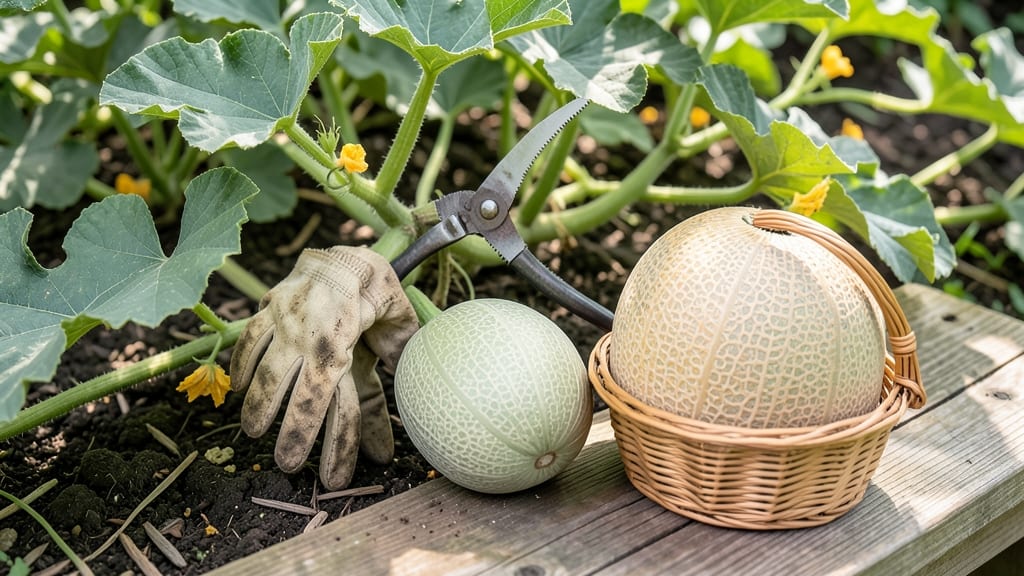
Harvesting cantaloupe from the garden at the right time means the difference between sweet, juicy perfection and bland, seedy disappointment—and those 3 simple checks will never let you down again.
Picture this: you’ve spent months nurturing your cantaloupe 🍈, only to slice into a fruit that’s either rock-hard or mushy. The key is catching it at peak ripeness, when the vine curls, the rind turns from white to cream, and that unmistakable sweet scent fills the air.
But here’s the catch: cantaloupes don’t ripen evenly, and missing the window means wasted effort. I’ll walk you through the visual, scent, and tactile tests that guarantee you pick them at their sweetest—no guesswork required.
From the thump test to the stem twist trick, you’ll learn exactly when to harvest, plus what to do if your garden produces uneven ripening. Let’s make sure your hard work pays off with flavor-packed cantaloupes every time.


3 Visual and scent-based ripeness checks for cantaloupe
Nothing beats the moment you pull a perfectly ripe cantaloupe from your garden—sweet, fragrant, and ready to slice. But how do you know it's truly ripe without cutting into it?
The secret lies in three external cues that reveal peak ripeness: the vine's behavior, the skin's color shift, and the unmistakable aroma. These signs work together to guarantee you harvest at the perfect moment, every time.
Many gardeners overlook these visual and scent-based clues, leading to either underripe fruit (hard, bland, and seedy) or overripe fruit (mushy, fermented, and wasted). The good news?
You don’t need fancy tools—just your eyes, nose, and gentle touch. Let’s break down the three non-negotiable ripeness checks that will transform your cantaloupe harvests.
Let’s start with the vine separation, the first clue your cantaloupe is ready. When the fruit’s stem begins to dry and curl upward, it’s nature’s way of signaling it’s time to harvest.
Gently grasp the stem between your thumb and forefinger and twist—if it slips free with minimal effort, your cantaloupe is perfectly ripe. This happens because the abscission layer (a natural separation zone) forms as the fruit matures.
If the stem resists or snaps off cleanly, the fruit is either underripe or overripe. Underripe cantaloupes will have a greenish stem, while overripe ones may detach too easily and feel mushy.
This test is non-destructive, so you can check it multiple times over a few days to track progress.
The skin color shift is another foolproof indicator, but it requires close inspection. Start by examining the blush near the stem—this area darkens first as the fruit ripens. A ripe cantaloupe will show a cream to beige color with a distinct netted pattern.
The entire rind should transition from white or greenish to a soft, matte beige.
Pro tip: Hold the cantaloupe up to natural light to see the netting more clearly. The darker the blush and the more pronounced the netting, the riper the fruit. Avoid harvesting if the rind still has green patches—this means it needs more time on the vine.
Finally, the scent test is the most reliable way to confirm ripeness, especially for varieties like Hale’s Best or Athena, which are prized for their intense aroma.
Simply sniff the stem end—the part where the fruit connects to the vine. A ripe cantaloupe will release a sweet, musky fragrance that’s impossible to miss.
If the scent is weak or sour, the fruit isn’t ready yet. Some gardeners even cut the stem end open slightly to check for a golden, honey-like liquid inside—this is a final verification of ripeness. However, this method should be used sparingly to avoid damaging the fruit.
Combine these three checks for 100% accuracy. For example, if the vine separates easily but the skin is still mostly white, wait another day. Conversely, if the skin is beige but the stem doesn’t twist free, the fruit may need more time.
Trust your eyes, nose, and hands—they’re your best tools for a perfect harvest.
Once you master these visual and scent-based cues, you’ll never second-guess your cantaloupe harvest again. The next time you’re in your garden, take a moment to observe, sniff, and test—your taste buds will thank you with bursting sweetness in every bite. Happy harvesting! 🍈
How to use the thump test and stem twist for foolproof harvest timing
When your cantaloupe vines are heavy with fruit, knowing exactly when to harvest can feel like guessing. The thump test and stem twist are my go-to tactile methods for determining ripeness without relying solely on visual cues.
These techniques work best when combined with the color and scent checks we covered earlier, but they’re especially useful for varieties with less obvious skin changes, like Hale’s Best or Athena.
For early-season varieties, prioritize the stem twist first—it’s the most reliable indicator of internal sugar development. For late-season cantaloupes that stay on the vine longer, the thump test helps confirm the fruit’s readiness when other signs are ambiguous.
Both methods take seconds but can save you from harvesting too soon or too late.
The thump test is simple: hold the cantaloupe in one hand and tap it firmly with your other knuckles. A ripe cantaloupe will sound dull and hollow, like thumping a watermelon. If it sounds sharp or metallic, it’s not ready yet.
Pro tip: Compare it to a known ripe cantaloupe—your ears adapt quickly! For smaller varieties like Minnesota Midget, thump gently to avoid bruising.
Next, try the stem twist. Grasp the stem between your thumb and forefinger and give it a quarter-turn twist. A ripe cantaloupe’s stem should slip free with minimal force—like unscrewing a jar lid.
If it resists or tears, wait another 2-3 days. For heirloom varieties with thicker stems, use a small pruning shear to snip the stem cleanly at the vine.
Troubleshooting is key: if your cantaloupe passes both tests but still tastes bland, check for uneven ripening (common in shaded spots) or nutrient deficiencies (like yellowing vines). For container-grown cantaloupes, these tests work the same, but harvest slightly earlier—heat stress can accelerate ripening in pots.
Remember, these tactile tests work best in warm, dry conditions. If you’ve had recent rain, wait 24 hours before testing—moisture can make the fruit feel heavier than it is. Once you master these methods, you’ll never second-guess harvest time again. Happy harvesting!