
Picking
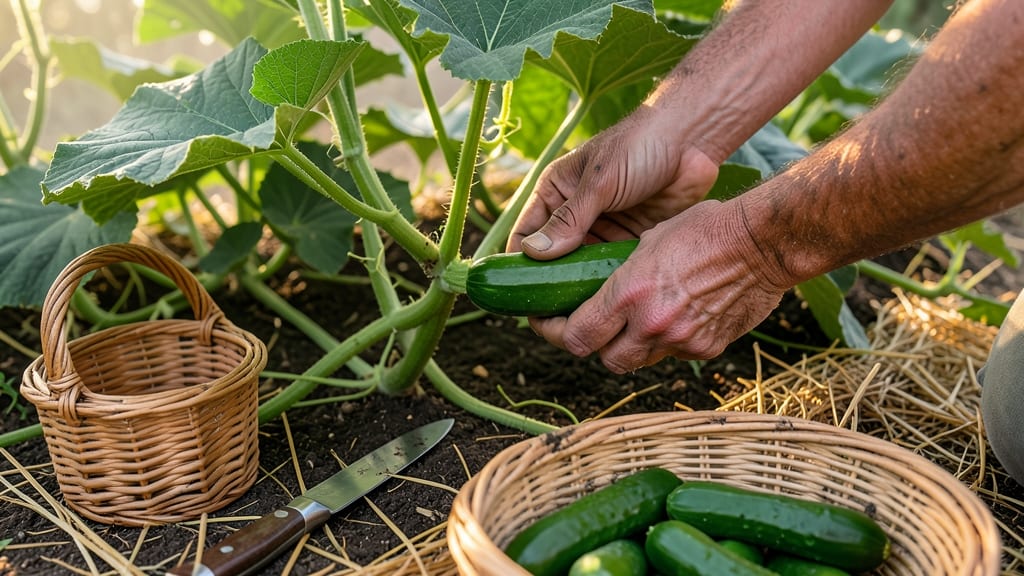
Harvesting cucumbers from your garden at the right time ensures they’re crisp, flavorful, and ready for your favorite recipes—miss the window, and you’ll end up with bitter, seedy, or mushy produce.
Picture this: you’ve been eagerly waiting for your 🥒 cucumbers to grow, only to snap one off the vine and find it’s either rock-hard or already turning yellow and mealy. That’s the difference between a perfect harvest and a disappointing one.
Knowing when to pick cucumbers isn’t just about size—it’s about color, texture, and even the time of day. For slicing varieties, you’ll want them firm and bright green, while pickling cucumbers should be harvested smaller and slightly firmer.
Regular checks keep your plants producing, but waiting too long can mean fewer cucumbers later in the season.
In this guide, I’ll walk you through the three foolproof ripeness tests to pick cucumbers at their peak, how often to check them, and the common mistakes that lead to wasted harvests. Let’s make sure every cucumber you pick is the best it can be!
3 Visual ripeness tests to harvest cucumbers at peak freshness
Harvesting cucumbers at the perfect moment transforms your garden bounty from ordinary to extraordinary. The key lies in understanding three science-backed visual cues—size, color, and texture—that guarantee maximum crunch and sweetness.
Whether you're growing slicing varieties like 'Straight Eight' or pickling types like 'Boston Pickling,' these tests apply universally to ensure you never miss the sweet spot.
I've learned through years of trial and error that ignoring these cues leads to either bitter, seedy cucumbers or overly soft ones that lack the satisfying snap. The good news? Mastering these simple checks takes just minutes daily and can double your harvest's quality while extending your plant's productivity.
Let's break down each test so you can confidently pick cucumbers at their prime.
🥒
| Test Type | Slicing Varieties | Pickling Varieties | What to Look For |
|---|---|---|---|
| Size | 6-8 inches | 1-3 inches | Measure from blossom end to tip; avoid oversized cucumbers that become seedy |
| Color | Deep, even green | Bright green with slight yellowing at stem | Uniform color indicates maturity; yellowing at stem signals readiness for slicing |
| Texture | Skin yields slightly to gentle thumb pressure | Firm but not rock-hard | Press gently—if skin springs back slightly, it's perfect; if it dents, it's overripe |
| Stem Test | Stem snaps cleanly when bent | Stem separates easily from vine | Grasp cucumber near stem and bend gently; clean break means it's harvest-ready |
| Pro Tip | Morning harvests yield crispest cucumbers since evening heat can soften them | ||
The size test is your first line of defense against bitter cucumbers. For slicing varieties, aim for 6-8 inches—any longer and you risk developing large, seedy centers that compromise texture. Pickling cucumbers, on the other hand, should be harvested at 1-3 inches to maintain their signature crunch.
I once let my pickling cucumbers grow to 4 inches, and the difference in texture was night and day!
Color plays a crucial role in determining sweetness. Look for deep, even green across the entire cucumber for slicing types. A slight yellowing at the stem end signals peak ripeness for slicing varieties, while pickling cucumbers should remain uniformly bright green.
The blossom end (opposite the stem) should never show signs of yellowing or browning, as this indicates overripeness.
🌱
Texture reveals a cucumber's hidden secrets. Gently press your thumbnail into the skin—if it yields slightly but springs back, you've found the sweet spot. For slicing cucumbers, the skin should feel firm yet slightly tender, while pickling varieties should maintain a crisp, almost snappy resistance.
Overripe cucumbers will dent noticeably under pressure, and their skin may feel slightly waxy or rough to the touch.
Don't overlook the stem test, which is my foolproof method for determining ripeness. Hold the cucumber near its stem and bend gently—if it snaps cleanly with a slight crack, it's ready for harvest.
This test works because the cucumber's natural separation from the vine signals physiological maturity. For trellised varieties, this test is especially valuable as it helps you avoid missing hidden cucumbers on lower vines.
The variety difference can't be overstated. Slicing cucumbers like 'Marketmore' or 'Arkansas' develop a sweeter, milder flavor when harvested at 7-9 inches, while pickling varieties such as 'Calypso' or 'Boston Pickling' reach peak flavor at just 2-3 inches.
I always keep a small notepad near my garden to jot down which varieties perform best in my climate—this year, my 'Lemon Cucumber' reached perfection at just 4 inches!
📏
One common mistake I see is harvesting based on calendar days rather than visual cues. While most cucumbers take 50-70 days to mature, environmental factors like temperature and sunlight can drastically alter this timeline.
Instead of guessing, combine all three tests—size, color, and texture—to make your decision. This multi-step approach eliminates guesswork and ensures consistent quality.
For container growers, these tests take on even greater importance since space is limited. In my 5-gallon pots, I harvest every other day to prevent overcrowding, which can lead to uneven ripening.
Pay special attention to the smallest cucumbers first—they'll be the most tender and flavorful. I've found that container-grown cucumbers often ripen 5-7 days faster than their in-ground counterparts due to warmer soil temperatures.
✂️
How often to check cucumbers for harvest readiness (and when to stop)
Cucumbers are prolific producers, but their harvest window is short-lived. Checking them every 2-3 days is ideal—this prevents overripeness while keeping vines productive. I’ve found that morning harvests (between 7-9 AM) yield the freshest cucumbers, as nighttime moisture can make them softer and more prone to disease.
If you’re new to cucumber gardening, don’t panic if you miss a day or two. Cucumbers can tolerate a 5-7 day gap without turning bitter, but their texture and flavor degrade quickly.
The key is consistency—once you establish a routine, your plants will reward you with nonstop production all season long.
🌱 Numbered Highlights: When to Harvest Cucumbers
- Daily checks for slicing varieties (harvest at 6-8 inches)
- Every 3 days for pickling types (smaller, 2-4 inches)
- Morning harvests prevent bitterness buildup from heat
- Stop checking when vines yellow or die back (end of season)
- Overripe signs: Spongy texture, yellow patches, or seeds turning black
I’ve salvaged overripe cucumbers by peeling the skin and using them in soups or stir-fries, but they’ll never match the crisp sweetness of a properly timed harvest. Pay attention to the stem end—when it turns yellow, that’s your final warning before the cucumber becomes mealy.
For bush varieties, checking every 3 days works well since they produce fewer cucumbers at once. Vining types, however, demand daily attention—they can produce 5-10 cucumbers per plant weekly, and missed harvests lead to rapid decline in quality.
I always set a phone reminder to avoid neglecting my vines.
Knowing when to stop harvesting is just as important. Once your cucumber plants show yellowing leaves or stop producing flowers, it’s time to let them rest. In cooler climates, this happens by late August or early September, while warmer zones may extend until first frost.
Pro tip: Use a small basket or harvesting knife to avoid damaging vines. Always cut cucumbers with 1 inch of stem—this prevents disease entry points and encourages new growth. With the right rhythm, your cucumber plants will keep giving until frost arrives!