
Picking
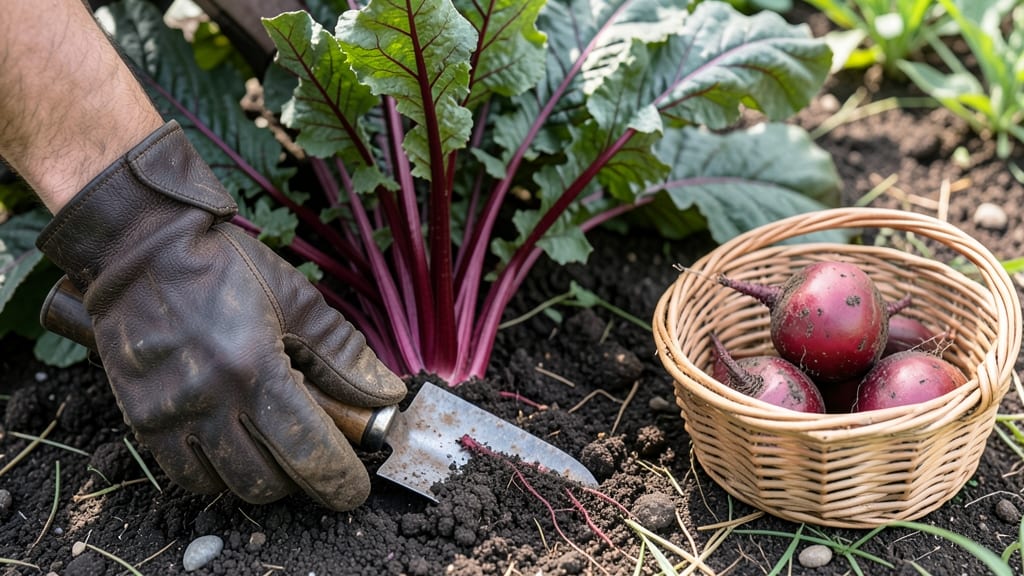
Picking beets from your garden at the right time ensures they're sweet, tender, and packed with flavor—so you’ll want to know when those roots are ready to pull.
Beets are one of the most versatile vegetables in your garden—but harvesting them too early or too late can ruin their flavor and texture. Knowing the exact moment to pull them ensures sweet, tender roots packed with nutrients.
Look for roots that are 1-3 inches in diameter and have deep, vibrant color, whether red, purple, or golden. The foliage should be 4-6 inches tall, and the skin should feel firm when you gently squeeze it.
In this guide, I’ll walk you through the 4 key signs of beet maturity, how to test them without digging up every plant, and the best time of day to harvest for peak flavor.
4 Visual signs your beets are ready for harvest (with size guide)
Harvesting beets at the perfect moment transforms them from earthy roots to sweet, tender delights. The key lies in watching for visual cues that signal maturity—without digging up every plant. Whether you're growing baby beets or full-sized varieties, these signs ensure you pull them at peak flavor and texture.
Beets mature 45 to 70 days after planting, but their ideal harvest window depends on your variety. Baby beets (like 'Babybeat') are ready in just 30 to 40 days, while storage varieties (like 'Detroit Dark Red') need the full 60 to 70 days.
Pay attention to these four visual signs to avoid woody roots or underdeveloped flavors.
📌 Summary Table: When to Pick Beets from Garden
| Sign | Baby Beets (30-40 days) | Mature Beets (55-70 days) | Action |
|---|---|---|---|
| Root Size | ½ to 1 inch diameter | 1 to 3 inches diameter | Harvest when firm to touch |
| Leaf Color | Deep green, 2-3 inches tall | Vibrant green/purple, 4-6 inches tall | Pull before leaves yellow |
| Root Color | Pale but consistent | Deep red/purple/gold | Check for uniform hue |
| Soil Resistance | Gentle push resists | Firm resistance when pushed | Test with finger before digging |
The root size is your first clue. Baby beets should be about ½ to 1 inch in diameter—think of a small golf ball. For mature varieties, aim for 1 to 3 inches, similar to a baseball.
Use a ruler to check diameter if unsure, as oversized roots can become tough and woody.
Leaf color is another reliable indicator. Healthy beet greens should be deep green or purple, not pale or yellowing. If leaves start wilting or turning brown, your beets may be overripe. For baby beets, look for leaves 2 to 3 inches tall, while mature varieties should have foliage 4 to 6 inches tall before harvest.
Don’t overlook the root color underneath the soil. Mature beets develop a rich, consistent hue—deep red, purple, or golden—depending on the variety. If the color is patchy or pale, give them more time.
For baby beets, the color may be lighter but still uniform. This visual cue ensures you’re harvesting beets at their sweetest and most vibrant stage.
My favorite trick? The finger-push test. Gently press the soil near the beet stem with your finger. If the root resists slightly (like pressing a firm ball), it’s ready.
If it gives way easily, it’s underdeveloped. For baby beets, even a light resistance means it’s time to harvest. This method saves you from digging up every plant prematurely.
Timing matters too. Harvest baby beets in the late morning when temperatures are mild, and mature beets in the cool of early evening to preserve sweetness.
Avoid harvesting during heatwaves, as stress can make roots tough. Pro tip: Use a hand fork to loosen soil before pulling to avoid damaging the roots.
Regional differences can affect maturity. In warmer climates (like Zone 8+), beets may mature faster—watch for signs 2 to 3 weeks early. In cooler zones (like Zone 5), they’ll take the full 60 to 70 days. Always adjust based on your local growing season and weather patterns.
Overlooking these signs can lead to woody or bitter beets. For example, leaving storage varieties in the ground too long causes the roots to split or develop a tough skin.
On the flip side, harvesting too early results in small, underdeveloped roots with less flavor. Balance is key—pull them when they’re firm, colorful, and full-sized.
Once you’ve mastered these visual cues, you’ll never second-guess your beet harvest again. The reward? Sweet, tender roots that shine in salads, roasts, or pickled dishes. Happy harvesting—and enjoy the bounty of your garden! 🌱
How to test beet maturity without digging: the finger-push method
Harvesting beets at the perfect time means sweet, tender roots instead of tough or woody ones. The finger-push method lets you check maturity without digging up every plant—ideal for large patches or when you want to leave some growing.
This tactile test works for both baby beets (harvested small) and mature storage beets.
Start by locating the base of the beet leaves where they meet the soil. Here, the root begins to swell—this is your testing zone. The key is to gently press the soil around the stem while observing resistance.
If the soil feels firm but gives slightly, the root is likely ready. For baby beets, you’ll feel a smaller resistance compared to full-sized varieties.
- 1 Locate the stem base where leaves meet soil. Use your fingers to gently press the soil around it.
- 2 Apply firm pressure (about 5 lbs) and feel for resistance. If soil gives slightly, the root is ready.
- 3 For baby beets, aim for 1-2 inches diameter (softer resistance). For storage beets, wait until you feel 3+ inches of firmness.
- 4 Check leaf size: If leaves are 4-6 inches tall and vibrant, the root is likely mature. Pale or yellowing leaves mean it’s overripe.
- 5 Harvest on a cool morning after watering. Grip the leaf base and twist gently to avoid damaging nearby roots.
This method works best when soil is moist but not soggy. If the ground is dry, water it the day before testing for accurate resistance readings.
For heirloom varieties, which often grow larger, wait until you feel a deep, firm resistance—these roots can reach 3-4 inches in diameter.
Pro tip: Test a few plants in your patch to account for uneven growth. If most feel ready but a few don’t, let the laggards mature another 3-5 days. Over-mature beets develop woody cores, so timing is everything for that perfect sweet, earthy flavor.
Once you master this tactile test, you’ll never guess when to harvest again. The finger-push method saves time, preserves root integrity, and ensures your beets are pulled at their peak tenderness—whether you’re growing them for fresh eating or long-term storage.