
Picking
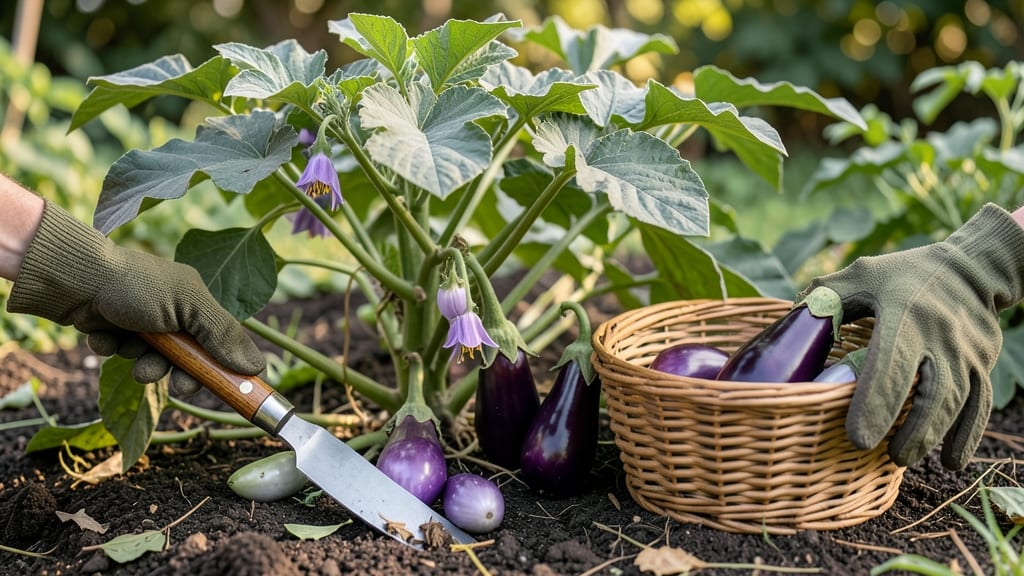
Most gardeners wait for deep color, but that’s just part of the story. The truth? Eggplant ripeness is a mix of size, firmness, and even how the stem snaps.
I’ve harvested too early (mealy texture) and too late (seedy, bitter), and these three simple tests will save you from both mistakes.
In USDA Zone 6a, your eggplant’s peak season runs from July through October, but heat and humidity speed up ripening. Ignore the calendar and focus instead on the glossy skin that resists gentle pressure, the stem that breaks cleanly, and the color that’s deep and even—not pale or streaky.
Below, I’ll walk you through the exact cues to watch for, plus how to adjust for your region’s climate and avoid the two biggest harvest blunders that waste your garden’s hard work.
3 Visual cues to determine when eggplant is ready for harvest
Eggplant ripeness isn’t just about waiting for the fruit to grow big—it’s about catching those subtle visual cues that signal peak flavor and texture. Many gardeners pick too early, resulting in seedy, bitter flesh, or too late, leading to overripe, mealy fruit.
The key lies in three simple but often overlooked visual checks that reveal when your eggplant is truly ready.
First, let’s debunk the myth that eggplants must be fully grown to harvest. Many varieties—especially Asian eggplants—reach peak flavor at smaller sizes. The trick is to focus on color intensity, skin firmness, and stem maturity rather than just fruit dimensions.
These three cues will help you avoid common mistakes and ensure every harvest delivers the tender, sweet flesh you crave.
📋 Summary Table: Eggplant Ripeness Checklist
| Cue | Ready Signs | Not Ready Signs | Action |
|---|---|---|---|
| 🌈 Color | Deep, vibrant hue (purple, white, or variety-specific); glossy finish | Pale, uneven color; dull or patchy appearance | Wait 2-3 days; check for deeper color progression |
| 🤲 Skin Firmness | Firm to touch; resists gentle pressure (no dents) | Soft or dents easily when pressed | Harvest immediately if firm elsewhere; otherwise, wait |
| 🌱 Stem Maturity | Snaps cleanly when bent (no force needed) | Hard to snap; requires significant force | Wait 1-2 days; stem should soften naturally |
Pro Tip: Use a sharp knife to harvest—twisting can damage the plant.
Let’s start with the most obvious cue: color intensity. A ripe eggplant’s skin should be its deepest, most vibrant shade. For classic purple varieties, this means a rich, almost eggplant-black hue without streaks.
White or striped varieties should turn a creamy, consistent white. Avoid harvesting if the color is pale or uneven—this often means the fruit needs more time on the vine.
Next, test the skin firmness with a gentle squeeze. A ripe eggplant should feel firm and slightly glossy, like a ripe avocado. If it leaves a dent when pressed, it’s underripe and needs more time.
Overripe eggplants, on the other hand, may feel saggy or leathery. The goal is that plump, resilient feel—a dead giveaway of peak ripeness.
Here’s a trick most gardeners miss: the stem snap test. Gently bend the stem near the fruit. If it snaps cleanly with minimal force, your eggplant is ready.
If the stem resists or breaks with difficulty, the fruit isn’t mature yet. This test is especially useful for smaller varieties, where size alone isn’t a reliable indicator.
Regional differences matter! In hotter climates (Zones 8-10), eggplants may ripen faster due to higher temperatures. Conversely, in cooler zones (Zones 6-7), they might need an extra week or two. Always adjust your timing based on your local growing conditions—heat accelerates ripening, while cooler temps slow it down.
One common mistake is assuming all eggplants should be harvested at the same size. Asian eggplants, like Fairy Tale or Ichiban, are best picked when 4-6 inches long, while Italian varieties like Black Beauty can wait until 8-10 inches.
Always check the variety’s specific guidelines—they’re your best friend for avoiding bitter surprises.
Finally, never harvest in the heat of the day. Eggplants are sensitive to temperature fluctuations, and picking them when the sun is strongest can cause skin bruising. Aim for early morning harvests when the fruit is cool and firm.
Store them in a shady, well-ventilated spot until you’re ready to use them—this preserves their texture and flavor.
With these three visual cues—color, firmness, and stem maturity—you’ll never second-guess your eggplant harvest again. The next time you’re in your garden, take a moment to check these signs. Your future grilled eggplant parmesan will thank you! 🍆
Common mistakes that ruin eggplant flavor (and how to avoid them)
Even the most experienced gardeners sometimes harvest eggplant too early or too late, sacrificing flavor for convenience. Overripe fruit becomes mealy and bitter, while underripe skin stays tough and pale. These mistakes happen more often than you’d think—especially when you’re eager for a harvest.
The key is understanding the subtle signs of readiness and avoiding common pitfalls that sneak up on gardeners.
One of the biggest mistakes is ignoring the stem snap test. Many gardeners pick eggplant based on size alone, but a flexible stem that snaps cleanly is the true sign of maturity. If the stem resists, your fruit isn’t ready yet.
Similarly, uneven color or pale patches can indicate stress or poor growing conditions, which directly affect taste. Let’s break down these mistakes and how to fix them before your next harvest.
⚠️ When to Pick Eggplant: Critical Mistake Alert
Picking eggplant too late is just as bad as picking too early. Overripe fruit develops a spongy texture and bitter flavor, while the skin may crack or split. If your eggplant has deep wrinkles or soft spots, it’s past its prime. Harvest when the skin is firm and glossy, and the color is deep and consistent—this ensures the best flavor and texture for grilling or roasting.
Another common error is watering inconsistencies. Eggplants need deep, consistent moisture, but many gardeners either overwater (leading to blossom-end rot) or underwater (causing bitter fruit). Aim for 1-2 inches of water per week, delivered in the morning to reduce disease risk.
Mulching around the base helps maintain soil moisture and prevents stress that can ruin flavor.
Environmental factors also play a huge role. Temperature swings or poor soil fertility can make eggplants bitter or tough. If your garden experiences sudden heatwaves, provide shade cloth to protect the plants.
Additionally, balanced fertilization (like a 5-10-10 NPK mix) ensures your eggplants develop sweet, tender flesh. Skip heavy nitrogen feeds—too much green growth at the expense of fruit quality.
Don’t forget the harvest frequency factor. Eggplants produce continuously, and leaving fruit on the vine too long reduces future yields. Pick regularly to encourage more production. If you notice small, misshapen fruit, it might be due to overcrowding or poor pollination.
Hand-pollinate flowers if your garden lacks bees, and prune excess leaves to improve airflow and fruit quality.
Finally, storage mistakes can ruin flavor after harvest. Never store eggplants in the fridge—they’re sensitive to cold and develop off-flavors. Instead, keep them at room temperature (around 60°F) for up to a week.
For long-term storage, wrap them in paper towels and place them in a cool, dark pantry to preserve freshness.