
Picking
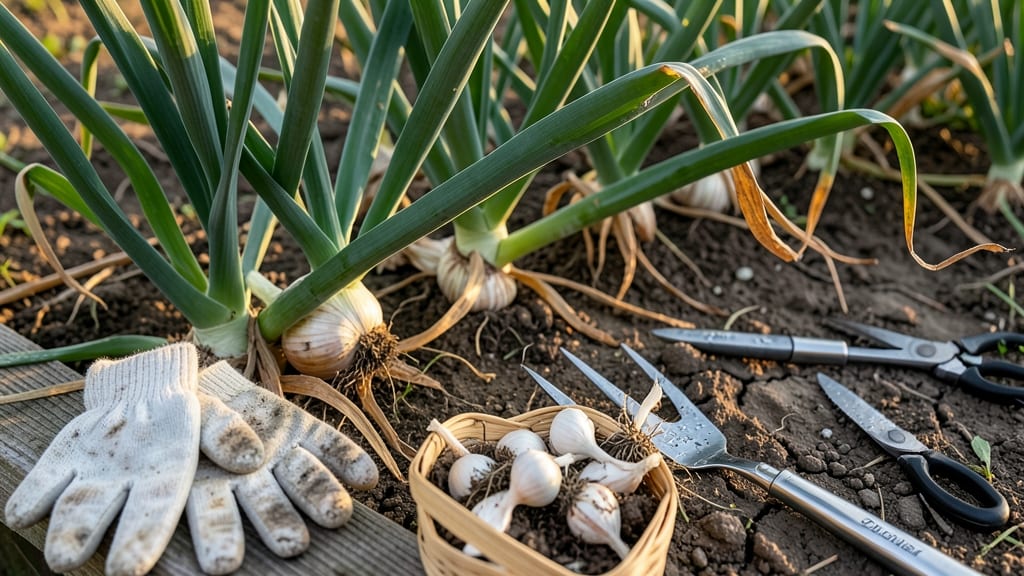
Picking garlic from your garden at the right time means the difference between bold, flavorful bulbs and weak, pithy cloves that won’t store.
Timing your harvest wrong can mean the difference between plump, flavorful bulbs and shriveled disappointment—so knowing exactly when to pick garlic from your garden is a gardener’s secret weapon.
One week early or late, and you’re left with either green, underdeveloped cloves or papery, overmature ones that crumble at the touch.
Most gardeners in Zone 6a should watch for lower leaves browning by late May or early June, but the real test is the squeeze trick: when the bulb feels firm and the paper skin tightens, it’s time.
Miss this window, and you’ll either dig up garlic that won’t store or lose it to rain or pests before it’s ready.
Below, I’ll walk you through the foolproof signs—including the scape trick for bigger bulbs—and how to cure and store your harvest so it stays perfect through winter. No more guesswork, just flavor-packed garlic that’ll make your kitchen (and your neighbors) jealous.
How to tell when garlic is ready to harvest using the squeeze test
Knowing exactly when to pick garlic from your garden can transform your harvest from meager to magnificent. The squeeze test is my foolproof method for determining garlic maturity—no guesswork required.
This simple technique, combined with visual cues like leaf browning and bulb size, ensures you harvest at the perfect moment for maximum flavor and storage life.
Garlic typically reaches harvest readiness between 240-300 days after planting, depending on your climate. In most regions, this falls between late spring and early summer. However, relying solely on days isn't enough—you need to check your plants regularly for these key indicators of readiness.
The squeeze test works by assessing bulb firmness through gentle pressure. When done correctly, this method reveals whether your garlic is still developing or ready to pull. Pair it with other visual cues like lower leaf browning and tight paper skin for absolute confidence in your harvest timing.
How to Use the Squeeze Test for Perfect Garlic Harvest Timing
- Step 1: Check lower leaves for browning. When 50-75% of leaves turn brown and crispy at the base, your garlic is nearing maturity.
- Step 2: Gently squeeze the bulb between your thumb and forefinger. A firm, solid feel means it's ready, while a soft or spongy bulb needs more time.
- Step 3: Inspect the paper skin around the bulb. It should be tight and dry—not loose or wrinkled. This indicates the bulb has stopped growing.
- Step 4: Verify upper leaves remain green. If they've also turned brown, you've waited too long—harvest immediately to avoid bulb deterioration.
- Step 5: Test bulb size by gently digging up one plant. If bulbs are 2-3 inches wide with well-formed cloves, they're harvest-ready.
Timing is everything when harvesting garlic. If you pull bulbs too early, they'll be small and underdeveloped. Harvest too late, and the skins may crack or the cloves won't store well. The squeeze test eliminates guesswork by giving you a tactile confirmation of maturity that visual cues alone can't provide.
For hardneck garlic varieties, which are common in cooler climates, focus on the lower leaves browning first while the upper leaves stay green. Softneck varieties, often grown in warmer regions, may show slightly different signs—watch for the stem end turning brown and the bulb feeling firm to the touch.
Weather plays a crucial role in garlic maturity. Hot, dry conditions can accelerate ripening, while cool, wet springs may delay it. If your region experiences unpredictable weather, perform the squeeze test every 7-10 days during the final month of growth to stay ahead of changing conditions.
Once you've confirmed your garlic is ready using the squeeze test, harvest on a dry, sunny day to allow bulbs to cure properly. Use a garden fork to loosen the soil around the plants, then gently pull them up.
Shake off excess dirt and lay them out to dry in a shady, well-ventilated area for 2-3 weeks before storing.
Pro tip: If you're unsure whether your garlic is ready, harvest a few test bulbs and check their quality. This low-risk approach lets you refine your timing for the rest of your crop.
Remember, perfectly timed garlic will have tight, papery skins and plump, well-formed cloves—the reward for your patience and attention to detail.
Mastering the squeeze test transforms garlic harvesting from a stressful gamble into a predictable, rewarding process. With practice, you'll develop an intuitive sense for when your garlic is at its peak, ensuring a bountiful harvest year after year.
The garlic scapes trick: when and how to harvest for bigger bulbs
If you've ever grown garlic, you know that timing is everything—but there's a hidden trick most gardeners miss. Those curly garlic scapes popping up in late spring aren't just decorative. They're stealing energy from your bulbs.
Removing them at the right time can double your harvest size and boost flavor. The secret? Harvest scapes before they flower, redirecting all that plant power back to your bulbs.
I learned this the hard way—my first year, I let scapes go to seed, only to harvest small, weak bulbs later. Now, I make sure to snip them early, and my garlic bulbs are plump, papery, and full of flavor.
The best part? Those scapes aren't wasted—they're delicious in pesto, stir-fries, or sautéed dishes. It's a win-win for your garden and your kitchen!
🌱 The Garlic Scapes Harvest Timeline
- Step 1: Watch for scape emergence (late spring, when curly stems appear).
- Step 2: Harvest when scapes are 6-8 inches long but before flowering (look for tiny buds).
- Step 3: Snip with clean scissors just above the 4th leaf from the top.
- Step 4: Use immediately or store in the fridge for up to 2 weeks.
- Step 5: Your bulbs will swell faster and taste sweeter!
Here's what I do with my scapes: I chop them into 1-inch pieces and toss them into olive oil with basil for garlic scape pesto. The flavor is milder than garlic but adds a delicate, oniony sweetness that's perfect for pasta or sandwiches.
If you're not into cooking, don't worry—scapes also make great compost or mulch for your garden beds.
One common mistake I see is waiting too long to harvest scapes. If you let them flower and seed, your bulbs will stop growing and may even shrink. The key is to act fast—as soon as you see those curly stems, grab your shears.
Pro tip: Harvest on a dry morning so the scapes stay crisp for longer.
For gardeners in warmer climates, scapes may appear earlier—sometimes as early as April. In cooler zones, you might not see them until June. Pay attention to your local frost dates and plant maturity.
If your garlic is hardneck variety, scapes are a must-harvest. Softneck varieties usually don't produce scapes, so focus on bulb health instead.
After removing scapes, give your garlic a light feeding with compost or a balanced fertilizer to encourage bulb growth. Keep watering consistently but avoid overwatering—garlic hates soggy soil.
In about 6-8 weeks, your bulbs will be ready for harvest, and you'll notice a big difference in size compared to years you skipped scape removal.