Picking
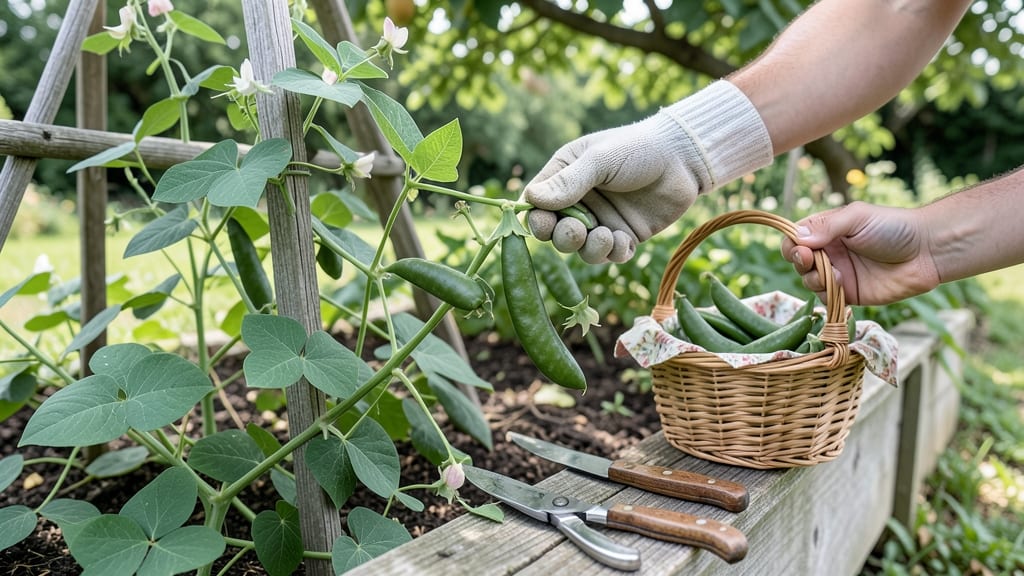
To pick peas from your garden at their sweetest, time it right—when pods are 2-3 inches long and bright green, before the seeds inside swell too large.
Peas straight from your garden taste nothing like store-bought—sweet, tender, and bursting with freshness—but only if you harvest them at the perfect moment. Miss the window, and you’ll end up with tough, mealy pods that ruin even the best homegrown harvest.
Checking your 🌱 peas every 2-3 days during their 60-70 day growing season ensures you catch them at peak ripeness. The key? Look for pods that snap easily when bent and have just a hint of plumpness.
In this guide, I’ll walk you through simple tests to determine the best time to harvest, how weather affects sweetness, and what to do if you pick them too early or too late.
3 Simple visual and tactile tests to harvest peas at peak ripeness
Knowing exactly when to pick peas from your garden transforms your harvest from bland to exceptionally sweet. Unlike store-bought peas, homegrown varieties peak in flavor when harvested at the right stage—before they toughen or lose sweetness.
The key lies in three simple tests: pod size, color, and texture. Master these, and you’ll enjoy peas that are crisp, tender, and packed with garden-fresh flavor every time.
Pea pods mature quickly, often in just 24-48 hours, so checking your plants every 2-3 days is essential. Many gardeners make the mistake of waiting too long, assuming bigger pods mean better peas.
In reality, overripe peas develop starchy, mealy interiors and tough skins. Let’s break down the foolproof tests to ensure you never miss the perfect harvest window again.
🌱 numbered-highlights
Look for pods that are 2-3 inches long and plump. Use a ruler for reference—most varieties reach ideal size when they’re about the length of your thumb from knuckle to tip.
Pea pods should be bright green and glossy, not dull or yellowing. Dwarf varieties like ‘Sugar Snap’ may stay slightly lighter, but they should never appear pale or waxy.
Gently squeeze the pod—it should feel firm and crisp, like a fresh green bean. If it’s soft or mushy, it’s past its prime. For shelling peas, the pod should snap easily when bent slightly.
For shelling peas like ‘Green Arrow’, focus on pods that are fully swollen but where the peas inside are still small and tender. If you see the peas inside filling more than half the pod, it’s time to harvest before they crowd each other.
Varieties like ‘Sugar Snap’ and ‘Snow Peas’ should be picked when the pods are flat and crisp, as their edible pods are the star.
Another pro tip: Check for seed visibility through the pod’s thin skin. If you can see the peas clearly but they’re still small and round, that’s your cue to pick. Overripe peas will have large, hard seeds that dominate the pod, making the entire harvest bitter and tough.
I once waited too long with my ‘Oregon Sugar Pod’ peas, and the difference in texture between the perfect pods and the overripe ones was night and day.
Don’t rely solely on days since planting—environmental factors like temperature and rainfall can speed up or slow down maturation. Cooler weather, for example, often results in slower growth, so your pods may stay tender longer.
Conversely, hot spells can cause peas to mature faster. Keep an eye on your plants and adjust your harvesting schedule accordingly.
One common mistake is harvesting only the largest pods, assuming they’re the ripest. In reality, peas mature unevenly on the same plant. I recommend running your fingers along the vines every few days, checking pods from top to bottom.
This ensures you don’t miss hidden gems while also preventing overripe pods from sapping energy from the rest of the plant.
Once you’ve mastered these tests, you’ll notice a dramatic improvement in both flavor and texture. Freshly picked peas should be crunchy with a snap and release their sweet aroma when shelled.
Store them in the fridge for up to 5 days in a perforated bag, or blanch and freeze for long-term storage. The key is consistency—harvest frequently to encourage more production.
If you’re growing multiple pea varieties, like both shelling and snap peas, keep a small notebook nearby to track which pods are ready on each plant. This simple habit saves time and ensures you’re always picking at peak ripeness.
With these tests in your gardening toolkit, you’ll never again wonder when to pick peas from your garden—just act on what you see and feel.
🌱
Best time of day and seasonal factors that affect pea harvesting
Timing matters more than you might think when harvesting peas—morning harvests yield the sweetest, crispest pods because cooler temperatures preserve their natural sugars. The 2-3 hours after sunrise window is ideal since peas lose sweetness as they warm up during the day.
Seasonal factors also play a crucial role: spring-planted peas (March-April) typically reach harvest by late May to June, while fall varieties planted in August mature by October-November. These windows align with USDA Zone 6a's 165 frost-free days, giving peas enough time to develop before cold snaps arrive.
Temperature extremes can ruin your harvest—heatwaves above 85°F cause peas to toughen and lose flavor, while prolonged rain dilutes their sweetness and risks fungal diseases. Aim to harvest during 55-75°F days for peak quality, and always check pods after 24+ hours of dry weather to avoid soggy harvests.
| Factor | Optimal Conditions | Impact of Deviation |
|---|---|---|
| Time of Day | Morning (6-9 AM) | Afternoon heat reduces sweetness |
| Seasonal Window | Spring: May-June / Fall: Oct-Nov | Early/late harvests risk frost damage |
| Temperature | 55-75°F | Above 85°F causes tough pods |
| Rainfall | <24 hours dry before harvest | Prolonged rain dilutes flavor |
| Variety Maturity | Dwarf: 60 days / Climbing: 70 days | Overripe peas develop bitter seeds |
Not all pea varieties mature at the same pace—dwarf varieties like 'Little Marvel' reach harvest in 60 days, while climbing types like 'Sugar Snap' take 70 days. Check seed packets for days-to-maturity labels and adjust your planting schedule accordingly to avoid staggered harvests that complicate timing.
Regional microclimates also affect ideal harvest windows. In cooler northern zones, peas may mature 2-3 weeks earlier than southern gardens where extended heat delays development. Always monitor your local frost dates and adjust planting to ensure harvest occurs before the first frost.
Pro tip: Harvest every 2-3 days during peak production to encourage continuous flowering and pod development. The more consistently you pick, the sweeter your peas will stay—overloaded vines produce fewer, less flavorful pods as they prioritize seed development over sweetness.