
Picking
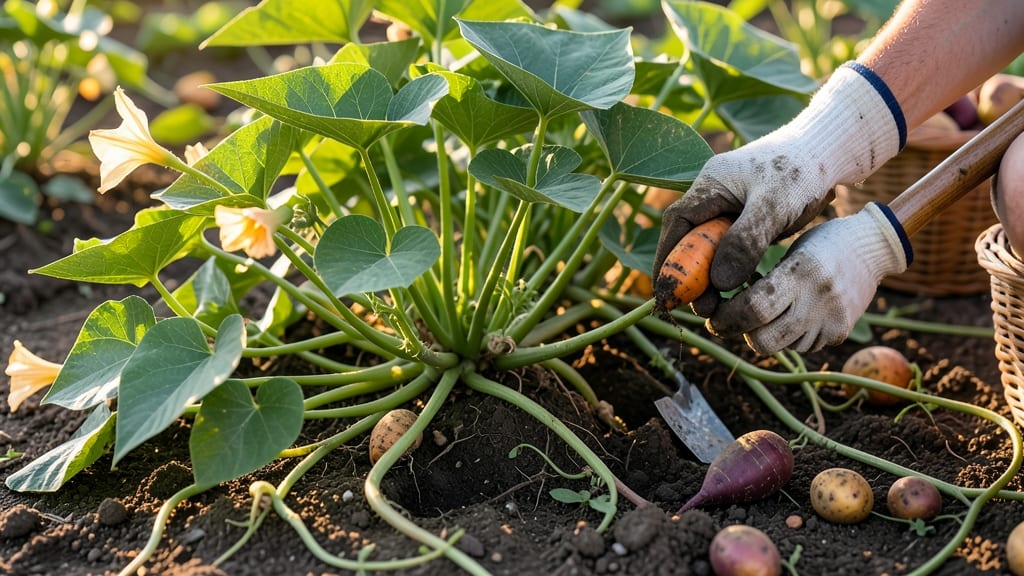
To pick sweet potatoes from the garden at their sweetest, watch for yellowing vines and firm skin—these are the two clearest signs they’re ready to harvest.
Sweet potatoes left in the ground too long become woody and lose their velvety sweetness—but harvest them too early, and you’ll get bitter, underdeveloped tubers. Timing is everything, and these visual cues will help you master the perfect harvest window.
In cooler zones like USDA 6a, wait until after the first frost when leaves turn crispy and brown. Warmer climates can harvest earlier, but always check for tough skin and loose soil—the two foolproof tests.
Below, I’ll break down the exact steps to test maturity, avoid common mistakes, and store your harvest for maximum flavor and shelf life.
How to test sweet potato maturity using skin color and soil resistance
Harvesting sweet potatoes at the right time ensures maximum sweetness and tender texture. The two most reliable indicators are skin firmness and soil resistance. These methods work across USDA Zones 6-10, though timing may shift slightly based on your local climate.
For example, in Zone 9, you might harvest a few weeks earlier than in Zone 7.
First, focus on the vine health. When 90% of the vines turn yellow and crispy, it’s a strong sign. This usually happens 10-14 days before the sweet potatoes reach peak maturity.
However, don’t rely solely on the vines—some varieties like Beauregard may drop leaves earlier than others like Jewel.
Next, perform the finger test, which checks for skin toughness. Press your fingernail into the skin near the shoulder of a tuber. If it doesn’t puncture easily and feels firm, the sweet potato is ready.
Soft skin means it needs more time in the ground, while overly hard skin could indicate it’s past its prime.
The soil resistance test is equally critical. Gently loosen the soil around the plant’s base with your fingers. If the tubers resist pulling and the soil clings lightly, they’re mature.
If they slide out effortlessly, they’re underdeveloped. In sandy soil, this test is trickier—you may need to dig slightly deeper to find resistance.
🌱 Step-by-Step: When to Pick Sweet Potatoes
- 1 Check vine color: 90% yellow and crispy means it’s time to test maturity.
- 2 Perform the finger test: Press your fingernail into the skin—if it doesn’t puncture, the tuber is ready.
- 3 Test soil resistance: Loosen soil near the base—if tubers resist pulling, they’re mature.
- 4 Dig carefully: Use a fork or hands to avoid damaging tubers. Aim for 2-4 inches in diameter for ideal size.
- 5 Adjust for climate zones: In warmer zones (9-10), harvest 2-3 weeks earlier than in cooler zones (6-7).
Seasonal variations play a key role in timing. In shorter growing seasons (Zones 6-7), aim to harvest by late September to avoid early frost, which can damage tubers still in the ground.
In longer seasons (Zones 8-10), you can wait until October or November, but monitor for soil moisture—dry spells can stress the plants.
For early-season varieties like Georgia Jet, harvest as early as 90 days, while late-season types like Centennial may take up to 140 days. Always dig a few test tubers to check maturity before committing to a full harvest.
This minimizes waste and ensures you’re picking at the peak of flavor.
After harvesting, let the sweet potatoes cure in warm conditions (80-85°F) for 5-10 days to develop their sweetness and skin toughness. Store them in a cool, dry place (55-60°F) with good airflow to prevent rot.
Proper curing and storage can extend their shelf life for up to 6 months.
Remember, over-maturity leads to woody tubers, while under-maturity results in bitter, small harvests. By mastering these two tests—skin firmness and soil resistance—you’ll consistently harvest sweet potatoes at their sweetest and most tender.
Sweet potato harvesting mistakes that ruin your crop (and how to avoid them)
Harvesting sweet potatoes at the wrong time or with poor technique can turn your hard work into bitter, shriveled tubers. Even experienced gardeners make these critical mistakes, often without realizing it. The key is understanding when to pick and how to handle them post-harvest to preserve sweetness and texture.
One of the biggest blunders is harvesting based on calendar dates instead of plant signals. Sweet potatoes mature at different rates depending on your USDA zone and variety. For example, Jewel varieties may be ready in 90 days, while Beauregard can take up to 140 days.
Ignoring these timelines leads to either underdeveloped or overripe tubers.
⚠️
Sweet potatoes need full maturity for maximum sweetness. Harvesting when leaves are still green and healthy (underripe) results in bitter, small tubers. Waiting until after frost (overripe) turns them woody and starchy. The perfect window is when vines yellow and die back, skin toughens, and tubers are 2-4 inches wide.
Pro Tip: Perform the finger test - press a fingernail into the skin. If it doesn't puncture easily, it's ready!
Another common mistake is using improper tools during harvest. Digging with sharp shovels can pierce tubers, creating entry points for rot. Instead, use a broadfork or garden fork to gently loosen soil around the plant base. This preserves the skin integrity while making extraction easier.
Many gardeners overlook the curing process, which is essential for developing flavor and shelf life. After harvesting, sweet potatoes need 10 days at 80-85°F and 80% humidity. Skip this step, and your tubers will store poorly, sprouting early or developing soft rot.
Cure them in a well-ventilated box or on a mesh rack in a sunny garage.
Improper storage is the final downfall for many harvests. Storing sweet potatoes in the refrigerator converts starches to sugars, making them grainy and bland. Instead, keep them in a cool, dark place (like a root cellar) where temperatures stay between 55-60°F.
With proper storage, your harvest can last 4-6 months without losing quality.
By avoiding these harvesting mistakes—timing, tools, curing, and storage—you'll enjoy sweeter, longer-lasting sweet potatoes straight from your garden. The secret lies in patience and precision, not just luck! 🍠