Planting
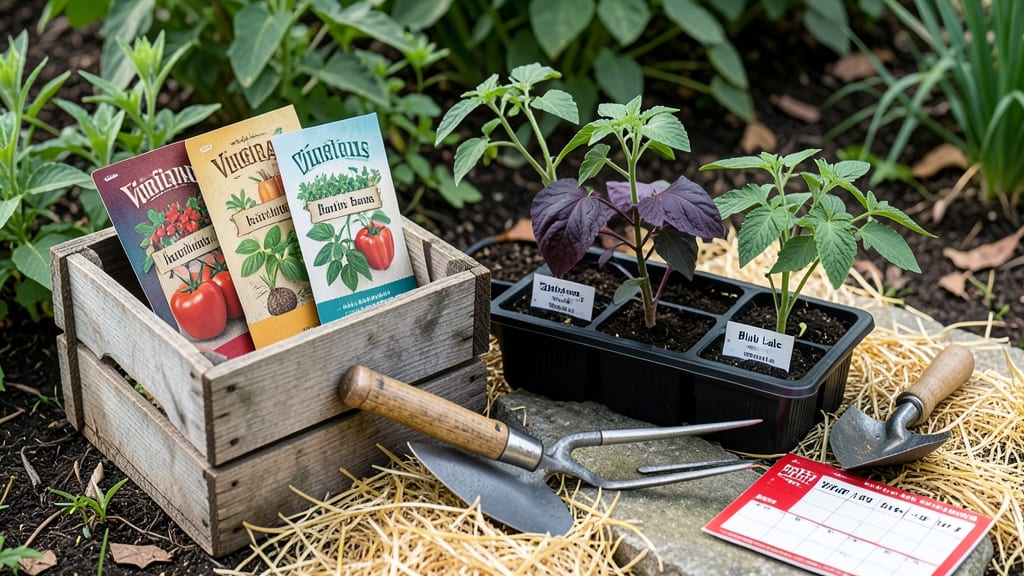
Planting a garden in Virginia depends on knowing when to plant for your specific USDA zone, since timing can make or break your harvest.
Virginia’s diverse climate—from the mountains to the coast—means your garden’s success hinges on timing. Plant too early, and frost will strike; too late, and your harvest will lag behind.
In USDA zones 5b through 8a, cold-hardy crops like kale, spinach, and peas thrive when planted in early spring, while tomatoes and peppers need to wait until after the last frost—usually mid-April in the Piedmont and late March on the coast.
Here’s your step-by-step guide to Virginia’s planting schedule, including soil prep tips and microclimate adjustments to maximize your garden’s potential.
Virginia’s planting zones & best times for cold-hardy crops (Zone 5-8)
Virginia’s USDA zones 5-8 create a unique gardening puzzle—mountain regions like Roanoke (Zone 6) can have earlier springs than coastal Norfolk (Zone 8), where humidity delays planting. Understanding your last spring frost and first fall frost dates is critical.
For example, Roanoke’s average last frost is April 15, while Norfolk’s is March 15, a full month difference!
Cold-hardy crops like kale, spinach, and peas thrive when planted 4-6 weeks before your last frost. In Richmond (Zone 7b), that means starting seeds indoors by February 15 for an early spring harvest.
Meanwhile, potatoes and broccoli prefer cooler soil, so wait until 2 weeks after your last frost to plant them directly.
Here’s your Virginia frost date cheat sheet by region, plus ideal planting windows for your top cold-hardy crops:
| Region | Last Spring Frost | First Fall Frost | Peas (Direct Sow) | Spinach (Transplant) | Broccoli (Start Indoors) |
|---|---|---|---|---|---|
| Roanoke (Zone 6b) | April 15 | October 30 | March 1 - April 15 | March 15 - April 30 | February 15 - March 15 |
| Richmond (Zone 7b) | March 25 | November 10 | February 15 - April 15 | February 28 - April 30 | January 31 - March 15 |
| Norfolk (Zone 8a) | March 15 | November 25 | January 15 - April 15 | February 15 - May 1 | January 1 - February 28 |
For potatoes, aim to plant 2-4 weeks after your last frost. In Zone 5 (like Blacksburg), that’s May 1, while Zone 8’s Norfolk can start as early as March 20. Use finger-length potato pieces with at least 2 eyes for faster sprouting.
Extend your season with row covers or cold frames. These let you plant spinach or kale as early as February in Zone 7 or even January in Zone 8. Just remove covers when temps hit 80°F to avoid overheating.
Pro tip: Soil temperature matters more than air temperature. Use a soil thermometer—most cold-hardy crops need soil at 40-50°F to germinate. In Virginia’s humid climate, mulch heavily to retain moisture and prevent bolting in greens like spinach.
Don’t forget fall planting! Broccoli and kale love cool weather and can be sown 8-10 weeks before your first frost. In Richmond, that’s August 15 for a winter harvest. Use straw mulch to protect young seedlings from early fall frosts.
If you’re in Zone 5 (like the Shenandoah Valley), err on the side of planting later—those early springs can bring unpredictable frosts. For Zones 7-8, start seeds indoors early to beat the heat and humidity that slows germination.
For peas, choose sugar snap or snow peas for Virginia’s climate—they tolerate humidity better than garden peas. Plant them every 2 weeks for a staggered harvest, and use trellises to save space and improve air circulation.
Track your local frost dates using the Virginia Cooperative Extension’s frost maps (vce.psu.edu) and adjust your schedule yearly. With these cold-hardy crops timed just right, you’ll enjoy fresh harvests from early spring to late fall! 🌱
Warm-season starts: when to plant tomatoes, peppers, and cucumbers in Virginia
Virginia’s warm-season crops like tomatoes, peppers, and cucumbers thrive when soil temperatures hit 60°F or higher.
In most of Virginia’s USDA zones 5-8, this means waiting until after the last frost date, typically mid-April to early May in the Piedmont and late April to early June in the mountains. Coastal areas can plant slightly earlier due to milder winters.
For transplants, start seeds indoors 6-8 weeks before your expected last frost date. This gives seedlings a head start and helps them catch up to direct-sown plants. If you’re sowing seeds directly, wait until soil is consistently 60°F+—test with a soil thermometer to avoid stunted growth.
⚠️ callout-warning ⚠️
Before planting, amend your soil with compost or aged manure to boost fertility—these crops are heavy feeders. Add a balanced fertilizer (10-10-10) at planting time, then side-dress with nitrogen-rich amendments every 3-4 weeks. Mulch heavily with straw or grass clippings to retain moisture and prevent blossom-end rot, a common issue in Virginia’s hot, humid summers.
For tomatoes, choose determinate varieties (like 'Celebrity') for earlier harvests or indeterminate types (like 'Sungold') for prolonged production. Peppers need consistent warmth—plant bell peppers slightly later than hot peppers, as they’re more sensitive to cool soil. Cucumbers thrive in trellises to improve air circulation and reduce disease risk.
Watch for bolting (premature flowering) if temps spike too early—this is common in Virginia’s unpredictable spring.
If seedlings bolt, pinch off flowers to redirect energy to leaf and stem growth. Water deeply in the morning to prevent fungal diseases like early blight, which thrives in Virginia’s humid summers. Drip irrigation is ideal to keep foliage dry.
Harvest tomatoes when they’re fully colored and slightly soft to the touch, peppers when firm and glossy, and cucumbers when 3-6 inches long. In Virginia’s Zone 7-8, you can extend the season by planting succession crops every 2 weeks until mid-July for a continuous harvest.