
Tools
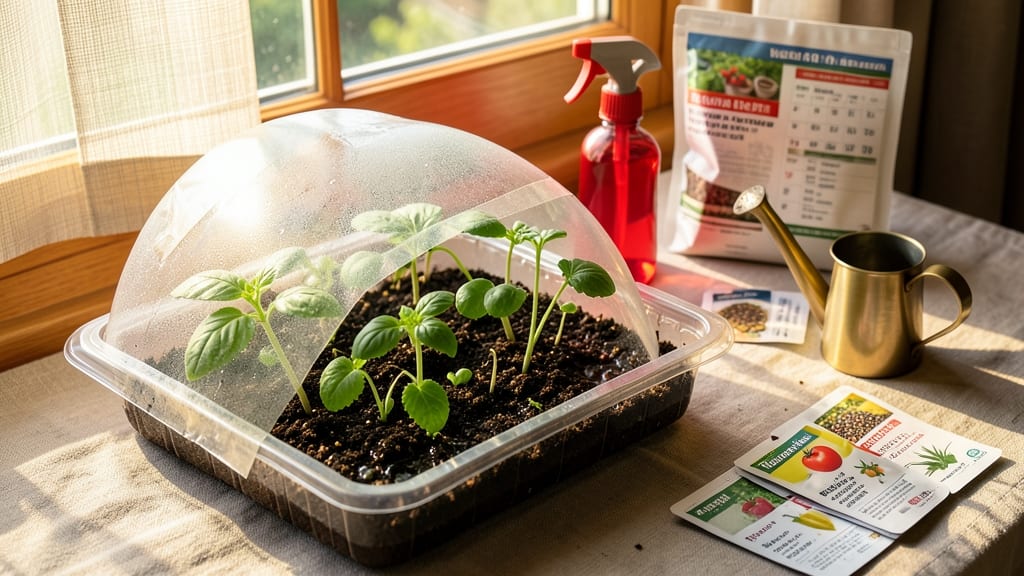
To start garden seeds at the right time means avoiding weak seedlings or missed harvests—timing is the difference between thriving plants and wasted effort.
Picture this: you’ve got your seed trays ready, the soil is perfect, and you’re eager to see those first green shoots. But if you plant too early, your seedlings will outgrow their containers before they’re ready to go outside.
Too late, and you’ll be scrambling to find transplants or watching your warm-season crops bolt before they produce.
In Zone 6a, where last frost typically hits around April 15, the best indoor starting window depends on the plant.
Cool-season crops like lettuce or peas can begin indoors as early as February, while heat-lovers like tomatoes or peppers need a March start to mature in time for transplanting.
Below, I break down exactly when to start your General Garden Seeds 🌱—indoor timing by plant type, how to adjust for early or late seasons, and the 3 key factors that determine success (hint: it’s not just about frost dates).
Indoor seed starting calendar by plant type for optimal transplant timing
Starting seeds indoors gives you a head start on the growing season, but timing is critical. If you plant too early, seedlings will become overcrowded or leggy; too late, and they won't be ready when it's safe to transplant outdoors.
The key is matching your indoor seed-starting window with your last frost date and the maturity timeline of each plant type.
For example, cool-season crops like lettuce and spinach can handle frost, so you can start them indoors 8-10 weeks before last frost. Meanwhile, warm-season crops such as tomatoes and peppers need to wait until after the last frost, so you'll start them indoors 6-8 weeks before transplanting.
Below, I’ve broken down the best times to start seeds indoors for popular vegetables, herbs, and flowers, using USDA Zone 6a as a reference (adjust for your zone).
For cool-season crops, like lettuce and broccoli, I recommend starting seeds indoors 8-10 weeks before your last frost date. These plants thrive in cooler temperatures and can even handle a light frost, so they’re perfect for early spring planting.
For example, if your last frost is April 15, aim to start these seeds around February 15.
On the other hand, warm-season crops such as tomatoes and peppers need to wait until the soil is warm enough to avoid stunted growth.
Start these indoors 6-8 weeks before transplanting, which typically means mid-March to early April for Zone 6a. If you’re in a cooler zone, extend the indoor time slightly to ensure seedlings are robust enough for outdoor conditions.
Herbs like basil are heat-loving and should only be started indoors 4-6 weeks before last frost, as they won’t tolerate cold temperatures. Meanwhile, cilantro and dill prefer cooler weather, so start them indoors 6-8 weeks before last frost to avoid bolting (flowering prematurely) in the heat.
Flowers like marigolds and petunias can be started indoors 6-10 weeks before last frost, depending on your desired bloom time. If you want vibrant summer blooms, aim for the earlier end of this window.
For annuals with longer maturity times, like snapdragons, start them indoors 8-10 weeks before last frost to ensure they have enough time to establish and flower.
Root vegetables like carrots and radishes are best direct-sown outdoors, but if you’re starting them indoors, do so 4-6 weeks before last frost. These plants have delicate root systems, so handle seedlings with care when transplanting to avoid damaging the roots.
For beets and turnips, you can also start them indoors, but they’re often more successful when sown directly into the garden.
Pro tip: Always check your seed packet instructions for specific recommendations, as some varieties may have unique needs. Adjust your indoor seed-starting timeline based on your USDA hardiness zone—cooler zones may need an earlier start, while warmer zones can delay slightly.
With this calendar, you’ll have healthy, vigorous seedlings ready to thrive in your garden when the time is right! 🌱
Key factors that determine the best time to start seeds indoors
Determining the perfect time to start seeds indoors isn't just about flipping a calendar—it's a mix of science, strategy, and a little bit of local know-how. Your climate zone sets the baseline, but seed packet instructions and plant growth habits fine-tune the timing.
For example, tomatoes and peppers need a long indoor head start, while basil and marigolds can wait until after your last frost date. Ignore these factors, and you risk overcrowded trays or leggy seedlings that struggle to thrive outdoors.
First, locate your USDA hardiness zone—this tells you your average last frost date, the critical benchmark for most indoor seed starting.
In Zone 6a, for instance, you’ll likely aim for March to early April starts, but adjust if you’re in a warmer (Zone 8+) or colder (Zone 4) region.
Seed packets often suggest a range (like "start 6-8 weeks before last frost"), but fast germinators (e.g., radishes) can go in later, while slow growers (e.g., trees) need an earlier jumpstart.
- Climate Zone: Your last frost date is the anchor. Use Zone 5-7 as a midpoint—adjust ±2 weeks for colder/warmer zones.
- Seed Packet Math: Subtract days to maturity from your frost-free window. Example: 90-day tomatoes in Zone 6a → start by March 1 (180 days - 90 days).
- Growth Speed: Fast germinators (e.g., lettuce) can wait until 4-6 weeks before frost. Slow growers (e.g., broccoli) need 8+ weeks.
- Avoid Overcrowding: Seedlings need 12+ hours of light daily. Too early starts = leggy, weak plants. Use grow lights if natural light is insufficient.
- Transplant Readiness: Harden off seedlings 1-2 weeks before outdoor move. Skip this, and you risk shocked plants that wilt in the garden.
One of the biggest mistakes I see is blindly following a generic seed-starting chart without accounting for your local microclimate. For instance, if you’re in a valley or near a large body of water, frost dates can shift by 1-2 weeks.
Always cross-reference seed packet instructions with your local frost data—tools like the Old Farmer’s Almanac or NOAA provide hyper-local insights. Pro tip: Cold-hardy crops like kale or spinach can handle light frosts, so you might start them 6-8 weeks before frost and transplant earlier.
Don’t overlook the lighting conditions in your home—this is where many gardeners trip up. A south-facing window might seem ideal, but most homes don’t get enough intense sunlight for robust seedlings. If your windowsill is dim, supplement with LED grow lights (12-16 hours/day) to prevent etiolation (those sad, stretched seedlings).
I once started peppers under a north-facing window and ended up with 3-foot-tall sticks—a lesson in humility! Test your light setup with a light meter or by observing how fast a seedling grows compared to one under ideal conditions.
Finally, plan for seedling care logistics. Starting seeds too early means you’ll be juggling overcrowded trays for months, which increases the risk of damping off (a fungal disease that kills seedlings).
A good rule of thumb: Start your last batch of seeds 4-6 weeks before your final transplant date, spacing out starts by 2-3 weeks for a staggered harvest.
For example, if you’ll transplant tomatoes on May 1, start your first batch by March 15, the second by March 30, and the third by April 15. This ensures you’re not overwhelmed with seedlings at once.
Mastering indoor seed starting is about balancing patience and precision. Start too early, and you’ll waste space and resources; too late, and your plants won’t mature in time.
But with these key factors in mind—climate zone, seed instructions, growth speed, and lighting—you’ll create a schedule that works for your garden’s unique rhythm. Happy planting! 🌱