Tools
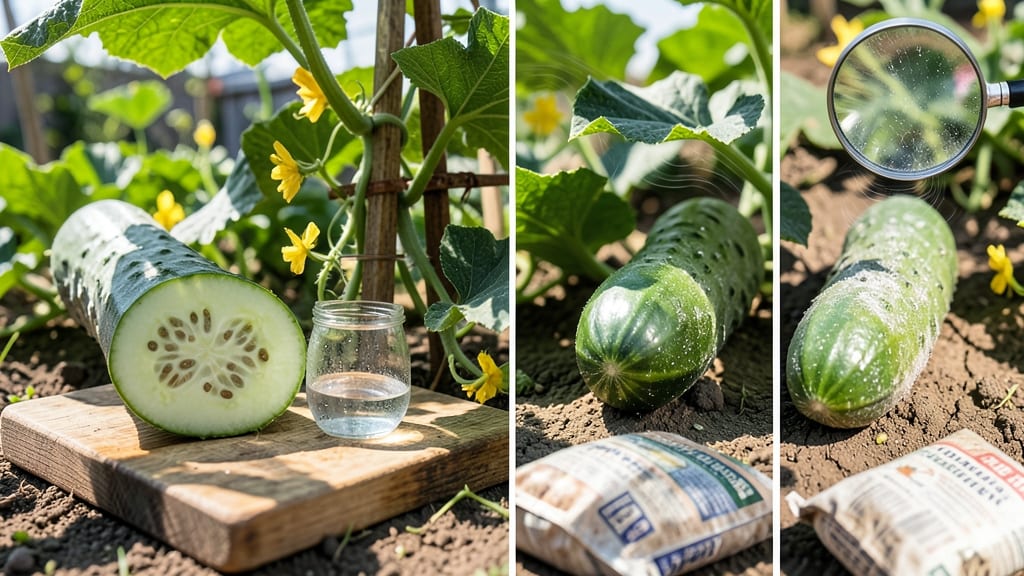
Your garden cucumbers 🥒 taste bitter because they’re either overripe, stressed by heat, or starved for water—and the fix is easier than you think.
Picture this: you’ve spent weeks tending to your vines, only to bite into a cucumber that tastes like soap or worse. That sharp flavor isn’t just a quirk of nature—it’s a cry for help from your plants.
The good news? Most causes are preventable, and once you know the triggers, you can turn bitter harvests into sweet, crisp rewards.
Overripe cucumbers develop bitterness as they age, but heat stress and uneven watering play just as big a role. Even something as simple as harvesting at the wrong time can turn your garden gold into disappointment.
Below, I’ll break down the fast fixes for each issue, so you can enjoy cucumbers that taste fresh off the vine.
Ready to save your harvest? You’ll learn how to spot the perfect picking window, adjust your watering routine, and even choose the right cucumber varieties to keep bitterness at bay. Let’s get your garden back on track!
4 Common reasons your garden cucumbers taste bitter (and how to fix them)
There’s nothing worse than biting into a cucumber you grew yourself—only to be met with an unpleasant bitter taste. This common issue frustrates even experienced gardeners, but the good news is that bitterness usually stems from controllable factors.
Whether your cucumbers are overripe, struggling with heat stress, or lacking proper nutrients, we’ll break down the top causes and how to fix them for a sweet, crisp harvest.
Cucumbers develop bitterness when they produce cucurbitacin, a natural compound that acts as a defense mechanism against pests and stress. While small amounts are harmless, excessive bitterness ruins the flavor.
The key to prevention? Understanding the environmental triggers and adjusting your care routine accordingly. Let’s dive into the most common culprits and how to tackle them head-on.
🌱 Why Are My Garden Cucumbers Bitter?
- 1. Overmaturity: Leaving cucumbers on the vine too long triggers cucurbitacin buildup. Harvesting at the right stage is critical.
- 2. Heat Stress: Extreme temperatures (above 90°F) cause plants to produce bitter compounds as a survival mechanism.
- 3. Poor Soil Conditions: Low nitrogen or compacted soil stresses plants, leading to bitterness. Test your soil pH (ideal: 6.0-6.8).
- 4. Inconsistent Watering: Fluctuating moisture levels (drought followed by heavy watering) shocks the plant, prompting bitter flavor development.
Each of these issues is fixable with targeted adjustments to your growing routine. Let’s address them one by one!
Let’s start with the most common offender: overmaturity. Cucumbers are fast-growing but have a short window between peak ripeness and bitterness.
If you’re harvesting once a week and still getting bitter cucumbers, you’re likely leaving them on the vine too long. Slicing cucumbers should be harvested at 6-8 inches, while pickling varieties can wait slightly longer (up to 4 inches).
Use a sharp knife to cut them cleanly, leaving a small stem to prevent rot.
To combat overmaturity, set a harvest schedule and check your plants every 2-3 days. Look for deep green color, firm texture, and a yellowing stem end—these are signs of readiness.
If you’re busy, consider planting bush varieties like ‘Bush Champion,’ which produce fruit closer to the ground and ripen more uniformly. Regular harvesting also encourages the plant to produce more cucumbers, reducing the risk of bitterness in the remaining fruit.
Next up is heat stress, a sneaky culprit that often flies under the radar. Cucumbers are cool-season crops at heart and struggle when temperatures exceed 90°F. During heatwaves, plants ramp up cucurbitacin production as a defense against wilting and pest damage.
To mitigate this, provide shade cloth (30-50% coverage) during peak afternoon sun. You can also mulch heavily with straw or grass clippings to keep roots cool and retain moisture.
Another effective strategy is to water deeply in the morning to help the plant endure the heat. Avoid overhead watering in the evening, as damp foliage can lead to fungal diseases like powdery mildew, which further stress the plant.
If your garden is in a hot climate, consider growing heat-tolerant varieties like ‘Straight Eight’ or ‘Marketmore 76,’ which handle higher temperatures better than standard types.
Poor soil conditions often go unnoticed until they manifest as bitter cucumbers. Cucumbers thrive in well-draining, nutrient-rich soil with a pH between 6.0 and 6.8. If your soil is compacted or lacks organic matter, roots struggle to absorb water and nutrients, triggering stress responses.
Test your soil with a home kit or send a sample to your local cooperative extension service for a detailed analysis.
If your soil is lacking, amend it with compost or aged manure before planting. For an immediate boost, side-dress with a balanced fertilizer (10-10-10) when flowers appear. Avoid over-fertilizing with nitrogen, as this can lead to leafy growth at the expense of fruit quality.
Instead, focus on a moderate nitrogen supply combined with phosphorus and potassium to support both foliage and fruit development.
Lastly, inconsistent watering is a major contributor to bitterness. Cucumbers have shallow roots and require consistent moisture to thrive. Fluctuations—like drought followed by sudden heavy watering—shock the plant and trigger cucurbitacin production.
To prevent this, water deeply 1-2 times per week (or daily in extreme heat) and mulch around the base to retain moisture and regulate soil temperature.
Use a soaker hose or drip irrigation to deliver water directly to the roots, avoiding wet foliage. If you’re using a sprinkler, water early in the morning to allow leaves to dry quickly.
Keep an eye on the top 1-2 inches of soil—it should stay moist but not soggy. During dry spells, consider container growing with self-watering pots to maintain consistent moisture levels.
How to harvest cucumbers at the perfect stage to avoid bitterness
Timing is everything when it comes to harvesting cucumbers. If you wait too long, those crisp, sweet cucumbers can turn bitter and tough. The key is to pick them at the right stage—when they’re firm, vibrant, and full of flavor.
For most varieties, this means harvesting when cucumbers are 6-8 inches long and still deep green with a slight sheen. The stem end should turn from green to yellow or brown, signaling they’re ready to be picked.
Different cucumber varieties have slightly different ideal harvest windows. Slicing cucumbers like 'Straight Eight' or 'Marketmore' should be harvested when they’re 6-8 inches long and still firm. On the other hand, pickling cucumbers like 'Boston Pickling' or 'Calypso' are best when they’re 2-3 inches long and bright green.
Harvesting at the right time prevents bitterness and ensures a steady supply of fresh, tender cucumbers.
| Variety Type | Ideal Size | Color | Stem End | Days to Harvest |
|---|---|---|---|---|
| Slicing (e.g., 'Straight Eight') | 6-8 inches | Deep green | Yellow/brown | 50-60 days |
| Pickling (e.g., 'Boston Pickling') | 2-3 inches | Bright green | Green/yellow | 45-55 days |
| English (e.g., 'Burpless') | 8-12 inches | Dark green | Yellow/brown | 60-70 days |
| Lemon (e.g., 'Lemon Cucumber') | 3-5 inches | Yellow/green | Yellow/brown | 50-60 days |
To test if a cucumber is ready, gently press your thumb against its skin. If it feels firm but yields slightly, it’s perfect for picking. If it’s rock-hard or too soft, it’s past its prime.
Overripe cucumbers develop a woody texture and bitter taste due to the buildup of cucurbitacin, a natural compound that intensifies as the fruit matures. Harvesting frequently—every 2-3 days—encourages the plant to produce more cucumbers and keeps them tender.
Another trick is to check the stem end. When it turns from green to yellow or brown, it’s a clear sign the cucumber is ready. If the stem end remains green, the cucumber needs more time.
Pro tip: Use a pair of sharp pruning shears to harvest cucumbers, leaving about 1/2 inch of stem attached. This helps prevent disease and makes the fruit last longer in storage.
If you’re growing cucumbers in containers or greenhouses, monitor them even more closely. These environments can speed up growth, leading to faster overripening. In hot climates, cucumbers may mature quicker, so check them daily.
Conversely, in cooler weather, they’ll take longer to reach harvest size. Adjust your harvesting schedule based on your local climate and the specific variety you’re growing.
Don’t let bitter cucumbers ruin your harvest! By following these simple steps—harvesting at the right size, checking the stem end, and testing firmness—you’ll enjoy sweet, crisp cucumbers all season long. Plus, frequent harvesting boosts productivity, so you’ll have plenty to share with friends and family. Happy harvesting! 🥒