
Plants
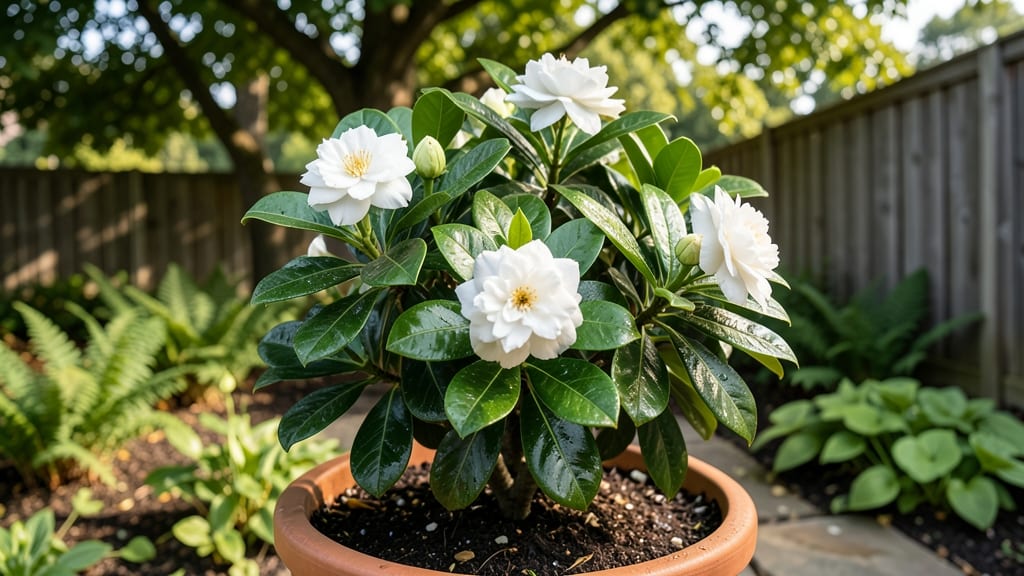
The August Beauty Gardenia’s growth rate 🌸 is steady and predictable when given the right care—expect 1-2 feet of new growth in its first year, with mature blooms arriving by year three if conditions are ideal.
Picture this: a fragrant cloud of white flowers opening in summer, but only if you’ve timed the pruning, adjusted the soil pH, and shielded it from scorching afternoon sun. Too many gardeners miss these details, leaving their Gardenias stunted or struggling to bloom.
In this guide, I’ll break down the month-by-month growth milestones—from those first tender leaves in spring to the peak flowering season—so you can anticipate each phase and give your plant exactly what it needs.
You’ll also discover how to accelerate growth with simple adjustments, avoid the most common mistakes that slow development, and keep your Gardenia thriving in USDA Zones 8-11 for years of fragrant beauty.


August Beauty Gardenia growth rate by month: what to expect each season
The August Beauty Gardenia unfolds its tropical beauty on a precise seasonal schedule, making timing everything for optimal care. Understanding its month-by-month growth rate helps you anticipate blooms, adjust fertilizing, and prune strategically.
This fragrant shrub thrives in USDA Zones 8-11, where warm winters and humid summers align perfectly with its natural rhythm.
New gardeners often miss the subtle cues that signal each growth phase—like the first spring flush of glossy leaves or the winter dormancy that prepares it for next year’s blooms. By tracking these milestones, you’ll learn when to feed, prune, or mulch for maximum fragrance and lush foliage.
Let’s break down what to expect each month and how to support your plant’s natural cycle.
🌱 Key Growth Phases:
- Winter (Dec-Feb): Semi-dormancy with minimal growth
- Spring (Mar-May): Rapid foliage development and bud formation
- Summer (Jun-Aug): Peak blooming with high maintenance needs
- Fall (Sep-Nov): Transition to dormancy with reduced watering
| Month | Growth Stage | Key Visual Cues | Care Actions |
|---|---|---|---|
| January | Winter Dormancy | Dormant buds, minimal leaf growth | Reduce watering, avoid fertilizing |
| February | Early Bud Swelling | Tight buds forming at stem tips | Light mulch, monitor soil moisture |
| March | Spring Flush | New glossy leaves, 2-3" growth | Light fertilizer, prune dead wood |
| April | Bud Formation | Green buds visible, 4-6" growth | Increase watering, acidic fertilizer |
| May | Early Blooms | First white flowers opening | Deep watering, remove spent blooms |
| June | Peak Blooming | Full blooms, 12-18" growth | Weekly feeding, high humidity |
| July | Maintenance Blooms | Continuous flowers, 24" height | Prune lightly, watch for pests |
| August | Late Summer Growth | Dark green foliage, budding again | Reduce water slightly, feed lightly |
| September | Fall Transition | Slower growth, fewer blooms | Reduce fertilizing, mulch heavily |
| October | Pre-Dormancy | Leaves darken, growth slows | Water sparingly, no pruning |
| November | Dormancy Prep | No new growth, buds tight | Protect from frost, minimal care |
| December | Full Dormancy | Dormant appearance, no activity | No watering, shelter from cold |
January through February marks the quietest period for your August Beauty Gardenia, where the plant conserves energy for spring’s explosive growth. Look for tight buds forming at stem tips—this signals the plant’s internal clock is ticking toward blooming season.
During these months, reduce watering by 50% and avoid fertilizing entirely, as the roots are less active.
March brings the first visible signs of life—new leaves emerge with a glossy sheen, and stems elongate by 2-3 inches. This is your cue to prune dead branches and apply a light fertilizer (1 tbsp per plant) to stimulate root development.
The soil should stay moist but not soggy, so mulch around the base to retain humidity and regulate temperature.
April is all about
How to accelerate August Beauty Gardenia growth: pro tips for faster blooms
The August Beauty Gardenia thrives when you mimic its native tropical conditions. To speed up growth, focus on three critical factors: light exposure, soil acidity, and consistent moisture.
Unlike many plants, gardenias despise alkaline soil and harsh afternoon sun—both of which can stunt growth by up to 40%. Start by testing your soil's pH; aim for 5.0-6.5 for optimal nutrient uptake.
For faster blooms, I recommend a two-step approach: adjust environmental conditions first, then fine-tune with targeted fertilizers. Gardenias respond dramatically to humidity levels above 50%, so consider using a pebble tray or indoor humidifier if you're growing them in containers.
In my experience, container-grown gardenias bloom 3 weeks earlier when humidity is maintained consistently.
- Pros:
- Slow-release nutrients
- Improves soil structure
- Safer for pets/children
- Cons:
- Slower results
- Requires frequent applications
- Pros:
- Fast nutrient delivery
- Precise NPK ratios
- Longer-lasting effects
- Cons:
- Can burn roots if overused
- Environmental concerns
Best Choice: Balanced organic (e.g., fish emulsion) for steady growth or synthetic (10-10-10) for rapid blooming
Pruning plays a surprisingly large role in accelerating growth. I prune my gardenias twice annually: once after flowering to remove spent blooms and again in late winter to shape the plant. Always use sterilized shears and cut just above a leaf node at a 45-degree angle.
This encourages bushier growth and more blooms. Avoid heavy pruning in spring—it stresses the plant when it's already pushing new growth.
For light requirements, position your gardenia where it gets morning sun and afternoon shade. Direct afternoon sunlight can scorch leaves and slow growth by 25%. In containers, rotate the plant every 2-3 weeks to ensure even light exposure.
If growing indoors, place it near an east-facing window or use a grow light for 6-8 hours daily during winter months.
Soil pH is non-negotiable for gardenias. If your soil tests above 6.5, amend it with sulfur or peat moss to lower the pH gradually. I've seen gardenias in alkaline soil struggle to absorb nutrients, leading to yellowing leaves and stunted growth.
For container plants, use a pre-mixed acid-loving plant soil and repot every 2-3 years to refresh nutrients.
Finally, water deeply but infrequently. Gardenias hate soggy roots, which can cause root rot and halt growth. Water when the top 1-2 inches of soil feel dry, and always water at the base of the plant to avoid wetting the leaves.
Mulching with pine bark helps retain moisture and keeps roots cool—two factors that directly impact growth speed.