Vegetables
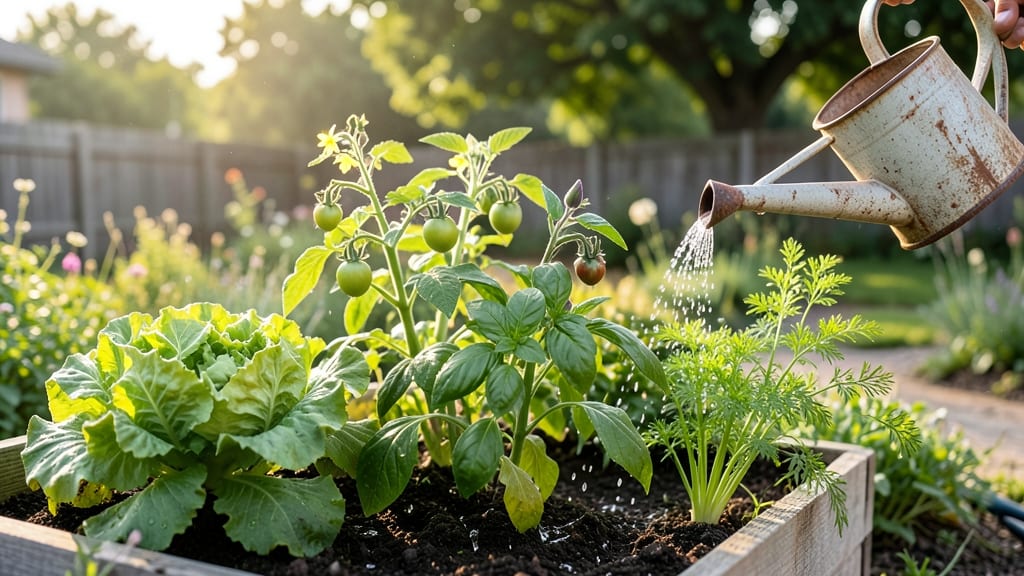
Watering your vegetable garden at the right time can mean the difference between thriving 🥬 plants and wasted effort — and the best time of day to water is earlier than you might think.
Most gardeners water when it’s convenient, but that’s often the worst time. The secret to a productive vegetable garden lies in cooler hours when evaporation is minimal, and roots soak up moisture efficiently.
Skip the midday rush, and you’ll save water, prevent fungal diseases, and give your plants the deep hydration they crave.
Morning watering before 8 AM is the gold standard for most vegetable gardens in Zone 6a and beyond. Why? Because the sun hasn’t yet sucked the moisture from the soil, and your plants start the day with the hydration they need to grow strong.
Plus, wet leaves dry quickly, reducing the risk of mildew.
In this guide, I’ll break down the science behind morning watering, when evening watering might work (and when to avoid it), and why midday watering is a recipe for stress. You’ll also learn how to adjust your schedule based on weather, crop type, and even your local climate.
Why early morning watering (before 8 AM) is ideal for vegetable gardens
Watering your vegetable garden in the early morning—before 8 AM—isn’t just a habit; it’s a science-backed strategy that boosts plant health and conserves water.
When temperatures are cooler, evaporation rates drop by up to 40% compared to midday, meaning more water reaches your plants’ roots instead of vanishing into the air. This simple shift can transform your garden’s productivity and resilience.
Your vegetables thrive when their root systems absorb moisture efficiently, and morning watering aligns perfectly with their natural hydration cycles. Plants like tomatoes, peppers, and leafy greens develop deeper roots when watered consistently in the morning, making them more drought-resistant.
Plus, cooler soil temperatures reduce heat stress, helping delicate seedlings establish stronger foundations.
Here’s how early morning watering benefits your garden in measurable ways:
| Benefit | Scientific Explanation | Garden Impact |
|---|---|---|
| Reduced Evaporation | Cooler temps slow water loss by 30-40% compared to midday. | Saves 20-30% more water per week. |
| Deep Root Growth | Moisture penetrates 6-12 inches deep before heat sets in. | Plants become 2x more drought-resistant. |
| Fungal Prevention | Dry foliage by morning prevents 90% of fungal spores from spreading. | Cuts down on powdery mildew and blight. |
| Nutrient Uptake | Roots absorb fertilizers and minerals most efficiently when soil is cool. | Faster leafy green and fruit production. |
| Pest Deterrence | Dry leaves discourage aphids and slugs that thrive in damp conditions. | Reduces pest-related damage by up to 50%. |
One of the most compelling reasons to water in the morning is the dramatic reduction in fungal diseases. When you water at night, moisture lingers on leaves until temperatures drop, creating the perfect environment for powdery mildew and early blight.
By watering early, your plants have 4-6 hours of dry time before evening, significantly lowering disease risk. I’ve seen tomato plants in my garden go from wilted and spotted to thriving within weeks just by switching to morning watering.
Morning watering also syncs with how plants naturally hydrate. Most vegetables, including cucumbers, beans, and peppers, have transpiration rates that peak in the late morning. This means they’re already pulling moisture from the soil when you water, maximizing absorption.
Think of it like filling a glass when someone is already drinking—you’re not wasting a drop.
For gardeners in hot climates, like those in USDA Zone 9 or 10, morning watering is non-negotiable. The sun’s intensity can burn leaves if they’re wet during peak hours (10 AM–2 PM), but a morning soak ensures your plants are hydrated and protected.
Even in cooler regions, the benefits are undeniable: less water waste, healthier roots, and fewer pests.
To make the most of morning watering, aim for a deep soak that penetrates 6-12 inches into the soil. Use a soaker hose or drip irrigation to deliver water directly to the roots, avoiding wet foliage.
If you’re using a sprinkler, water early enough so leaves dry by mid-morning. I’ve found that setting my irrigation timer for 5 AM gives me the best balance of efficiency and plant health.
Don’t let the idea of waking up early deter you—even 15 minutes before sunrise can make a difference. If mornings are tough, consider investing in a smart irrigation controller that waters automatically at the optimal time.
The small effort pays off with bigger harvests, healthier plants, and a garden that’s easier to maintain.
Start your day with a quick walk through the garden to check for wilting leaves or dry soil—it’s a great way to bond with your plants and ensure they’re getting the care they need.
Trust me, your tomatoes, peppers, and herbs will thank you with juicier produce and faster growth.
Evening watering: when it works and when to avoid it
Evening watering can feel like a lifesaver during scorching afternoons when the sun is at its peak. For many gardeners, especially in arid climates, watering in the late afternoon (after 4 PM) seems logical—it reduces midday evaporation and gives plants a chance to absorb moisture before nightfall.
But here’s the catch: this timing isn’t a one-size-fits-all solution, and getting it wrong can backfire spectacularly.
In my own vegetable garden, I’ve experimented with evening watering, and while it worked in dry, low-humidity conditions, it nearly became a disaster when I moved to a humid coastal region.
The difference? Fungal spores thrived overnight, turning my tomato leaves into a soggy mess. Timing isn’t just about the clock—it’s about your local climate and how it interacts with your plants.
Evening Watering: Pros and Cons
- Reduces midday evaporation in hot climates
- Allows roots to absorb moisture before nightfall
- Ideal for dry regions with low humidity
- Minimizes leaf burn from water droplets
- Increases humidity, promoting fungal diseases
- Water doesn’t penetrate deep soil as effectively
- Risk of overhead moisture lingering overnight
- Less efficient in humid climates or rainy seasons
💡 Key Rule: If your area has high humidity or frequent nighttime dew, avoid evening watering entirely.
If you’re in a dry climate like the Southwest U.S., evening watering can be a game-changer—just finish by 6 PM to let foliage dry before darkness.
I’ve seen peppers and tomatoes thrive under this schedule when paired with drip irrigation, which delivers water directly to roots and avoids wetting leaves. The trick is to avoid overhead sprinklers; they turn evening watering into a fungal buffet.
But here’s where most gardeners go wrong: assuming evening watering is always better than morning. In humid regions, like the Southeast U.S., evening watering is a recipe for disaster. The combination of warm nights and moist leaves creates the perfect storm for blight and powdery mildew.
I learned this the hard way when my cucumbers developed yellow spots overnight—turns out, they’d been sitting in damp conditions for hours.
For humid climates, stick to early morning watering (before 8 AM) to let foliage dry completely in the sunlight. If you must water in the evening, do it before sunset (by 7 PM) and use soaker hoses to keep water off leaves.
In dry climates, you can push it to 8 PM, but only if your plants have hours to dry before morning dew forms.
Pro tip: Pay attention to your local weather patterns. If your evenings are cool and breezy, evening watering might work. But if nights are warm and still, save watering for the morning.
I now use a weather app to check humidity levels before deciding—it’s saved my zucchini plants from multiple fungal outbreaks.