Light Requirements
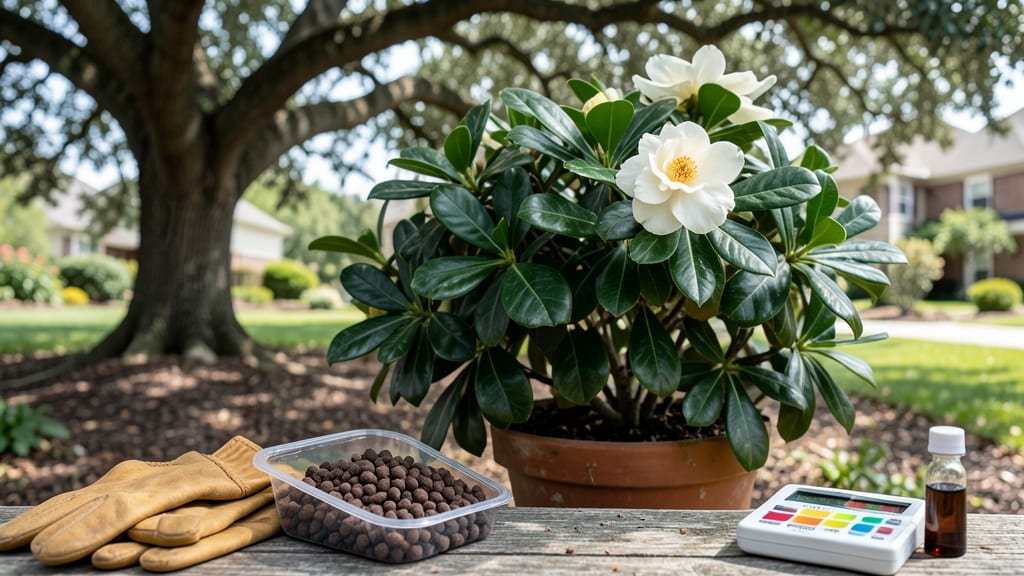
Feeding your gardenia the right fertilizer is the key to those intoxicating blooms 🌸—and skipping the acid-loving requirements can leave your plant struggling to thrive.
Picture this: You’ve nurtured your gardenia for months, only to watch its leaves yellow or its buds drop before opening. The culprit? Often, it’s not enough (or the wrong kind of) fertilizer.
These finicky shrubs demand specific nutrients—like a balanced NPK ratio of 6-10-10—and a soil pH that stays acidic, between 4.5 and 6.0.
In this guide, I’ll walk you through the best organic and synthetic fertilizers for gardenias, how often to feed them (spoiler: it’s not monthly!), and warning signs that you’re over- or under-feeding.
You’ll also learn how to adjust your schedule for spring blooming cycles and avoid the five most common mistakes that kill gardenia growth.
By the end, you’ll have a clear, seasonal feeding plan that keeps your gardenia lush, fragrant, and blooming year after year—without the guesswork.
Understanding gardenia fertilizer requirements: soil pH, nutrient needs & acid-loving essentials
If your gardenia's glossy leaves aren't translating into fragrant blooms, the issue likely starts with its soil chemistry. These tropical beauties demand acidic conditions (pH 4.5-6.0) to absorb nutrients effectively.
Standard garden soil often sits at pH 6.0-7.5, which locks out essential minerals and stunts growth. Without proper acidity, your plant may show yellowing leaves or sparse flowering—even with regular feeding.
Gardenias also need a precise nutrient balance of macronutrients (nitrogen, phosphorus, potassium) and micronutrients like iron and magnesium. Too much nitrogen? You'll get lush foliage but fewer blooms.
Too little phosphorus? Buds may drop before opening. The key is feeding them exactly what they crave—not what other plants tolerate—during their active growing months.
| Requirement | Specification | Testing Method |
|---|---|---|
| Soil pH | 4.5–6.0 (acidic) | pH meter or test kit (e.g., LaMotte) |
| Primary Macronutrients | N-P-K: 6-10-10 ratio | Label check on fertilizer bag |
| Micronutrients | Iron (Fe), Magnesium (Mg), Zinc (Zn) | Leaf analysis or visual symptoms |
| Fertilizer Type | Slow-release, acidic (e.g., azalea fertilizer) | Product label or organic matter (peat moss) |
| Feeding Frequency | Every 4–6 weeks (spring/summer) | Calendar tracking |
The NPK ratio (nitrogen-phosphorus-potassium) is your first clue. Gardenias prefer a 6-10-10 blend—moderate nitrogen for foliage, higher phosphorus for blooms, and balanced potassium for root health. Many gardeners mistakenly use high-nitrogen lawn fertilizers, which cause leafy growth at the expense of flowers.
For example, a 10-10-10 all-purpose fertilizer might work short-term, but it lacks the acidifying agents gardenias need long-term.
Don't overlook micronutrients like iron and magnesium. Yellowing leaves between veins? That’s classic iron deficiency (chlorosis), common in alkaline soils. A foliar spray with chelated iron (like Iron Chelate 6%) can revive your plant in 2–3 weeks.
Similarly, magnesium deficiency causes yellow patches on older leaves—fix it with Epsom salt (1 tbsp per gallon of water) applied to the soil.
Testing your soil’s pH is non-negotiable. Grab a digital pH meter (around $15) or use a home test kit like LaMotte’s. If your reading is above 6.0, amend the soil with sulfur or peat moss.
For every 1.0 pH unit too high, you’ll need 1–2 pounds of elemental sulfur per 100 sq ft to lower it safely. Pro tip: Mix sulfur into the top 6 inches of soil in early spring for gradual acidification.
Seasonal adjustments matter too. In spring, when new growth appears, switch to a balanced acid fertilizer (like Miracle-Gro Azalea/Camellia). By late summer, reduce feeding to avoid late-season flushes that won’t harden off before winter.
Ever notice how gardenias in nurseries bloom year-round? That’s artificial light and year-round feeding—not something you’ll replicate at home. Stick to the growing season (April–September) for feeding.
Over-fertilizing is a silent killer. Symptoms include crispy leaf edges, leaf drop, or white salt deposits on soil. If you see these, flush the soil with water for 10–15 minutes to leach excess salts.
For potted gardenias, this means running water through the drainage holes until it exits clean. Always water before fertilizing—dry soil burns roots when salts concentrate.
Organic options like cottonseed meal or fish emulsion work well but require more frequent applications (every 2–3 weeks). Synthetic fertilizers like Oscozine (a 6-10-10 acid-loving blend) provide faster results but may need acidifying additives.
My go-to? A mix of half organic, half synthetic for the best of both worlds. For example, use cottonseed meal in spring for slow-release nitrogen and Oscozine in summer for bloom support.
Remember: Gardenias are not forgiving. They’ll drop buds or yellow leaves at the first sign of stress—whether it’s wrong pH, overfeeding, or poor drainage. Start with a soil test, amend as needed, and feed consistently but lightly. Your reward? Fragrant, glossy blooms that’ll make
Best fertilizers for gardenias: organic vs synthetic options & monthly feeding schedule
Choosing the right fertilizer for your gardenia can transform its blooming potential from sparse to spectacular. These acid-loving shrubs demand specific nutrients and a precise feeding schedule—neither too much nor too little.
Organic options like cottonseed meal or peat moss provide slow-release nutrition, while synthetic blends (such as Miracle-Gro Azalea/Camellia) offer quick results. Let’s break down the best choices and how to apply them monthly for year-round success.
Your gardenia’s health hinges on soil acidity (pH 4.5-6.0) and a balanced NPK ratio of 6-10-10. Synthetic fertilizers deliver immediate nutrients but require careful dosing, while organic options improve soil structure over time. For example, fish emulsion boosts nitrogen for foliage, while bone meal enhances phosphorus for blooms.
The key is matching your fertilizer to your gardenia’s current growth stage—spring for new growth, summer for blooms, and fall/winter for rest.
To transition between fertilizers smoothly, start with a soil test to confirm pH levels. If switching from synthetic to organic, reduce synthetic doses by 50% for 2 months to avoid nutrient shock.
For example, if you’ve been using Miracle-Gro Azalea/Camellia in May, supplement with cottonseed meal in June while tapering off the synthetic. Always water thoroughly after applying fertilizer to prevent root burn—a common mistake that stunts growth.
Your monthly feeding schedule should align with your gardenia’s growth cycle. From April to June, focus on nitrogen-rich fertilizers like fish emulsion to encourage leafy growth. Shift to phosphorus-heavy options (bone meal) in July and August to support blooming.
By September, reduce feeding entirely to prepare for dormancy. Avoid fertilizing in winter, as gardenias rest during colder months.
Overfeeding is a silent killer for gardenias—look for yellow leaves, leaf drop, or stunted blooms as warning signs. If you notice these symptoms, flush the soil with water to leach excess salts.
For potted gardenias, use half the recommended dose since nutrients concentrate faster in containers. With the right balance, your gardenia will reward you with fragrant blooms year after year.
🌸