
Watering
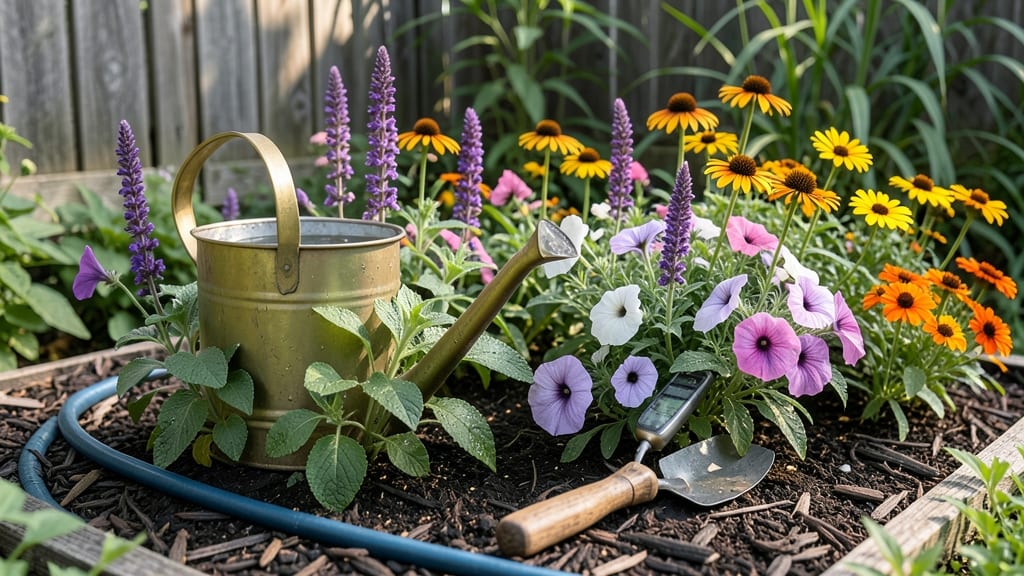
Watering your flower garden the right way means checking soil moisture—not guessing—because too much or too little water can ruin your blooms faster than you think.
Overwatering kills more flowers than underwatering—but most gardeners don’t know the exact soil-moisture test that determines when to water, saving time and preserving blooms.
Think about it: a dry, sandy patch needs water every 2-3 days in summer, while a clay-heavy bed might only need a deep drink once a week. The key? Stick your finger an inch deep—if it feels dry, it’s time.
In this guide, I’ll break down the perfect watering schedule for your 🌸 flower garden, from seasonal shifts to the one trick that cuts water waste in half.
The 3-Step soil-moisture test to water flowers perfectly
Overwatering is the silent killer of flower gardens—yet most gardeners guess when to water instead of testing soil moisture scientifically. The key? A simple 3-step test that checks both depth (top 1–2 inches) and texture (clay vs. sandy).
This method saves time, prevents root rot, and keeps blooms vibrant longer. I’ve used it for annuals like zinnias and perennials like lavender with zero wilting.
Start by identifying your soil type—clay holds moisture longer than sandy soil, so watering schedules differ drastically. For example, petunias in clay soil may need water every 5 days, while the same petunias in sandy soil might dry out in 2 days.
The test below adapts to both, ensuring your flower roots get just the right amount of hydration without stress.
Why this test works: It mimics how plants naturally access water—through the top 2 inches of soil, where most roots thrive. By combining a finger check, visual inspection, and texture test, you’ll know exactly when to water, whether you’re growing drought-tolerant succulents or thirsty hydrangeas.
-
Step 1: Finger Check (Depth Test)
Stick your index finger 1–2 inches into the soil near the plant’s base. If it feels dry or slightly crumbly, it’s time to water. For annuals like marigolds, aim for a moist but not soggy feel. -
Step 2: Visual Inspection (Surface Clues)
Look for cracked soil (sandy soil) or dull, wilting leaves (clay soil). Drip irrigation or a watering can with a rose attachment delivers water evenly, preventing surface evaporation. -
Step 3: Texture Test (Soil Type)
Grab a handful of moist soil and squeeze it. If it holds shape (clay), water every 5–7 days. If it crumbles easily (sandy), water every 2–3 days. Mulch with straw to slow moisture loss.
✅ Pro Tip: Test soil in multiple spots—some areas may dry faster due to sun exposure.
Annuals like geraniums and cosmos need more frequent watering than perennials such as black-eyed Susans or coneflowers. After testing, adjust your schedule: water annuals every 2–3 days in summer, while perennials thrive on weekly deep watering.
This test also helps you spot overwatering signs, like yellowing leaves or mold on mulch.
For container-grown flowers, the rules change slightly. Potted petunias or impatiens dry out faster—check soil moisture daily in extreme heat. Use a moisture meter for accuracy, or lift the pot: if it feels light, it’s time to water. Terracotta pots dry out quicker than plastic, so adjust accordingly.
Seasonal shifts matter too. In spring and fall, most flowers need water every 5–7 days, but summer heat can halve that timeframe. Morning watering (before 10 AM) reduces evaporation and fungal diseases like powdery mildew. Avoid evening watering—wet foliage overnight invites pests.
If your flowers wilt midday despite moist soil, it’s a heat stress signal, not a watering issue. Provide afternoon shade for delicate blooms like roses or peonies. For drought-resistant flowers (e.g., lavender or yarrow), reduce watering to every 10–14 days once established.
Track your watering journal for a month to refine your schedule. Note which flowers thrive with less water (e.g., sedum) and which demand consistency (e.g., begonias). Over time, you’ll master the perfect watering rhythm for your garden’s unique conditions.
Remember: healthy soil = happy flowers. This test isn’t just about survival—it’s about maximizing blooms and minimizing waste. With practice, you’ll water like a pro, saving time and keeping your garden bursting with color all season. 🌸
Watering frequency chart: how often to water flower types
Not all flowers thrive on the same watering schedule—sun-loving lavender and shade-dwelling impatiens have completely different needs. The key is understanding your flower types' drought tolerance and adjusting for seasonal heat waves or cooler fall days.
My chart below groups flowers by sun exposure and moisture needs, so you can water with confidence without guessing.
Start by checking the top 1-2 inches of soil—if it feels dry, it's time to water. For sandy soils, water more frequently, while clay soils hold moisture longer.
Always water deeply (1-2 inches per session) to encourage strong root growth. This method prevents shallow roots that lead to floppy stems and weak blooms.
Here’s my seasonal watering guide for popular flowers, organized by sun preference and drought tolerance. Adjust for extreme weather—summer heat may require daily watering for delicate varieties, while winter dormancy often needs minimal moisture.
For container-grown flowers, water 2-3 times per week in summer since pots dry out faster.
Always water at the base of the plant to avoid fungal diseases from wet foliage. Mulch with 2-3 inches of organic matter (like shredded bark) to retain moisture and regulate soil temperature—this can reduce watering needs by 20-30%.
Watch for wilting leaves or yellowing edges—these are signs your flowers need water. But don’t overcorrect: soggy soil leads to root rot, which kills plants faster than drought.
Adjust your schedule based on rainfall (skip watering if you’ve had 1 inch of rain in the past week) and humidity levels (hot, dry air increases evaporation).
Pro tip: Use a rain gauge or tuna can buried in your garden to track moisture levels. When you see 1-2 inches of water in your gauge, you’ve hit the sweet spot for most flowers.
This simple tool takes the guesswork out of watering and keeps your blooms thriving all season long. 💧☀️🌸