Picking
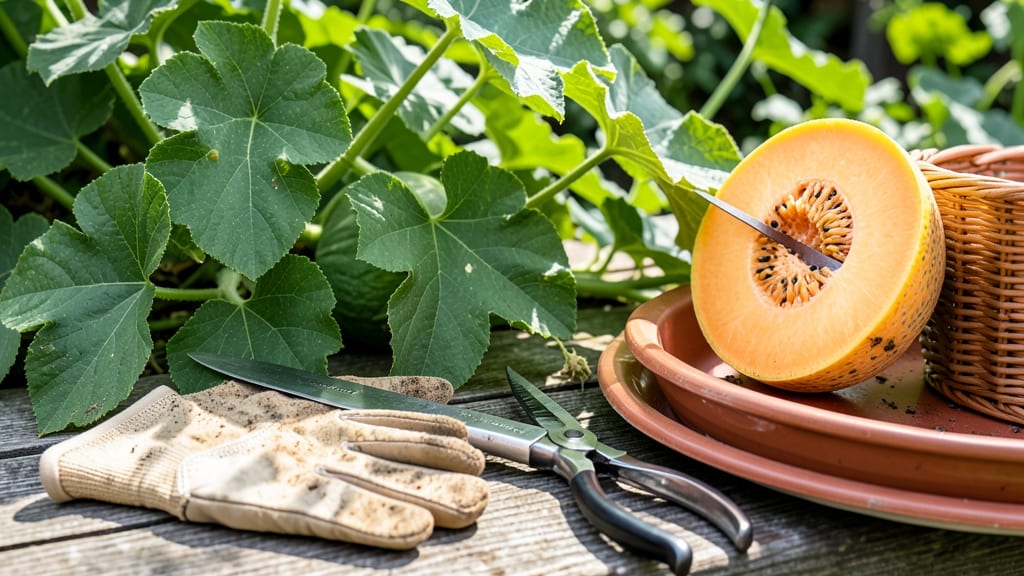
To pick cantaloupe from your garden at the perfect moment means the difference between a fruit so sweet it melts in your mouth and one that’s still hard or already mushy.
Picture this: you’ve nurtured your 🍈 vines all season, and now the moment of truth arrives. How do you know when to pluck that melon without guessing?
The answer lies in three simple but often overlooked clues—color shifts, scent cues, and a gentle tug test—that turn a gamble into a foolproof routine.
In USDA Zone 6a, where summer heat accelerates ripening, timing becomes even more critical. A cantaloupe picked too soon lacks flavor; too late, and it’s overripe. I’ll walk you through the exact signs to watch for, plus the best time of day to harvest for maximum sweetness.
By the end, you’ll confidently recognize the ideal cantaloupe—no more second-guessing, no more wasted fruit. Let’s make sure every slice you serve is bursting with summer perfection.


3 Visual and physical ripeness tests for cantaloupe picking
Picking cantaloupe at the perfect moment is an art—and science—combining visual cues, physical tests, and even your nose. Unlike some fruits that ripen off the vine, cantaloupes must be harvested at peak ripeness because they won’t sweeten further once picked.
Missing these signs means sacrificing that explosive sweetness and tender flesh we all crave.
Here’s the secret: cantaloupes communicate their readiness through three key signals. First, the blossom end (the part where the stem meets the fruit) changes color dramatically. Second, the vine separation trick reveals structural readiness.
And third, your senses—especially your nose and fingers—hold the final clues. Master these, and you’ll never guess again whether your cantaloupe is ready for the table.
🍈 3 Unmistakable Signs Your Cantaloupe Is Ready to Pick
-
1. Blossom End Turns Creamy-Yellow
The stem end (near the vine) shifts from green to tan or yellowish-brown. This color change signals internal sugar development. Press gently—if it feels slightly soft, it’s ripe. -
2. Vine Snaps Cleanly at the Stem
Grasp the fruit stem and twist gently. A ripe cantaloupe will separate easily from the vine with a slight popping sound. If it resists, wait 1–2 days. -
3. Sweet Aroma Near the Stem
Hold the cantaloupe to your nose and sniff near the blossom end. A powerful, musky sweetness (like honey or ripe melon) means peak ripeness. No smell? It’s not ready yet.
Let’s break down these tests further. The blossom end color is your first red flag—or green flag, depending on the hue. Early in the season, this area stays bright green, but as sugars build, it dulls to a creamy tan.
Pro tip: Use a flashlight to inspect hidden spots where the color might be fading unevenly.
Next, the vine separation test is a game-changer. Many gardeners skip this, but it’s foolproof. The abscission layer (a natural separation zone) forms at the stem when the fruit is ripe.
Twist with your fingers—if the stem snaps cleanly (not tears), you’re golden. Resisting? The cantaloupe needs more time on the vine.
Don’t underestimate the nose test, either. Cantaloupes release ethylene gas as they ripen, which triggers that unmistakable aroma. If your cantaloupe smells sour or fermented, it’s overripe. But if it’s subtly sweet, you’ve hit the jackpot.
For extra confidence, cut open the smallest cantaloupe on the vine—if its seeds are dark brown and the flesh is orange, the others are ready soon.
Timing matters too. Harvest cantaloupes on a cool morning after dew has dried. Why? Heat stress can make the fruit overripe quickly, and morning temps preserve flavor and texture. Avoid picking after a hot afternoon—the sugars can degrade faster, leaving your melon less sweet.
One common mistake? Waiting for the entire vine to yellow. While the blossom end is your best guide, the vine leaves may stay green even when the fruit is ripe.
Focus on the fruit itself, not the plant’s overall health. And if you’re in a hot climate, cantaloupes ripen faster—check them every 2–3 days once they near maturity.
Finally, regional tweaks apply. In cooler zones (USDA 6a and below), cantaloupes may take 10–14 days longer to ripen. Monitor nighttime temperatures: below 55°F (13°C) slows ripening, while 85°F (29°C)+ can speed it up. Adjust your checks accordingly.
Master these three tests, and you’ll never second-guess your cantaloupe harvest again. The difference between a meh melon and a showstopper comes down to these simple clues. Now grab your pruners—and get ready for the sweetest cantaloupe of the season! 🌱
How to avoid common mistakes when picking cantaloupe
Picking cantaloupe at the wrong stage can leave you with fruit that's either too hard and bland or overripe and mushy. Even experienced gardeners sometimes miss the sweet spot between these extremes.
The key is understanding how temperature and physical cues interact to signal true ripeness—and why cantaloupes never ripen further once picked.
Many gardeners assume cantaloupes will continue ripening off the vine like tomatoes, but that's not the case. Once separated from the vine, cantaloupes stop developing sugar and flavor. This means your harvest window is narrow, and missing it means wasted effort.
Let's explore the critical mistakes to avoid and how to recognize them in your garden.
⚠️ Warning: Never Pick Cantaloupe Too Early!
Underripe cantaloupes will never develop their full sweetness or texture, no matter how long you store them. Here's what to watch for:
- 🟢 Green blossom end – The stem-facing side should turn cream or tan, not stay green.
- 🤏 Firm skin – Press your thumbnail into the rind; it should not dent easily.
- No sweet aroma – A ripe cantaloupe emits a strong, musky fragrance near the stem.
Temperature plays a huge role in cantaloupe ripening. In hot climates (Zones 9-11), fruit may ripen faster and require earlier picking, while cooler zones (Zones 4-7) often need longer vine time.
If your area experiences unusually cool summers, your cantaloupes might need 10-14 extra days on the vine compared to standard timelines.
Another common mistake is overlooking the vine separation test. A truly ripe cantaloupe will detach easily from the vine when you gently twist it. If the stem resists or tears, the fruit isn't ready.
This test is non-negotiable—skipping it often leads to underripe fruit that lacks flavor. Pro tip: Perform this test in the morning when fruit is cooler and firmer.
Overripe cantaloupes are just as problematic as underripe ones. Look for soft spots, a fermented smell, or shriveled skin—these are red flags. Once cantaloupe passes its prime, its sugar converts to starch, and the texture becomes grainy and unappetizing.
To avoid this, harvest frequently and check your vines every 2-3 days during peak season.
Finally, resist the urge to pick cantaloupes by color alone. While the rind should shift from green to cream or tan, some varieties (like heirloom types) may stay partially green even when ripe.
Always combine color with the other tests—vine separation, aroma, and skin firmness—to guarantee success. With these tips, you'll never waste another cantaloupe again!