
Light Requirements
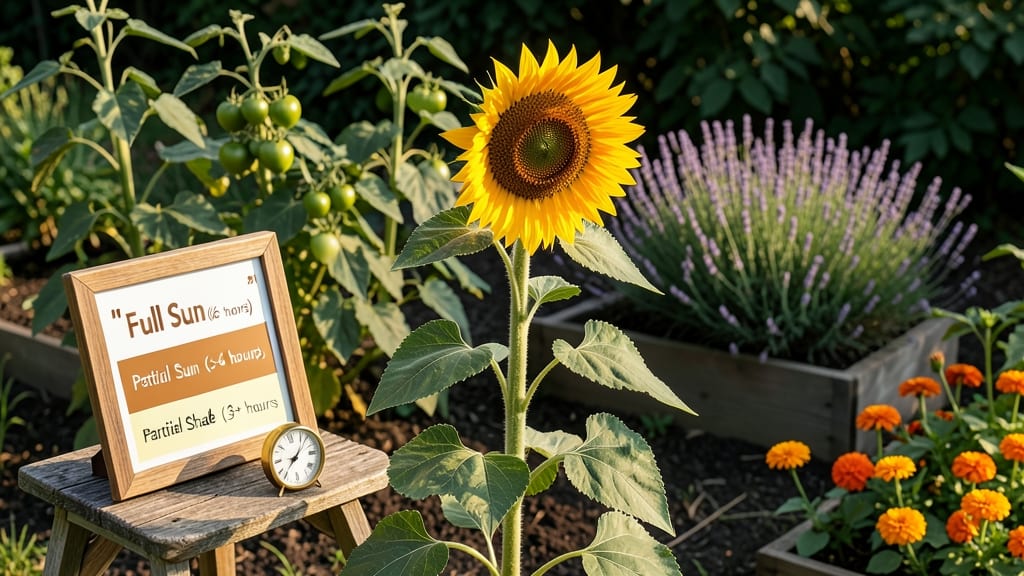
To determine how many hours of sun a garden needs, it depends on plant types: most vegetables and flowers thrive with 6–8 hours of full sun daily, while shade-loving plants do well with 2–4 hours. Herbs and succulents typically need 4–6 hours, and tropical plants usually prefer 3–5 hours. Always verify seed packets, as too much sun can harm sensitive plants.
A garden's sunlight needs aren't one-size-fits-all—they depend entirely on what you're growing. 🌿 For example, sunflowers and peppers demand full sun exposure to produce their best yields, while ferns and impatiens will bolt or wilt under too much direct light.
Even within categories, there's variation: leafy greens like spinach tolerate partial shade better than fruiting vegetables. I've learned the hard way that moving plants between sun and shade seasons can mean the difference between a thriving garden and one struggling to survive.
What's often overlooked is how sunlight quality matters just as much as quantity—bright, indirect light works better for shade plants than harsh afternoon rays. This is where observing your garden's microclimates becomes crucial.
A north-facing wall might create a cooler, shadier spot perfect for basil, while a south-facing border could scorch delicate petunias. The key is flexibility: use shade cloths in peak summer or prune overgrown branches to adjust exposure as needed.
💡 In This Article
- Sunlight Requirements by Plant Category: Full Sun vs Partial Shade
- Adjusting Sunlight for Different Garden Climates and Seasons
Sunlight requirements by plant category: full sun vs partial shade
Sunlight isn't just about hours—it's about intensity and quality. Full-sun plants like tomatoes and marigolds need 6-8 hours of direct sunlight because their photosynthesis machinery thrives on high-light conditions.
These plants have evolved with chlorophyll b that efficiently captures light energy, allowing them to produce more glucose for growth and fruiting. 🌞 The difference between 6 and 8 hours can mean 20-30% higher yields in tomatoes, as studies show light saturation occurs around 7 hours for optimal photosynthesis.
Partial-shade plants like hostas and astilbes actually prefer 3-5 hours of morning sun combined with afternoon shade. Their leaves contain more anthocyanins (the pigments that give red/purple hues) which protect against excessive light damage.
What's fascinating is how these plants regulate their stomata—tiny leaf pores that open wider in low light to maximize water uptake while minimizing evaporation. This is why hostas wilt dramatically if moved to full sun: their stomata can't adjust quickly enough to prevent water loss.
Herbs and succulents occupy a middle ground with 4-6 hours of sun, but their needs vary dramatically. Basil, for example, grows best with 4-6 hours of morning sun to prevent bolting (flowering prematurely), while rosemary thrives in full sun and can even handle some drought.
The key difference lies in their water storage mechanisms—succulents like sedum store water in leaves, while herbs like oregano have waxy coatings that reduce water loss. This is why your basil might need afternoon shade while your rosemary begs for more sun.
Tropical plants often get overlooked in sun discussions because they prefer 3-5 hours of dappled sunlight—bright but filtered light that mimics their native forest understory. Plants like calatheas and peace lilies have larger, thinner leaves with fewer stomata, making them highly sensitive to direct sun.
When these plants get too much light, you'll notice brown leaf tips—a sign of oxidative stress where excess light creates harmful free radicals. The solution? Place them near east-facing windows or use sheer curtains to diffuse light intensity.
Here's what happens when you get it wrong: Too little sun means leggy growth (plants stretching toward light) and poor fruiting, while too much causes sunburn (white/yellow patches) and leaf scorch.
I once saw a perfectly healthy impatiens plant turn crispy in just two days after being moved to full sun—its leaves couldn't handle the sudden UV exposure. The lesson? Always observe your plants' color, growth pattern, and leaf condition to adjust their light exposure gradually.
Pro tip: Use your hand as a sun gauge! Hold it palm-up at noon—if your shadow is shorter than your hand, you're in full sun territory. If it's longer than your forearm, you're in partial shade. This simple trick helps you visualize sunlight intensity without fancy tools. 🌿