
Pruning
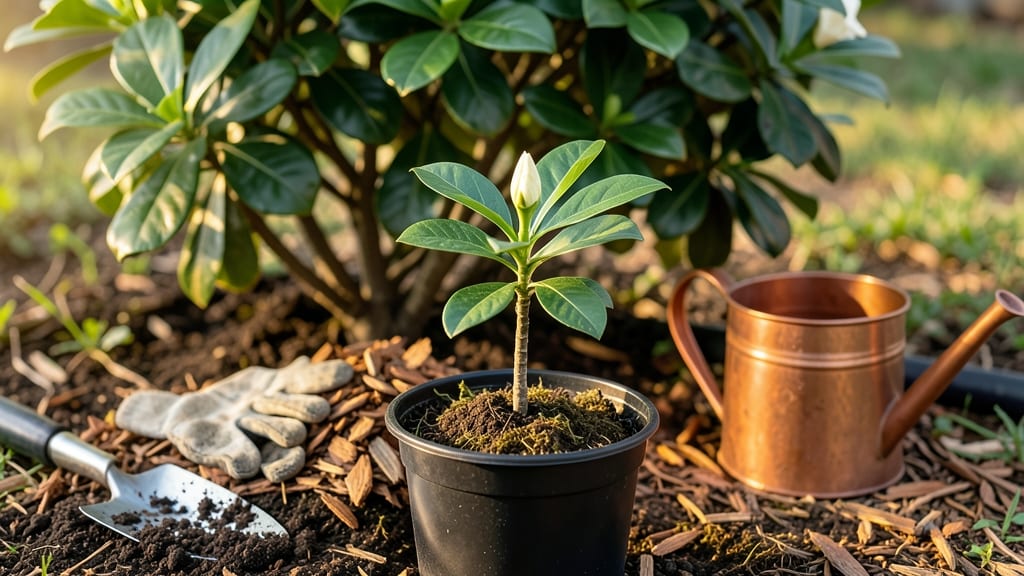
Planting a gardenia tree means creating the perfect conditions: well-draining acidic soil, full sun exposure, and spacing of 6-10 feet between plants for strong growth and vibrant blooms. Organic mulch helps retain moisture while preventing root rot, and consistent watering keeps roots healthy without over-saturating.
Gardenias thrive when their soil stays slightly acidic (pH 4.5-6.0), mimicking their natural tropical habitat. 🌱 The right sunlight—at least 6 hours daily—boosts flower production, while proper drainage prevents soggy roots that lead to rot.
I've seen gardeners use a mix of peat moss and pine bark for ideal texture, and always plant in spring or fall when temperatures are mild. The spacing rule (6-10 feet) ensures airflow, reducing fungal risks while giving roots room to expand.
For containers, reduce spacing to 3-4 feet but use larger pots (18+ inches) with drainage holes. Mulching with pine needles or wood chips keeps moisture steady, and watering deeply 2-3 times per week (less in winter) prevents stress.
I've found that gardenias planted in partial shade still bloom, but the flowers may be smaller—full sun always wins for showstopping results.
💡 In This Article
- Optimal Soil and Sunlight Conditions for Gardenia Trees
- Step-by-Step Gardenia Tree Planting Guide with Spacing Tips
Optimal soil and sunlight conditions for gardenia trees
Gardenias evolved in acidic tropical soils, so their roots thrive when the pH stays between 4.5 and 6.0.
This acidity level unlocks essential nutrients like iron and manganese, which are critical for vibrant foliage and abundant blooms. 🌱 If your soil tests higher (common in many regions), amending with sulfur or peat moss can lower the pH gradually.
For example, a 50/50 mix of peat moss and pine bark creates the ideal loose, airy texture that prevents compaction while retaining moisture without waterlogging.
The sunlight requirement isn't just about duration—it's about intensity. Gardenias need 6+ hours of direct sunlight daily, but the quality matters too. Morning sun paired with afternoon shade works best in hot climates (like Florida or California), as the midday heat can scorch delicate leaves.
In cooler regions, full sun exposure year-round is perfect. I've noticed that gardenias in partial shade still produce flowers, but they tend to be smaller and less fragrant—the difference is night-and-day compared to fully sunlit plants.
Drainage is where many gardeners go wrong. Gardenias hate soggy roots, which is why their native habitats have sandy, well-draining soils. A simple test: Dig a hole, fill it with water, and time how long it takes to drain.
If it takes longer than 30 minutes, amend with perlite or coarse sand. Raised beds are another great solution, as they prevent water from pooling around the roots during heavy rains.
Seasonal adjustments matter too. In summer, gardenias in full sun may need afternoon shade to prevent leaf burn, while winter brings different challenges. Cold snaps can stress the plant, so mulching with 3-4 inches of pine needles insulates roots while maintaining moisture.
This mulch layer also slowly releases organic acids as it decomposes, helping maintain that crucial 4.5-6.0 pH range over time.
For container gardeners, the soil mix becomes even more critical. A blend of 60% peat moss, 20% pine bark, and 20% perlite mimics ideal in-ground conditions while allowing excess water to escape through drainage holes.
I've seen gardenias in containers outperform their in-ground counterparts simply because the grower controlled the soil composition perfectly. The key is repotting every 2-3 years to refresh the mix before it compacts or loses acidity.
One common mistake is assuming all gardenias have the same soil needs. Dwarf varieties (like 'Radicans') tolerate slightly less acidic soil (5.0-6.5 pH) compared to standard types, which is why choosing the right cultivar for your climate matters.
For example, 'Kleim's Hardy' gardenias can handle pH up to 7.0 in cooler zones, making them more adaptable but potentially less fragrant than tropical varieties.