Planting
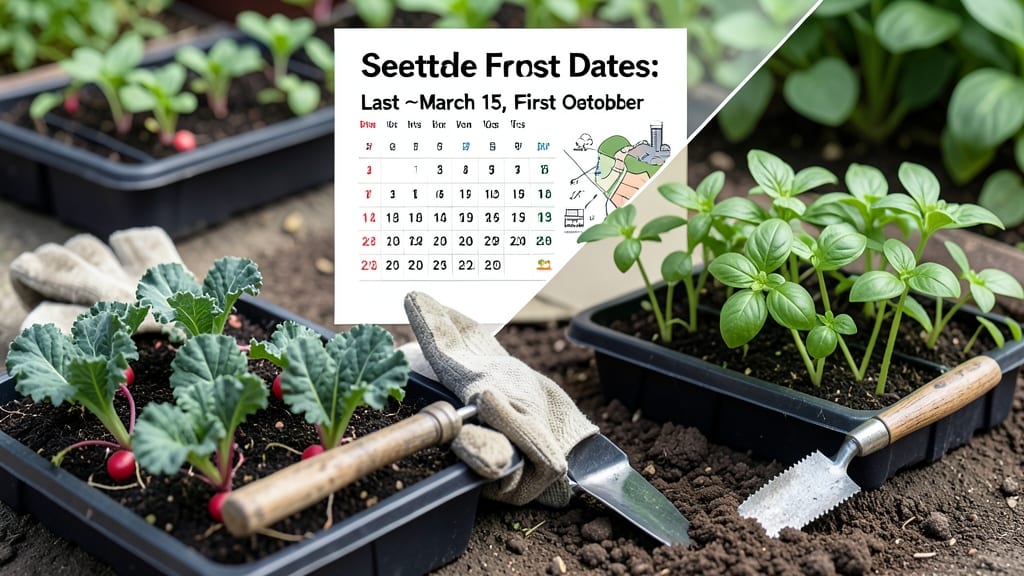
To plant a vegetable garden in Seattle, timing is everything—cool-season crops go in by March 15, while warm-season plants wait until after the last frost in early May.
Seattle’s unpredictable weather can make planning your vegetable garden a real challenge—but timing your plantings correctly means the difference between a bountiful harvest and a sad, frost-bitten disappointment.
With USDA Zone 8a and rainy winters, not every vegetable thrives here. Some, like kale and carrots, love the cool, wet spring, while tomatoes and peppers need the dry, warm summers Seattle barely gets.
Below, I break down the best months for each crop, how to adjust for late frosts, and the one trick that extends your growing season by 30 days—no greenhouse needed.
Seattle’s frost-free window: exact planting dates by last frost date
Seattle’s USDA Zone 8a/8b climate gives us a 165-day frost-free window—the perfect timeframe to grow everything from cool-season greens to heat-loving tomatoes. But knowing your exact last frost date (typically March 15) and first frost date (around November 15) is critical for timing plantings right.
Get it wrong, and you risk frost damage or wasted effort on crops that won’t mature before winter.
Urban Seattle gardens often experience microclimate variations that can shift frost dates by 1-2 weeks. For example, south-facing urban areas (like Ballard or Fremont) may warm up faster than rural areas (like Snohomish County).
Always check your local microclimate—a neighbor’s garden might have a completely different frost timeline than yours.
Here’s how to use these dates: Cool-season crops (like kale or peas) can handle light frosts, so plant them 4-6 weeks before your last frost date. Warm-season crops (like tomatoes or peppers) need to wait until 2 weeks after your last frost date to avoid cold snaps.
And don’t forget—Seattle’s fall planting window (August–September) is your last chance for a harvest before winter sets in.
Pro Tip: Use row covers or cold frames to extend your season by 2-4 weeks in both spring and fall. This is especially useful for heat-loving crops that need extra warmth to germinate.
For warm-season crops, start seeds indoors 6-8 weeks before your last frost date. This gives seedlings a head start and ensures they’re ready to transplant when temperatures rise. Peppers and eggplants are particularly finicky—they need consistent warmth and won’t tolerate chilly soil.
Don’t overlook succession planting! In Seattle’s short growing season, planting every 2-3 weeks ensures a continuous harvest. For example, bush beans can be sown in April, May, and June for staggered harvests. This strategy maximizes your frost-free window and reduces waste.
If you’re new to Seattle gardening, test your soil temperature before planting warm-season crops. Soil should be at least 60°F for seeds to germinate properly. A soil thermometer (just $10 at garden centers) is a game-changer for avoiding failed plantings.
Remember, Seattle’s first frost usually arrives around November 15, but it can happen as early as October 15 in some years. Plan your fall crops accordingly—spinach and radishes are your best bets for a late harvest.
And if you’re feeling ambitious, overwintering crops like garlic or onions can be planted in October for a spring harvest.
By mastering these frost-free window principles, you’ll turn Seattle’s unpredictable weather into an advantage. Start with cool-season crops in early spring, transition to warm-season plants after the last frost, and squeeze in a fall harvest before winter arrives.
Your garden will thank you with bountiful, homegrown goodness all season long! 🌱
Best vegetables to plant in Seattle by month: a month-by-month guide
Seattle’s cool, wet springs and mild summers create a unique growing season that rewards gardeners who plan carefully. Unlike warmer climates, we can’t just plant tomatoes in May and expect success—timing is everything.
The key is balancing cool-season crops that thrive in early spring and fall with warm-season favorites that need our short summer heat. Let’s break it down month by month so you can maximize your harvest from March through October.
I’ve gardened in Seattle for over a decade, and I’ve learned that succession planting and row covers are my secret weapons for extending seasons. For example, spinach and kale can handle light frosts, while peppers and eggplants need our warmest months to thrive.
Below, I’ve mapped out the best vegetables to plant each month, including when to start seeds indoors and when to direct-sow outdoors.
📅 Seattle Vegetable Planting Calendar
- 🌱 March: Start cool-season crops indoors—lettuce, spinach, kale, and peas. Direct-sow potatoes and onions outdoors.
- 🌿 April: Transplant broccoli, cauliflower, and cabbage. Direct-sow carrots, radishes, and beets. Start tomatoes and peppers indoors.
- ☀️ May: After last frost (mid-May), transplant tomatoes, peppers, and eggplants. Direct-sow beans, corn, and cucumbers.
- 🌻 June: Plant summer squash, zucchini, and melons. Succession-sow lettuce and spinach for fall harvest.
- 🍅 July: Start fall crops indoors—kale, broccoli, and spinach. Direct-sow radishes and turnips.
- 🌾 August: Plant garlic for next year. Succession-sow green onions and bush beans.
- 🍂 September: Extend season with row covers for lettuce, kale, and spinach. Plant garlic and overwintering onions.
One of my biggest lessons? Don’t wait until May to start your garden—March and April are prime months for cool-season crops like peas and spinach, which can handle our chilly springs.
I’ve even had success with overwintering garlic planted in October, which produces sweeter bulbs the following summer. For warm-season crops, wait until after the last frost date (usually mid-May) to transplant tomatoes and peppers outdoors.
Pro tip: Use row covers to extend your growing season. I’ve kept lettuce and spinach growing well into October by covering them with lightweight fabric. This also protects against late frosts, which can sneak in even in summer.
For succession planting, I recommend sowing radishes every 2-3 weeks from April through August—they’re fast-growing and perfect for continuous harvests.
If you’re new to gardening in Seattle, start small with easy-to-grow crops like lettuce, spinach, and radishes. These thrive in our climate and give you confidence before tackling tomatoes or peppers.
Remember, soil temperature matters—wait until the soil is at least 50°F before planting seeds like beans or peas. And always mulch to retain moisture and regulate soil temperature.
With this month-by-month guide, you’ll avoid the common pitfalls of Seattle gardening—like planting tomatoes too early or skipping cool-season crops in favor of warm-weather favorites. Happy planting, and may your harvest be as bountiful as our local farmers’ markets! 🌱