Planting
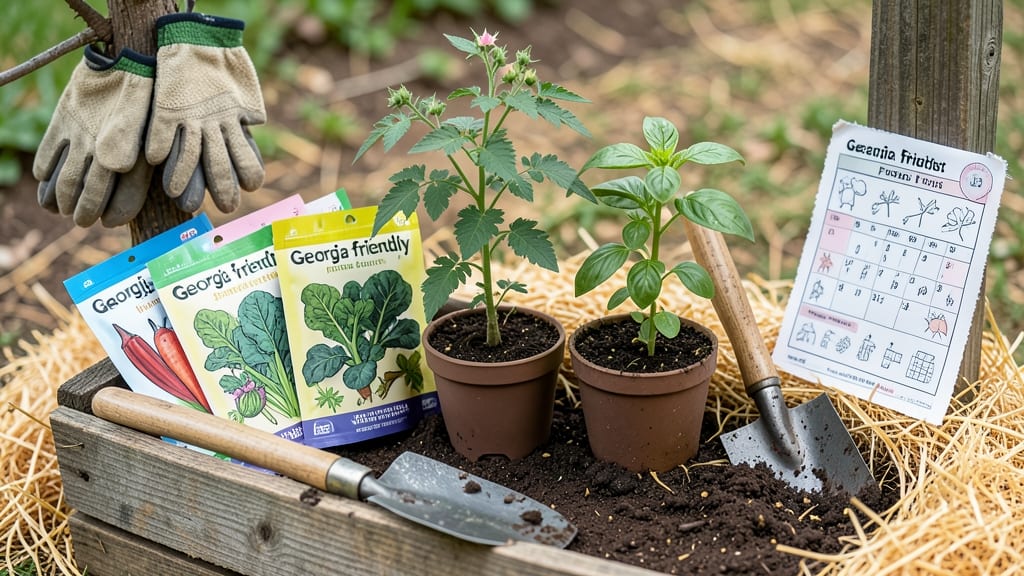
To plant a garden in Georgia, aim for late February through early April for spring crops and August to September for fall planting—timing that aligns with the state’s 220-270 frost-free days.
Georgia’s warm climate and extended growing season make it a gardener’s paradise—but planting at the wrong time can mean wasted effort and poor yields. Whether you’re growing sweet potatoes, peaches, or marigolds, knowing the exact window for your Zone 8A/8B plants is the key to a thriving garden.
Miss the ideal window, and you might end up with stunted vegetables or flowers that bolt too quickly. But get it right, and you’ll enjoy a bountiful harvest from March through November, with the right crops planted at the right time.
Below, I’ll break down the exact dates for planting everything from leafy greens to tomatoes, plus tips for adjusting to Georgia’s microclimates and soil conditions. Let’s get started!
Georgia planting calendar: exact dates for Zone 8A/8B vegetables, flowers, and herbs
Georgia’s Zone 8A/8B climate gives gardeners a longer growing season than many northern states, but precise timing ensures your vegetables, flowers, and herbs thrive. The average last frost date in most of Georgia is around March 15, while the first frost typically arrives in mid-November.
These dates create a 220-270 frost-free window—perfect for both spring and fall planting.
For cool-season crops like leafy greens and broccoli, start seeds indoors in late February and transplant outdoors after the last frost. Warm-season crops, including tomatoes and peppers, should wait until soil temperatures reach 60°F+, usually around mid-April.
Fall planting begins in late summer for crops like kale and carrots, which tolerate cooler temperatures.
In spring, prioritize cool-season crops like broccoli and peas in February-M
How to adjust planting times for Georgia’s microclimates and soil conditions
Georgia’s diverse landscapes—from the mountains of North Georgia to the coastal plains—create unique microclimates that can shift planting windows by weeks. Even within a single county, urban heat islands can make soil 5-10°F warmer than rural areas, while elevation changes delay spring in the Appalachians.
These differences mean a one-size-fits-all approach won’t work for every garden in the state.
Beyond climate, Georgia’s soil varies dramatically: clay-heavy soils in the Piedmont retain moisture but bake hard in summer, while sandy soils in the coastal plain drain quickly and need frequent watering.
Even pH levels differ—some areas need lime to raise pH for blueberries, while others benefit from sulfur to acidify for azaleas. Adjusting your planting strategy to match these conditions can mean the difference between a bountiful harvest and struggling seedlings.
Signs you planted too early: Yellowing leaves, stunted growth, or seedlings rotting in cold soil (below 50°F). Warm-season crops like tomatoes and peppers will bolt or fail to thrive.
Signs you planted too late: Flowers blooming but no fruit set (common with cucumbers and squash), or leafy greens bolting before harvest. Fall crops may not mature before frost.
Solution: Use a soil thermometer—most warm-season crops need soil temps of 60-65°F, while cool-season crops tolerate 40-50°F. Adjust planting dates by 2-4 weeks based on your microclimate.
For urban gardeners, concrete and pavement create heat pockets that can push planting dates 1-2 weeks earlier than rural areas. Start warm-season crops like basil and okra 2 weeks sooner in city gardens, but monitor for heat stress—young plants may need shade cloth until established.
In contrast, rural areas with more tree cover or higher elevations may need to wait until mid-April for warm-season planting.
Row covers and cold frames are game-changers for extending seasons. In North Georgia’s cooler zones (7a), use floating row covers to plant broccoli and cabbage as early as February, while southern Georgia gardeners (Zone 8b) can start tomatoes and peppers in mid-March. A cold frame can add 2-4 weeks to your fall harvest, letting you grow spinach and kale well into December in milder areas.
Succession planting is another key strategy. Instead of planting all your bush beans at once, stagger plantings every 2 weeks from May through July to ensure a continuous harvest. This works especially well for fast-growing crops like radishes, lettuce, and bush beans, which mature in 30-50 days.
In clay soils, improve drainage by amending with compost or sand before planting, while sandy soils benefit from organic matter like peat moss to retain moisture.
Finally, pay attention to local weather patterns. Use historical frost data from your county extension office—some years, North Georgia sees frost into April, while South Georgia may stay frost-free until mid-November.
Adjust your schedule accordingly, and don’t forget to mulch to protect roots from temperature swings. With these adjustments, you’ll turn Georgia’s microclimates into advantages, not obstacles. 🌱