Vegetables
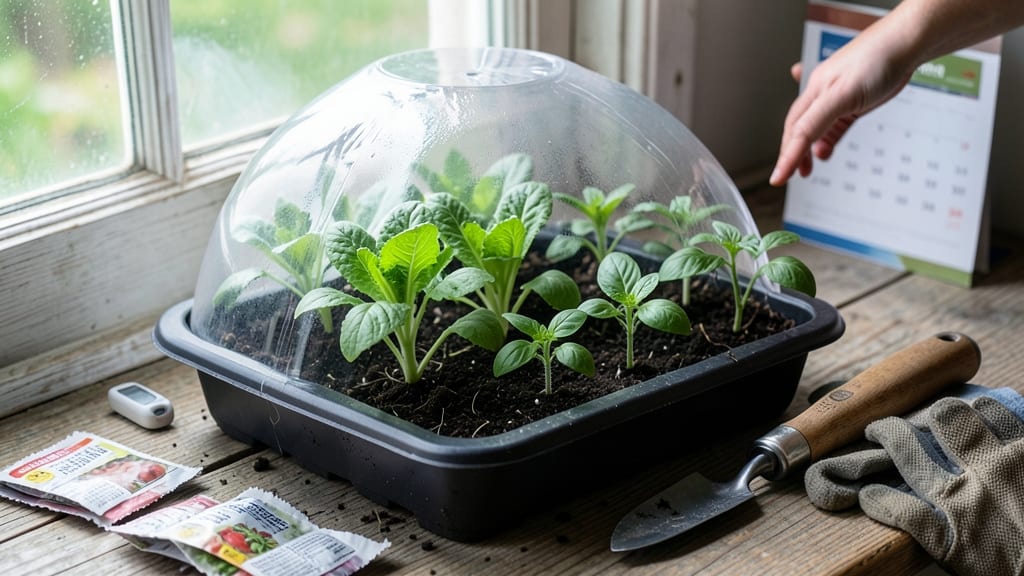
To start gardening vegetables at the right time means catching that sweet spot between frost and scorching heat — the window where your seeds or seedlings thrive instead of struggle.
Picture this: you’ve prepped the soil, ordered your seeds, and even cleared a patch of your yard — but if you plant too early, a late frost wipes out your hard work. Too late, and the summer heat arrives before your tomatoes or peppers have a chance to set fruit.
Getting the timing right is the difference between a bountiful harvest and a season of disappointment.
Your climate zone dictates the exact moment to begin, whether you’re sowing cool-loving greens in early spring or waiting for warm soil to transplant heat-lovers like peppers and cucumbers.
I’ll break down the best months for your region, how to read frost dates like a pro, and even when to start seeds indoors for a head start.
By the end, you’ll know exactly when to plant — down to the week — so you can enjoy fresh veggies all season long, no guesswork required.
USDA planting Zones: when to start vegetables based on your climate
Timing your vegetable garden correctly can mean the difference between a bumper crop and wasted effort. The USDA Planting Zones provide a framework for understanding when to start seeds or transplant seedlings based on your local climate.
Each zone—ranging from Zone 3 to Zone 10—has distinct last frost dates and ideal planting windows for both cool-season and warm-season crops.
For example, gardeners in Zone 3 (like northern Minnesota or Maine) must wait until late May or early June to plant warm-season crops like tomatoes or peppers, while those in Zone 10 (southern California or Florida) can start planting as early as February.
Understanding these differences ensures you avoid frost damage and maximize your harvest.
Below is a zone-by-zone breakdown of when to start vegetables, including direct sowing and transplanting schedules for popular crops. Use this as your guide to plan your garden with confidence!
In Zones 3-4, where frost lingers late, focus on cool-season crops like peas and lettuce in early spring. Transplant tomatoes and peppers only after the last frost date, typically in June. Use row covers to extend your growing season and protect tender seedlings from unexpected cold snaps.
Gardeners in Zones 5-6 enjoy a longer growing season, allowing for earlier starts. Begin sowing spinach and carrots as early as March, while tomatoes and cucumbers can be transplanted in May. For best results, start seeds indoors 6-8 weeks before your last frost date to give them a head start.
In Zones 7-8, you can plant radishes and kale as early as
Moon phases and seasonal cues: beyond Zones for perfect timing
While USDA planting zones provide a solid starting point, the most precise timing comes from combining lunar cycles with soil temperature and natural seasonal cues.
I’ve found that these additional factors can help me fine-tune planting schedules for carrots, beans, and corn—often resulting in healthier plants and higher yields.
Traditional lunar planting charts suggest planting root crops like carrots during the waxing moon when the soil is moist and receptive. Meanwhile, leafy greens and beans thrive during the full moon when their growth is encouraged by the moon’s gravitational pull.
But how do these methods stack up against science-backed soil temperature guidelines?
Here’s the key: Soil temperature (measured with a soil thermometer) is often the deciding factor. For example, beans need soil at 60°F or warmer to germinate properly, while corn thrives in soil above 50°F.
Natural seasonal cues—like the blooming of lilacs in spring—can also signal the perfect time to plant cool-season crops like lettuce or peas.
Lunar Planting vs. Soil Temperature: What Works Best?
Lunar Planting
- Pros: Aligns with natural rhythms, may improve root growth
- Cons: Less scientific backing, harder to generalize
Soil Temperature
- Pros: Science-backed, ensures germination and growth
- Cons: Requires tools (soil thermometer), less intuitive
For carrots, I’ve noticed that planting during the waxing gibbous moon (when the moon is more than half full) gives them a stronger start. However, if the soil isn’t warm enough (55°F or above), they’ll struggle to germinate, no matter the lunar phase.
This is where a soil thermometer becomes my best friend—it removes the guesswork.
When it comes to beans, I rely on both the full moon and soil temperature. Beans are heat-loving, so I wait until the soil reaches 60°F and the moon is full or waxing.
This combo has given me the most consistent results, especially for bush beans and pole beans. The full moon’s energy seems to boost their leafy growth, while the warm soil ensures strong root development.
For corn, I prioritize soil temperature over lunar phases. Corn needs 50°F soil to germinate, and I’ve learned the hard way that planting too early—even during a "favorable" lunar phase—can lead to slow, uneven growth.
I now use a soil thermometer to confirm the soil is ready before seeding, regardless of the moon’s phase.
Natural seasonal cues can also refine your timing. For example, when lilacs bloom in spring, it’s a sure sign that cool-season crops like lettuce and spinach can go in the ground.
Meanwhile, the first dandelions of summer often signal that it’s time to plant warm-season crops like tomatoes or peppers. These cues are especially helpful for gardeners who don’t rely on a soil thermometer or lunar charts.
In the end, the most successful gardeners I know blend traditional wisdom with modern science. Use the moon as a guide, but always check your soil temperature and watch for seasonal cues.
This hybrid approach has helped me grow healthier vegetables with fewer failures—whether it’s carrots, beans, or corn.