
Pests
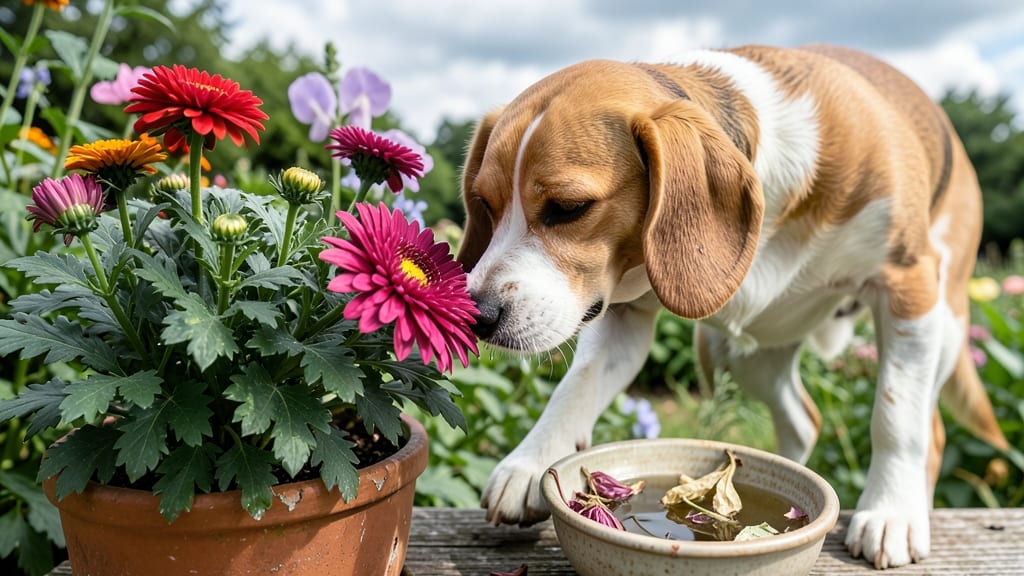
Garden mums (Chrysanthemums) are toxic to dogs, containing pyrethrins that cause drooling, vomiting, diarrhea, and lethargy. Severe cases may lead to weakness or difficulty breathing. Remove access immediately and contact a vet if ingestion occurs.
Garden mums (Chrysanthemums) contain natural compounds called pyrethrins and sesquiterpene lactones, which act as pesticides in the plant. 🐕 When dogs chew on leaves or flowers, these chemicals can irritate their digestive system and nervous system, leading to symptoms ranging from mild stomach upset to more serious reactions.
The severity often depends on how much your dog consumes—even small amounts of leaves can cause noticeable effects, while larger ingestions may require emergency veterinary care.
If you suspect your dog has eaten any part of a garden mum, act fast by removing access to the plant and monitoring for symptoms like excessive drooling or vomiting. Always have your vet's number handy, as prompt treatment can make a big difference in recovery.
For pet owners with green thumbs, consider swapping out mums for safer alternatives like sunflowers or marigolds, which are non-toxic and add beautiful color to gardens.
💡 In This Article
- Toxic Compounds in Garden Mums and Their Effects on Dogs
- Safe Dog-Friendly Flower Alternatives for Gardens
Toxic compounds in garden mums and their effects on dogs
The toxicity in garden mums (Chrysanthemums) stems from two key compounds: pyrethrins and sesquiterpene lactones. Pyrethrins act as natural insecticides, disrupting the nervous system of insects—and dogs—by overstimulating sodium channels in nerve cells.
This creates a cascade of erratic signals, leading to symptoms like drooling, vomiting, and muscle tremors. 🔥 Sesquiterpene lactones, meanwhile, trigger allergic reactions in sensitive dogs, causing skin irritation or gastrointestinal upset.
Leaves contain higher concentrations of these compounds than flowers, making them particularly dangerous. A single leaf can deliver enough pyrethrins to cause noticeable symptoms in a 10-pound dog, while larger ingestions (like eating multiple leaves or stems) may lead to severe reactions.
The ASPCA reports that symptoms typically appear within 6-12 hours of ingestion, though some dogs show effects as quickly as 2-4 hours. The plant's bitter taste may deter some dogs, but curious pups or those with access to garden beds are at risk.
What happens inside your dog's body? Pyrethrins bind to nerve receptors, causing overstimulation that manifests as tremors, seizures, or difficulty breathing in extreme cases. Sesquiterpene lactones irritate the digestive tract, leading to vomiting and diarrhea.
The combination can also trigger allergic skin reactions, with redness or itching around the mouth or paws. 💛 In severe poisoning cases, dogs may develop weakness or collapse due to respiratory distress—a medical emergency requiring immediate veterinary intervention.
Not all dogs react the same way. Factors like size, age, and health status play a role—smaller dogs or those with liver conditions may experience more intense symptoms due to slower toxin metabolism. Puppies are especially vulnerable because their nervous systems are still developing.
Even a tiny amount of dried mum leaves (common in mulch or flower arrangements) can pose risks, as the compounds remain potent when dehydrated.
Here's what to watch for after potential exposure:
- Mild symptoms: Excessive drooling, vomiting, or diarrhea within 6-12 hours
- Moderate symptoms: Lethargy, loss of appetite, or pawing at the mouth
- Severe symptoms: Muscle tremors, seizures, or difficulty breathing (requires emergency care)
The good news? Most dogs recover fully with supportive care, provided they receive prompt treatment. Activated charcoal (administered by a vet) can help bind toxins in the stomach, while IV fluids may be needed for dehydration.
Prevention is key—consider fencing off garden areas or choosing pet-safe plants to eliminate risks entirely. 💫