
Container Gardens
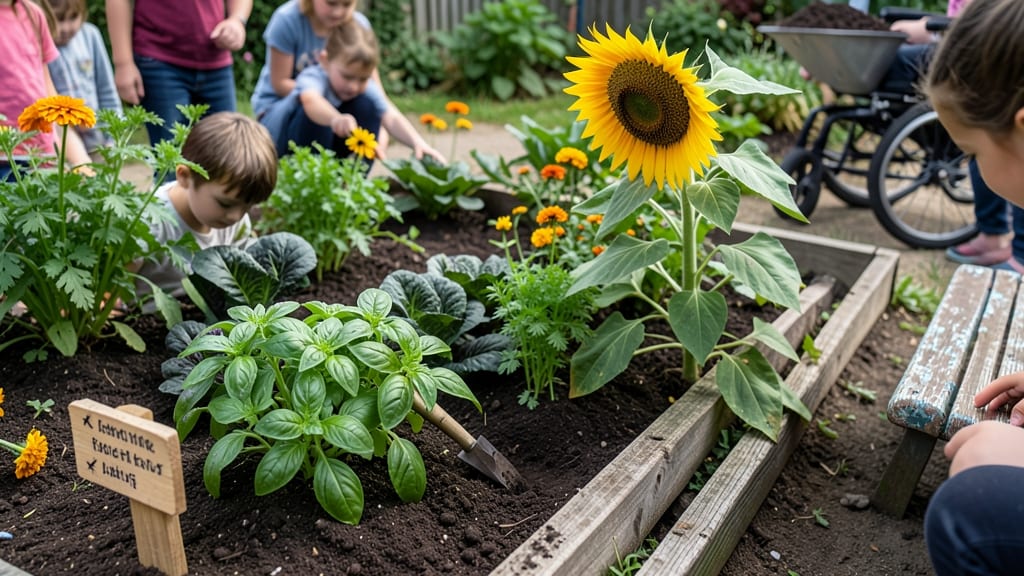
The benefits of gardens in schools include improved academic performance through hands-on learning, reduced stress and enhanced mental health, and stronger teamwork skills. Research shows they boost focus, creativity, and even nutrition awareness in students.
School gardens create a dynamic learning environment that goes beyond textbooks. 🌱 Hands-on planting and harvesting connect students to real-world science, math, and ecology concepts in ways traditional lessons can't match. For example, measuring plant growth introduces basic data analysis, while tracking seasons reinforces biology fundamentals.
Many schools report higher test scores in STEM subjects after implementing garden programs, proving this isn't just theoretical learning.
Beyond academics, these green spaces serve as natural stress relievers. The sensory experience of touching soil, smelling herbs, and watching plants grow triggers mindfulness that helps students regulate emotions. 🌿 Programs in underserved schools often use gardening as a trauma-informed tool, giving students a safe outlet to develop coping skills.
The collaborative nature of gardening also builds social connections, teaching responsibility and empathy through shared projects.
💡 In This Article
- Science-Backed Academic and Cognitive Benefits of School Gardens
- Mental Health and Social-Emotional Growth Through Gardening
Science-backed academic and cognitive benefits of school gardens
School gardens act as living laboratories where students engage in experiential learning that directly impacts cognitive development.
Research from the University of California shows that hands-on gardening improves STEM literacy by 30-50% compared to classroom-only instruction. 🌱 The tactile nature of planting seeds and observing growth creates neural connections that strengthen memory retention—students remember botanical concepts like photosynthesis 2-3 times longer than through traditional lectures alone.
What makes this particularly effective is how gardening integrates multiple subjects simultaneously. For example, measuring soil pH introduces chemistry principles, while calculating plant spacing reinforces math skills.
A 2019 study in the Journal of Environmental Education found that schools with garden programs saw 15% higher reading comprehension scores because students practiced writing about their gardening experiences, combining science with literacy development.
The sensory engagement—touching soil, smelling herbs, tasting homegrown produce—activates multiple brain regions, creating a more immersive learning experience than passive instruction.
The cognitive benefits extend to problem-solving and critical thinking.
When students encounter challenges like pests or poor soil quality, they must analyze situations and devise solutions—skills that translate directly to math and science problem-solving. 💡 One notable program at Boston's Fenway High School demonstrated that students who participated in garden-based learning showed 22% better performance on standardized tests in both math and science compared to their peers.
This improvement occurs because gardening requires students to apply concepts in real-time, making abstract theories concrete and immediately relevant.
Another key academic advantage is the connection to nutrition education. When students grow their own food, they're 2.5 times more likely to try new vegetables, according to research from the Centers for Disease Control.
Schools using garden programs report 40% reductions in food waste among students who helped grow their meals. The multisensory experience of harvesting and preparing food creates lasting associations between the garden and healthy eating habits, which can influence lifelong dietary choices.
The physical environment of a garden also plays a crucial role in cognitive function.
Studies on "biophilia"—our innate connection to nature—show that exposure to green spaces increases attention spans by up to 20 minutes compared to traditional classroom settings. 🌿 This extended focus time allows students to engage more deeply with academic content, particularly in subjects like ecology where they can observe ecosystems firsthand.
The combination of physical activity (digging, planting, weeding) and mental engagement creates an optimal learning state that traditional classrooms often lack.
For educators, this means school gardens aren't just extracurricular activities—they're powerful instructional tools that can be intentionally designed to meet curriculum standards. Many states now include garden-based learning in their science standards, recognizing that outdoor education provides unique opportunities to teach concepts that are difficult to convey indoors.
The key is structuring garden activities with clear learning objectives, just like any other lesson plan.