
Light Requirements
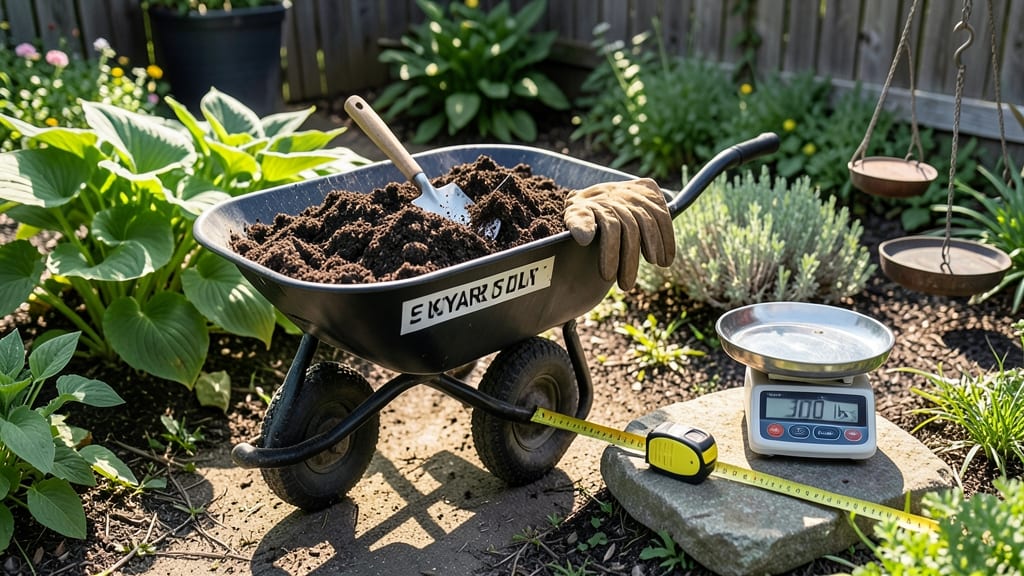
A yard of garden soil weighs 2,000 to 2,700 pounds depending on its composition, with topsoil averaging 2,200 lbs and heavier clay soils reaching 2,500+ lbs. Saturated soil can exceed 3,000 lbs per cubic yard due to water absorption.
A yard of garden soil's weight varies dramatically based on its moisture content and mineral composition. 🌱 Topsoil feels lighter because of its organic matter and air pockets, while clay holds more water and minerals, making it denser.
For example, a cubic yard of dry sandy soil might weigh closer to 1,800 lbs, but the same volume when damp could jump to 2,400 lbs. This is why professional landscapers always ask about soil moisture before estimating delivery loads—wet soil can easily double the weight of dry soil.
Understanding these variations helps you plan for proper equipment. A standard pickup truck typically handles up to 2,000 lbs per load, but clay soil deliveries often require larger vehicles.
I always recommend testing soil weight by filling a 5-gallon bucket and weighing it—this gives you a quick ratio to scale up to cubic yard estimates.
💡 In This Article
- Factors Affecting Garden Soil Weight by Type
- Practical Tips for Estimating Soil Weight Before Delivery
Factors affecting garden soil weight by type
Soil weight varies dramatically because of its particle composition and moisture content. Sandy soil has large, loosely packed particles with high porosity, creating air pockets that reduce density—typically weighing 1,800-2,200 lbs per cubic yard when dry.
In contrast, clay soil contains tiny, tightly packed particles that hold water like a sponge, increasing weight to 2,500-3,000 lbs when saturated. This difference happens because clay particles have a surface area 10-100 times larger than sand, allowing them to absorb and retain more water.
The organic matter in topsoil adds another layer of complexity. Topsoil contains decomposed plant material (humus) that increases porosity but reduces overall density compared to mineral-heavy clay.
For example, a cubic yard of peat-based topsoil might weigh just 1,500-1,800 lbs when dry, but the same volume of loam (a mix of sand, silt, and clay) typically falls between 2,200-2,500 lbs.
The key factor is how much air and water each soil type can hold—clay's dense structure leaves little room for air, while sandy soil has more space between particles. 🌱
Compaction plays a surprising role too. When soil is tilled or driven over, particles pack more tightly, reducing air pockets and increasing weight.
For instance, a freshly tilled garden bed might weigh 2,000 lbs per cubic yard, but the same soil after heavy rain or foot traffic could reach 2,400 lbs due to compaction. This is why professional gardeners recommend testing soil in its natural state—disturbing it changes its weight characteristics dramatically.
Regional differences also matter. Coastal areas often have lighter, sandy soils with lower mineral content, while inland regions frequently feature heavier clay deposits. For example, the Mississippi River Valley is known for its fertile but dense clay soils, while Florida's sandy soils weigh significantly less.
Even within a single yard, variations can occur—surface layers are usually lighter due to organic content, while subsoil often contains more minerals and weighs 10-20% more per cubic yard.
Moisture content is the wild card that can double soil weight overnight. Dry soil absorbs water like a sponge, with clay expanding up to 50% in volume when saturated.
This expansion increases weight because water adds 8.34 lbs per gallon—a cubic yard of dry clay (2,500 lbs) can become 3,000+ lbs when fully saturated. That's why delivery trucks often avoid clay soil in rainy seasons—the weight jump can exceed vehicle capacity limits. 💧
Understanding these factors helps explain why your neighbor's "light" topsoil might feel heavier than expected. The science lies in how soil particles interact with water and air—small changes in composition create big differences in weight.
For practical purposes, always assume wet soil will weigh 30-50% more than dry soil when planning deliveries or storage.