Planting
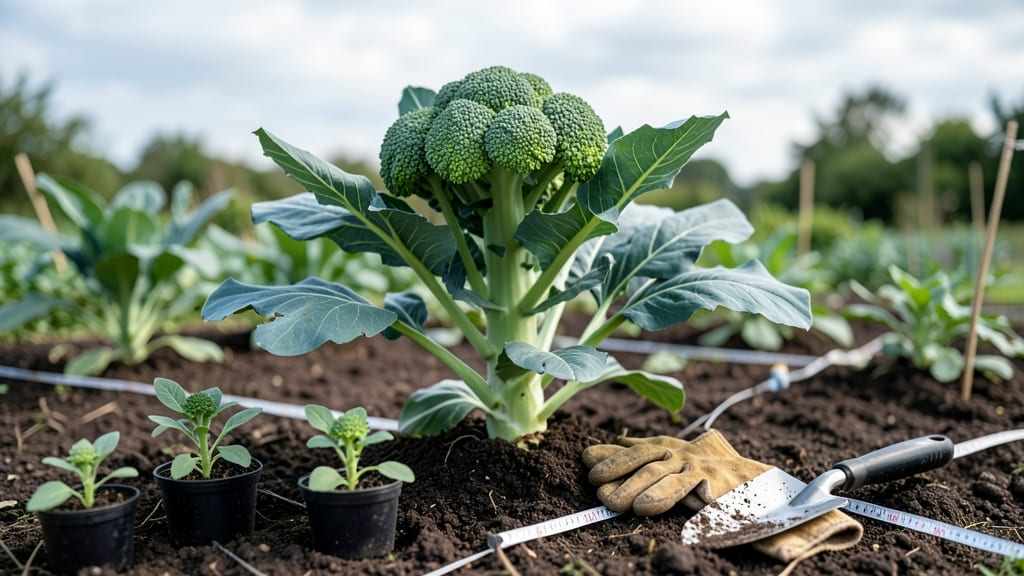
Proper broccoli spacing in garden is the foundation of a thriving 🥦 harvest, not just about cramming in more plants.
Picture this: you’ve spent weeks tending to your broccoli seedlings, only to watch them struggle for space, resulting in stunted growth or disease-prone clusters. The right spacing isn’t just about fitting more plants—it’s about giving each one room to grow strong, healthy heads while maximizing your yield.
In this guide, we’ll cover the ideal distances for rows, hills, and containers, plus how to adjust spacing for different varieties and soil conditions. You’ll learn how to spot overcrowding early and fix it without sacrificing your harvest.
Whether you’re a beginner or a seasoned gardener, these pro tips will help you avoid common mistakes and ensure your broccoli thrives from seed to harvest.
Optimal broccoli spacing by planting method (rows, hills, OR containers)
Getting the broccoli spacing right transforms your garden from a cramped jungle to a high-yielding powerhouse. I’ve learned the hard way—packing plants too close means smaller heads, more pests, and a battle for nutrients.
The key? Understanding how your planting method (rows, hills, or containers) changes spacing needs. Let’s break it down so you can maximize every square foot without sacrificing quality.
Broccoli thrives when it has room to breathe, but the exact spacing depends on your garden setup. Standard varieties like Calabrese need more elbow room than dwarf varieties, and container gardening demands even tighter spacing.
I’ll cover all three methods—in-ground rows, raised beds/hills, and containers—so you can pick the perfect fit for your space and goals.
Here’s why spacing matters: Broccoli plants compete for sunlight, water, and nutrients. When crowded, they produce smaller heads and become more susceptible to diseases like clubroot or downy mildew.
Proper spacing also makes harvesting easier and reduces pest pressure by improving airflow. Trust me, a few extra inches now save headaches later!
For in-ground rows, I recommend spacing plants 18–24 inches apart with rows 24–36 inches apart. This gives broccoli enough room to develop those plump heads without shading neighbors.
If you’re working with heavy clay soil or drought conditions, widen the spacing to 24 inches to reduce competition for moisture and nutrients.
When using raised beds or hills, you can tighten the spacing slightly to 12–18 inches between plants and 18–24 inches between hills. Hills are especially useful for improving drainage, which is critical for broccoli’s root health.
Just remember: the smaller the variety, the closer you can plant. For example, dwarf broccoli like 'Little Gem' can handle 12-inch spacing, while standard types need that extra room.
Container gardening is where spacing gets creative. In a 5-gallon container, plant just one broccoli seedling every 12 inches around the edges.
If you’re using larger pots (10+ gallons), you can fit two plants per container, but avoid overcrowding—broccoli needs space to send out those side shoots after harvest. Pro tip: Use well-draining potting mix with compost to compensate for the limited root space.
Why does plant size matter so much? Dwarf varieties like 'Calabrese' or 'Romanesco' stay compact (1–2 feet tall), so they’re perfect for containers or tight spaces. Standard varieties, though, can reach 2.5–3 feet, so they need that extra 20
How to adjust broccoli spacing for different varieties and soil conditions
Not all broccoli varieties play well together—and your soil type can drastically change the ideal spacing. For example, calabrese broccoli (the classic blue-green variety) thrives with 18-24 inches between plants, but Romanesco (with its fractal-like florets) needs 24-30 inches to avoid competition.
Meanwhile, sprouting broccoli (like 'Calabrese Sprouting') can handle 12-18 inches since it produces multiple harvestable side shoots. Purple varieties, like 'Purple Sprouting', often need 20-24 inches to prevent overcrowding and ensure vibrant color retention.
Soil fertility also dictates spacing adjustments. In rich, compost-amended soil, you can narrow spacing slightly (e.g., 16-18 inches for calabrese) because plants grow faster and compete less.
But in poor or sandy soil, widen spacing to 24-30 inches—this gives roots room to forage for nutrients, compensating for lower fertility. Clay-heavy soils? Space plants 30 inches apart to prevent waterlogging and root rot.
Climate zones matter too. In cool, short-season areas (Zones 3-5), plants grow slower, so tighten spacing to 16-20 inches to maximize yield before frost.
But in warm climates (Zones 7-10), broccoli bolts faster—space plants 24-30 inches apart to avoid heat stress and encourage longer harvest windows. Companion planting also influences spacing: Pairing broccoli with fast-growing radishes (which you harvest early) lets you space broccoli 18 inches apart without competition.
Broccoli Spacing: Pros & Cons
✅ DO THIS
- Widen spacing (24-30") for Romanesco or purple varieties in hot climates
- Narrow spacing (16-18") in fertile soil with companion plants like radishes
- Space 30" apart in clay soil to prevent root rot
- Adjust rows 30-36" apart for mechanical harvesters (commercial gardens)
❌ AVOID THIS
- Tight spacing (12") for standard varieties leads to smaller heads and pest hotspots
- Ignoring soil type—e.g., 18" spacing in sandy soil causes nutrient stress
- Overcrowding in containers—max 1 plant per 5-gallon pot (never 2+)
- Planting too close in frost-prone zones—16" spacing risks bolting before harvest
Here’s a quick rule of thumb: Measure your broccoli’s mature width (check seed packets) and add 6-12 inches to that number for spacing. For instance, if your calabrese matures at 2 feet wide, space it 2.5-3 feet apart.
In raised beds, reduce spacing by 20% (e.g., 18" instead of 24") because soil fertility is higher. But in containers, limit to one plant per 5-gallon pot—any closer, and roots will tangle, stunting growth.
Pro tip: Use straw mulch around plants to retain moisture and reduce competition. This lets you safely narrow spacing by 2-4 inches in dry climates without sacrificing yield.
Just avoid piling mulch against stems to prevent rot. Container growers, add 2 inches of compost to the bottom of pots before planting to offset the need for wider spacing.
Finally, watch for soil compaction—if your garden soil feels hard when pressed, widen spacing to 30 inches to prevent root restriction.
Amend compacted soil with peat moss or coconut coir before planting to improve aeration. Well-draining, loose soil lets you stick to standard spacing guidelines, but dense or rocky soil demands extra room for roots to spread.