
Advice
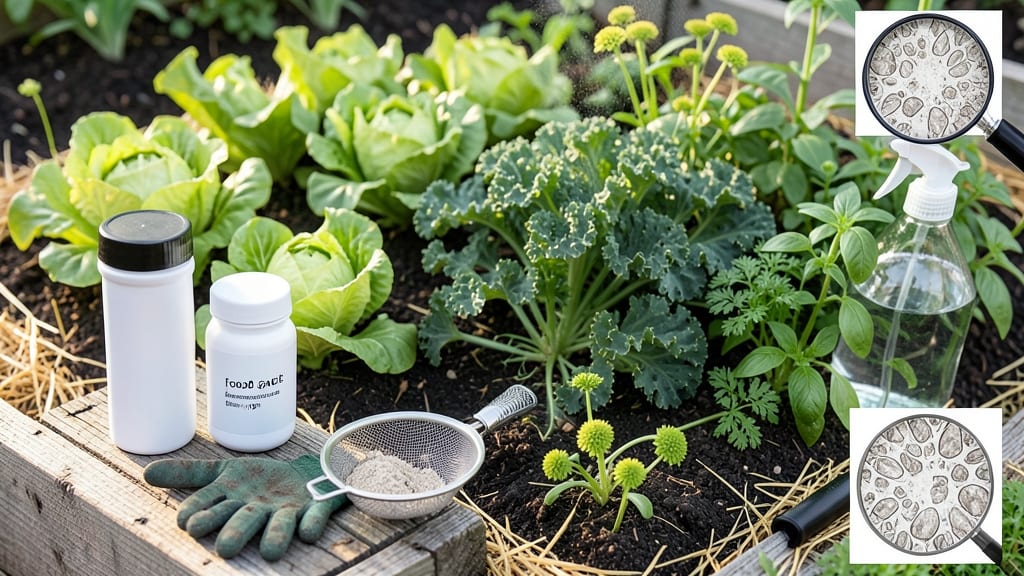
Yes, you can put diatomaceous earth in your garden as a natural pesticide, but use food-grade DE only—apply thin layers around plants, avoid direct contact with foliage, and reapply after watering. It’s non-toxic but requires careful handling for best results.
Diatomaceous earth (DE) works as a natural pest control by creating microscopic cuts in insects' exoskeletons, causing them to dehydrate. 🌱 The key is using food-grade DE—it's safe for plants and beneficial insects like bees when applied correctly.
Unlike chemical pesticides, DE breaks down harmlessly in sunlight and doesn't leave toxic residues. For best results, apply it in dry conditions during early morning or evening when pests are most active.
When applying, use a light dusting around plant bases rather than directly on leaves to avoid harming beneficial insects. A standard application is about 1 to 2 pounds per 100 square feet, but always follow the product's guidelines.
Remember to reapply after rain or heavy watering, as DE loses effectiveness when wet. For organic gardeners, this is a fantastic alternative to harsh chemicals!
💡 In This Article
- How Diatomaceous Earth Kills Pests Without Harming Plants
- Best Practices for Applying DE in Gardens and Landscapes
How diatomaceous earth kills pests without harming plants
Diatomaceous earth works through a mechanical process rather than chemical toxicity. The powder consists of fossilized remains of diatoms—microscopic algae with razor-sharp edges.
When insects like aphids, slugs, or ants crawl across it, these microscopic particles cut through their waxy exoskeletons, causing rapid dehydration and death within 24-72 hours. 🌿 The key advantage is that DE doesn't affect plants or beneficial insects like bees and ladybugs because their exoskeletons are softer or they avoid direct contact with the ground.
This selective toxicity makes DE far safer than chemical pesticides, which often kill beneficial insects alongside pests. For example, chemical sprays like malathion can harm bees for up to 21 days after application, while DE poses no risk to pollinators when applied correctly.
The powder also breaks down harmlessly in sunlight, leaving no toxic residues in soil or water. Unlike systemic pesticides that accumulate in plants, DE works on contact and disappears within days of rain or watering.
DE's effectiveness depends heavily on dry conditions—it loses its sharp edges when wet, making it useless against pests after rain. That's why gardeners apply it in the early morning or evening when humidity is lowest and pests are most active.
The particles need to remain dry to maintain their cutting ability, which is why you'll often see DE used in greenhouses or indoor plant areas where moisture control is easier to manage.
Another advantage is that DE doesn't create resistance in pests. Unlike chemical pesticides that can lead to superbugs developing immunity over time, insects don't adapt to DE because it works through physical rather than biological mechanisms.
This makes it a reliable long-term solution for organic gardeners who want to avoid the pesticide treadmill. The powder also helps control soil-dwelling pests like grubs and nematodes by creating a barrier they can't penetrate.
When comparing DE to chemical alternatives, the environmental impact is dramatically different. Chemical pesticides often require protective gear and leave harmful residues that can contaminate groundwater. DE, on the other hand, is completely inert when not in contact with pests—it's essentially just powdered silica that returns to its natural state.
This makes it particularly appealing for organic certification standards, where synthetic chemicals are prohibited.