
Fertilization
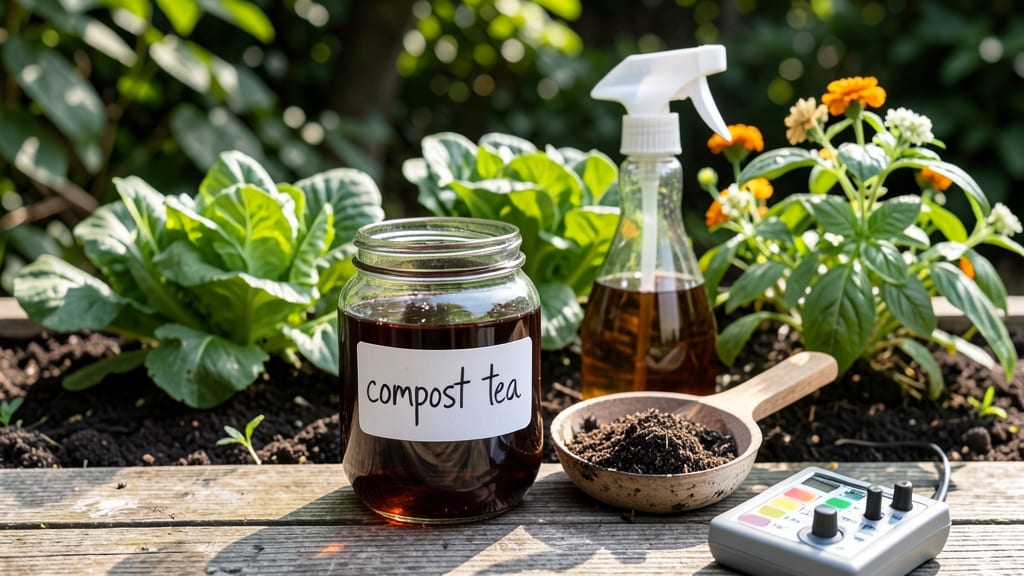
Creating compost tea for garden requires soaking finished compost in water for 24-48 hours to produce a nutrient-packed liquid that revitalizes soil microbes and promotes plant vitality. Oxygenate the mixture regularly to prevent harmful anaerobic bacteria, then filter and dilute before applying to garden beds.
This liquid fertilizer works by extracting beneficial microorganisms from compost, including bacteria and fungi that break down organic matter and make nutrients more accessible to plants. 🌱 The key to success lies in maintaining proper oxygen levels during brewing—anaerobic conditions create foul-smelling byproducts that can harm rather than help your garden.
For best results, use a 5-pound batch of compost per 5 gallons of water and apply the diluted tea directly to soil or as a foliar spray during active growing seasons.
Many gardeners enhance their compost tea by adding 1 tablespoon of molasses per gallon, which feeds the microbes during fermentation. This extra step creates a more potent brew that can help struggling plants recover from stress or disease.
Always use the tea within 24 hours of brewing to maintain microbial activity and effectiveness.
💡 In This Article
- Science Behind Compost Tea: How It Enhances Soil Microbes
- Best Compost Tea Recipes for Different Garden Needs
Science behind compost tea: how it enhances soil microbes
Compost tea works by extracting and activating beneficial microorganisms from compost through a controlled fermentation process. When you steep compost in water, aerobic bacteria and fungi—like Pseudomonas and Trichoderma—colonize the liquid, creating a microbial soup packed with enzymes and nutrients.
These microbes break down complex organic matter into simpler forms that plants can absorb more efficiently. The key difference between aerobic and anaerobic tea lies in oxygen exposure: aerobic brewing (with aeration) produces a balanced, beneficial microbial community, while anaerobic brewing (without oxygen) can generate harmful pathogens and foul odors.
Aerobic compost tea mimics natural soil conditions, where oxygen supports the growth of beneficial microbes that suppress plant diseases and improve nutrient cycling. Studies show that a well-balanced tea can contain 100 million to 1 billion beneficial microbes per milliliter, compared to just 1,000 to 10,000 in healthy soil.
This microbial boost enhances soil structure by producing polysaccharides that bind soil particles together, improving water retention and root penetration. The tea also releases growth-promoting hormones like auxins and cytokinins, which stimulate plant growth and stress resistance.
One of the most critical factors is the carbon-to-nitrogen (C:N) ratio of your compost. A balanced ratio (around 25:1 to 30:1) ensures microbes have enough energy (carbon) and nutrients (nitrogen) to thrive.
If your compost is too carbon-rich (like fresh wood chips), microbes will consume more nitrogen from your soil, potentially harming plants. To avoid this, use fully decomposed compost with a dark, crumbly texture and earthy aroma—never fresh manure or undecomposed materials, which can introduce harmful pathogens.
The addition of molasses or other microbial food sources accelerates the fermentation process by providing readily available energy for microbes. For example, 1 tablespoon of molasses per gallon can increase microbial activity by 30-50%, resulting in a more potent tea.
However, overfeeding microbes with too much molasses can lead to an imbalance, where fast-growing species outcompete slower, beneficial ones. Always follow a 1:100 ratio (1 part molasses to 100 parts water) to maintain microbial diversity.
When applied to soil, compost tea forms a protective microbial film around plant roots, creating a symbiotic relationship where microbes help plants absorb nutrients while receiving shelter and organic matter. This biological shield reduces the need for chemical fertilizers and pesticides, making plants more resilient to drought, disease, and pests.
For instance, foliar applications of compost tea can help prevent powdery mildew on roses by promoting the growth of Bacillus subtilis, a natural antagonist to fungal pathogens.
To maximize benefits, apply compost tea in the early morning or late evening when temperatures are cooler and evaporation is minimal. A 1:10 dilution (1 part tea to 10 parts water) is ideal for most plants, but sensitive species like tomatoes may need a 1:20 dilution to avoid overfeeding.
Always use the tea within 24 hours of brewing to ensure microbial viability—stored tea quickly loses its potency as microbes deplete available nutrients.
What most gardeners don't realize is that compost tea isn't just about adding nutrients—it's about restoring the soil food web. Healthy soil contains millions of microorganisms working together to decompose organic matter, cycle nutrients, and suppress diseases.
By introducing a diverse microbial population through compost tea, you're essentially giving your soil a probiotic boost, similar to how probiotics benefit human digestion. 🌱