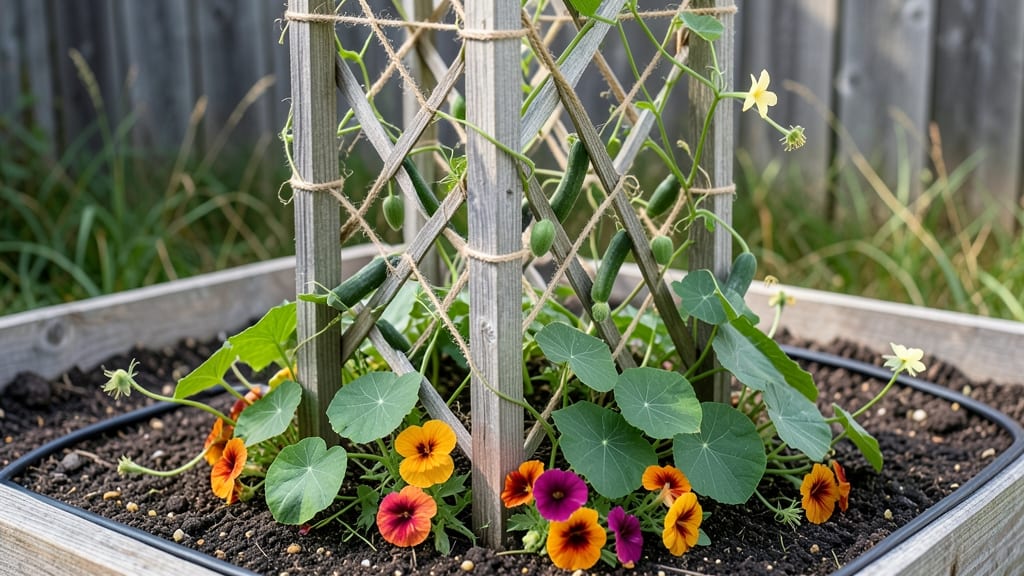
Transforming your garden bed with trellis ideas for climbing plants 🌿 can turn wasted space into a lush, vertical paradise—whether you’re growing cucumbers, roses, or morning glories.
Picture this: a small plot bursting with vines that would otherwise sprawl across your lawn, stealing space and sunlight. The right trellis doesn’t just support plants—it elevates your garden’s design, adds height, and keeps everything neat and organized.
From rustic wooden arbors to sleek metal obelisks, the options are endless. You’ll discover how to choose materials that match your style and budget, pair trellises with the perfect climbing companions, and even build your own with simple tools.
Ready to reclaim your garden’s vertical potential? Let’s dive into 10 creative trellis designs that make climbing plants the star of your outdoor space—no matter how limited your square footage.
10 Space-saving garden bed trellis designs for climbing plants
Transforming your garden into a vertical paradise doesn’t require sacrificing square footage. With the right trellis designs, you can guide climbing plants upward, creating stunning focal points while maximizing space.
Whether you have a small balcony, raised bed, or compact yard, these space-saving trellis ideas will help you grow more in less space. From elegant A-frame trellises to whimsical spiral designs, each option offers unique benefits for your climbing plants.
Trellises aren’t just functional—they’re decorative. A well-placed trellis can frame your garden, draw attention to prized plants, and even create privacy screens. For example, a teepee trellis works beautifully with pole beans or morning glories, while a horizontal lattice is perfect for cucumbers or grapes.
The key is matching the trellis style to your plant’s growth habits and your garden’s layout. Let’s explore the best options to inspire your next project.
Comparison Table: Top 10 Trellis Designs for Garden Beds
| Trellis Type |
Best For |
Materials |
Height Range |
Space Saved |
| A-Frame Trellis |
Roses, Clematis, Wisteria |
Wood, Metal, PVC |
4-8 ft |
Moderate (30-50%) |
| Obelisk Trellis |
Beans, Peas, Morning Glories |
Bamboo, Wood, Wire |
3-6 ft |
High (50-70%) |
| Teepee Trellis |
Pole Beans, Gourds, Clematis |
Wood, Metal Stakes |
5-10 ft |
High (60-80%) |
| Spiral Trellis |
Cucumbers, Melons, Ivy |
PVC, Wood, Wire |
4-7 ft |
Moderate (40-60%) |
| Horizontal Lattice |
Grapes, Tomatoes, Peppers |
Wood, Metal Grid |
3-5 ft |
Low (20-40%) |
| Arbor Trellis |
Roses, Jasmine, Hops |
Wood, Metal |
6-12 ft |
High (70-90%) |
| Cage Trellis |
Tomatoes, Eggplants, Peppers |
Wire, Plastic |
2-4 ft |
Low (10-30%) |
| Fan Trellis |
Clematis, Wisteria, Passionflowers |
Wood, Metal |
5-10 ft |
Moderate (40-60%) |
| Container Trellis |
Miniature Vines, Herbs, Flowers |
Bamboo, Wire, Plastic |
1-3 ft |
How to choose the right trellis for your climbing plants
Selecting the perfect trellis transforms your garden from flat to fabulous by guiding climbing plants upward. But with so many options, how do you choose?
Start by matching your trellis to your plant’s growth habit—vines like clematis need lightweight, flexible supports, while bushy climbers like roses require sturdy, wide structures. Ignoring this match leads to flopping plants or snapped trellises.
Next, consider weight capacity. Heavy vines like wisteria (up to 20 lbs per vine) demand metal or thick wooden trellises, while lightweight morning glories thrive on simple bamboo stakes.
Skipping this step risks your trellis bending under the weight of mature plants, turning your vertical garden into a tangled mess.
Your garden’s layout also plays a critical role. Tight spaces? Opt for teepee or obelisk trellises that save floor space. Long garden beds? A linear trellis or archway creates a stunning backdrop. Poor placement wastes potential—like installing a tall trellis where your plants can’t reach the sun.
Trellis Type Comparison
Pros
- 🌿 Space-saving: Maximizes vertical growth in small gardens
- 🌱 Improves airflow: Reduces fungal diseases like powdery mildew
- 🎨 Aesthetic appeal: Adds structure and focal points to beds
- 💧 Easier harvesting: Keeps fruits/flowers accessible and clean
Cons
- ⚠️ Wrong size: Trellis too small = plants sprawl; too tall = wasted space
- 🪵 Weak materials: Thin wood or plastic bends under heavy vines
- 🌧️ Poor drainage: Metal trellises can heat up and burn plant stems
- 🔧 Installation mistakes: Uneven bases cause trellises to lean or collapse
Avoid the common mistake of overcrowding trellises. Planting three cucumber vines on a single 4-foot trellis leads to competition for sunlight and nutrients, stunting growth. Instead, space plants 12–18 inches apart on their own supports or use modular trellis sections for flexibility.
Don’t overlook maintenance needs. Trellises made of untreated wood may rot within a year unless sealed annually, while powder-coated metal lasts decades but can get too hot for delicate stems. Choose materials that match your garden’s climate—bamboo thrives in humidity, while PVC resists rot in wet areas.
Test your trellis before planting. Give it a gentle shake—if it wobbles, secure it deeper into the ground or add stakes for stability. For heavy climbers, anchor trellises with concrete footings or tie them to permanent structures like fences.
A sturdy trellis ensures your plants grow strong and upright, not flopping over by midsummer.
★★★★★4.8(7 reviews)
|