
Size
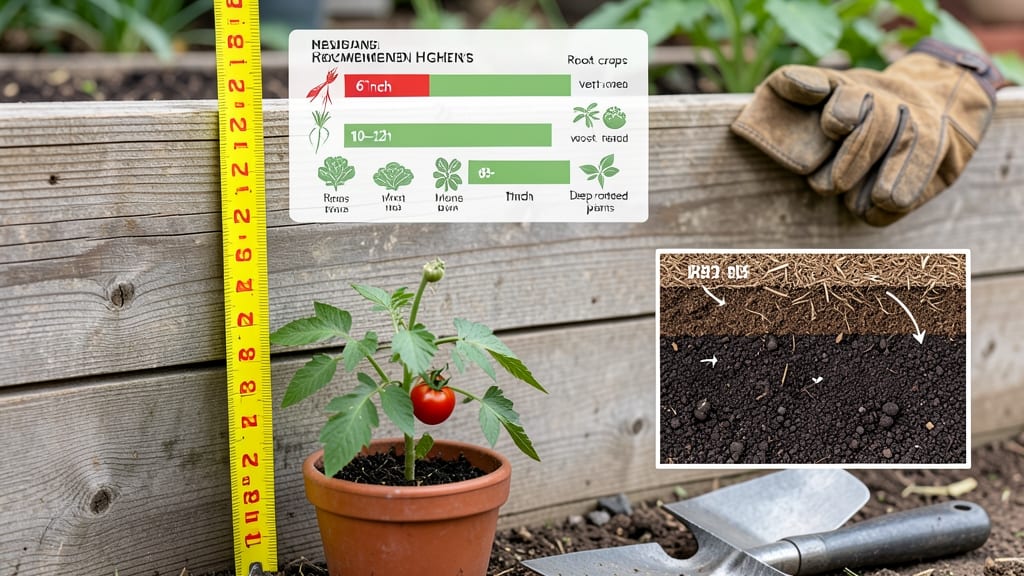
To determine how tall a raised garden bed needs to be, aim for 6 to 12 inches to support most plants while improving drainage and ease of maintenance, though deeper beds (12-18 inches) are ideal for root crops and better moisture retention.
Height directly impacts what you can grow and how easily you can tend to your garden. 🌱 A 6-inch bed works for shallow-rooted plants like lettuce or herbs, while 12-inch beds give carrots and radishes enough room to thrive.
The extra depth also reduces soil compaction and makes watering more efficient by minimizing evaporation. Many gardeners choose 18-inch beds for maximum flexibility—you can grow everything from potatoes to tomatoes without worrying about root restrictions.
Accessibility plays a huge role too. Beds that are 12 inches or taller let you garden without bending over, which is especially helpful for people with back issues or younger children. Just remember: taller beds require more soil, which can add up in cost and weight—so plan your materials carefully.
For example, cedar boards are lightweight but may need replacement every few years, while composite lumber lasts longer but costs more upfront.
💡 In This Article
- Raised Garden Bed Height Requirements for Root Growth
- Choosing the Best Raised Garden Bed Height for Accessibility and Soil Quality
Raised garden bed height requirements for root growth
The height of your raised garden bed directly influences plant growth by determining how much space roots have to spread and access nutrients. Most vegetables need at least 6 inches of soil depth to thrive, but their root systems vary dramatically.
For example, leafy greens like spinach or kale only require about 4-6 inches of soil, while carrots or beets demand 12-18 inches for their long taproots to develop properly.
The extra depth in taller beds also creates a larger soil volume, which helps regulate moisture levels and temperature fluctuations, creating a more stable growing environment.
Here's what happens when roots hit the bottom of a shallow bed: they become constricted, which can stunt growth or lead to nutrient deficiencies. 🌱 For instance, potatoes need 12-18 inches of soil to produce full-sized tubers, while strawberries—with their shallow roots—can thrive in just 6 inches.
The key is matching your bed height to the plants you want to grow. Deeper beds also reduce soil compaction, allowing roots to penetrate more easily and access water deeper underground, which is especially valuable during drought conditions.
Soil quality plays a crucial role in how effective different bed heights are. In a 6-inch bed, the soil dries out faster because it's exposed to more air and sunlight, requiring more frequent watering.
A 12-inch bed retains moisture longer due to its increased volume, while an 18-inch bed mimics the depth of in-ground soil, providing the best conditions for deep-rooted crops.
The extra depth also allows for better aeration at the bottom, which is essential for microbial activity that breaks down organic matter into plant nutrients.
Let's break down the science: taller beds create a thermal buffer, keeping roots cooler in summer and warmer in winter. This stability is particularly important for sensitive crops like lettuce or herbs, which can bolt (go to seed prematurely) if exposed to sudden temperature swings.
The deeper soil also acts as a reservoir, storing water and nutrients that shallow beds simply can't hold. For instance, a 12-inch bed might hold 30% more water than a 6-inch one, reducing the frequency of irrigation needed during dry spells.
One common misconception is that any height will work as long as you add more soil. However, this isn't always true—if your bed isn't structurally sound, the weight of deep soil can cause warping or collapse over time.
For example, a 18-inch bed filled with moist soil can weigh over 1,000 pounds, requiring sturdy materials like pressure-treated lumber or metal frames. Always check your bed's load-bearing capacity before filling it to the maximum recommended depth.
For gardeners who want maximum flexibility, 12-18 inches is the sweet spot—it accommodates nearly all vegetables while providing the benefits of deeper soil.
This height range also makes it easier to practice square-foot gardening, a space-efficient method where you divide the bed into a grid and plant different crops in designated squares.
With the right height, you can grow everything from bush beans in 6-inch squares to corn in 12-inch squares, all in the same bed.