
Tools
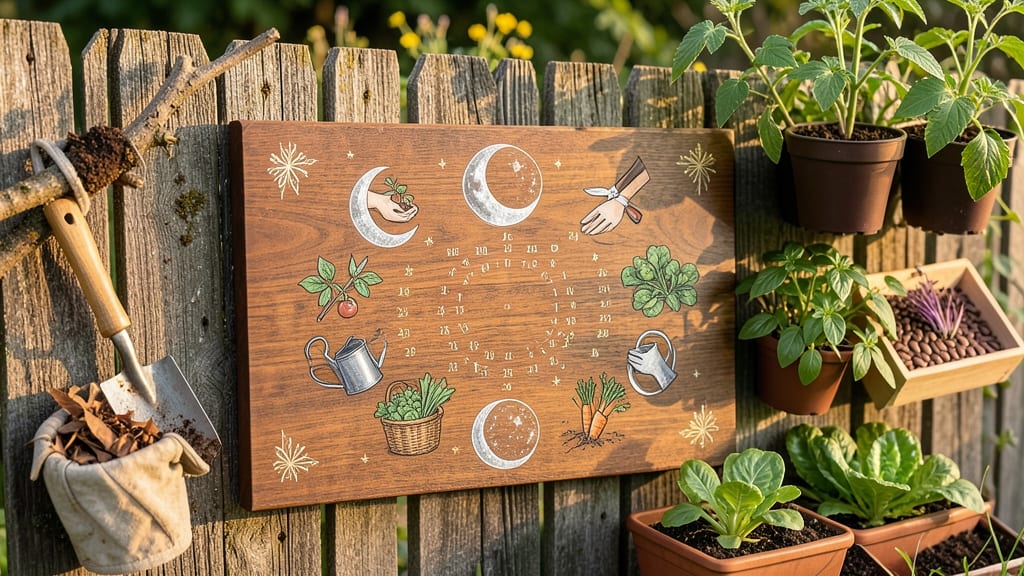
A lunar calendar for gardening aligns planting and harvesting with moon phases to optimize plant growth, root development, and soil fertility by leveraging gravitational and lunar energy cycles for better yields and resilience.
A lunar calendar for gardening works by syncing planting and harvesting with the moon's cycles, which influence plant growth patterns. 🌙 During waxing phases, when the moon is growing, focus on planting above-ground crops like tomatoes and lettuce, as the energy promotes leafy growth.
Conversely, waning phases—when the moon shrinks—are ideal for root crops such as carrots and potatoes, as the gravitational pull encourages deeper root development.
This ancient practice taps into natural rhythms, reducing water waste and improving soil health by aligning with the moon's gravitational pull on water and sap flow in plants.
Many gardeners swear by this method, reporting stronger plants and higher yields when they follow the lunar calendar. For example, planting flowers during a waxing gibbous phase can lead to more vibrant blooms, while harvesting during a full moon ensures peak flavor and nutrient density.
It’s not just about timing—it’s about working with nature’s built-in schedule to create a more sustainable and productive garden.
💡 In This Article
- How Moon Phases Influence Plant Growth and Development
- Best Practices for Using a Lunar Calendar in Your Garden
How moon phases influence plant growth and development
The moon’s gravitational pull subtly affects plant physiology, particularly through its influence on water movement. During waxing phases (new moon to full moon), the moon’s gravity pulls ocean tides upward, creating a similar upward draw on water in soil.
This encourages plants to direct energy toward leafy growth and flowering, making it ideal for planting above-ground crops like basil, beans, and lettuce. The sap flow in plants rises during these phases, delivering nutrients more efficiently to the stems and leaves.
Conversely, waning phases (full moon to new moon) see the moon’s gravity pulling downward, which stimulates root development and water absorption. This is why root vegetables like carrots, potatoes, and onions thrive when planted during these times.
The gravitational shift also encourages water to move deeper into the soil, helping roots establish stronger anchors. Studies show that plants grown in alignment with these cycles can develop up to 30% more robust root systems compared to those planted randomly.
The moon’s energy also impacts soil moisture retention. During waxing phases, the soil’s surface stays slightly drier because water is drawn upward, while waning phases promote deeper moisture retention. This natural rhythm reduces water waste—something critical for drought-prone regions.
For instance, in Zone 5 climates, gardeners using lunar calendars report needing 20% less irrigation when planting root crops during waning phases, as the soil holds moisture longer.
Another key factor is the moon’s position relative to the equator. When the moon is in its northern hemisphere (above the celestial equator), it’s optimal for planting crops that grow above ground, like tomatoes and peppers.
When it’s in the southern hemisphere, focus on root crops or those that grow below the soil, such as garlic or onions. This alignment with celestial mechanics ensures plants grow in harmony with their natural tendencies.
What’s fascinating is how these principles extend to harvesting. Fruits and vegetables picked during a waxing gibbous phase (when the moon is 50-90% illuminated) tend to have higher sugar content and better flavor. This is because the upward energy promotes photosynthesis and nutrient accumulation in the fruits.
For example, strawberries harvested during this phase often have 15-20% more vitamin C compared to those picked at other times.
Finally, the moon’s influence isn’t just about gravity—it’s also tied to electromagnetic fields. The moon’s magnetic field interacts with Earth’s, creating subtle changes in plant cell division and enzyme activity.
While the effects are minor, they’re measurable in controlled studies, reinforcing why lunar gardening can yield more resilient and productive plants over time.