
Tools
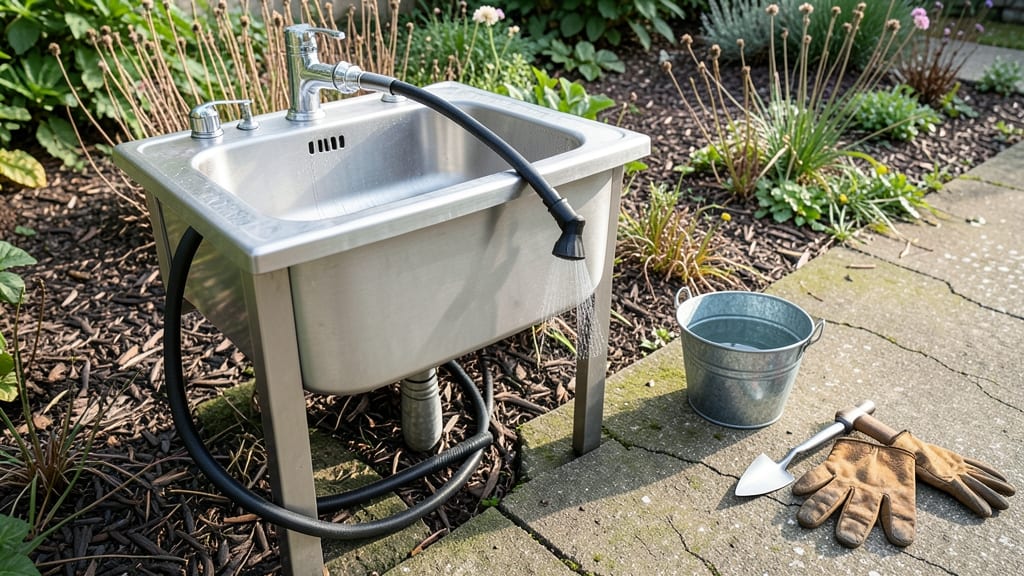
Installing an outdoor garden hose sink involves burying a PVC pipe with a threaded outlet, connecting it to your water supply, and mounting a durable sink basin with a secure faucet connection. Proper sealing and backflow prevention are essential for long-term performance.
An outdoor garden hose sink gives you a dedicated water source for gardening, washing tools, or rinsing off muddy pets—but getting it right means planning for exposure to weather and pressure changes. 🔥 The buried PVC pipe must extend at least 12 inches deep to prevent freezing in cold climates, while brass fittings resist corrosion better than cheaper alternatives.
I always recommend testing the water flow before finalizing connections to avoid costly repairs later.
Once you've marked the pipe location and dug the trench, use a slip coupling to connect sections of pipe smoothly, then seal all joints with outdoor-rated PVC cement. For the sink itself, choose a stainless steel or heavy-duty plastic basin that can handle weight and temperature swings.
Mounting it on a sturdy concrete pad ensures stability, and a backflow preventer valve keeps contaminants from flowing back into your home's plumbing system.
💡 In This Article
- Choosing the Right Materials for Outdoor Hose Sink Installation
- Step-by-Step Outdoor Hose Sink Installation Process
Choosing the right materials for outdoor hose sink installation
Outdoor conditions demand materials that resist corrosion, pressure fluctuations, and temperature swings. PVC pipe (schedule 40 or 80) is the gold standard for buried connections because its smooth interior minimizes friction loss, while its chemical resistance prevents degradation from soil acids.
The 1/2-inch or 3/4-inch diameter is ideal for garden hoses—anything smaller risks clogging from debris, while larger pipes increase excavation costs without benefit. 🔥
Brass fittings and valves are non-negotiable for connections above ground. Unlike galvanized steel (which corrodes in 3-5 years) or plastic (which cracks under UV exposure), brass maintains its integrity for decades.
For the sink basin, opt for 304-grade stainless steel or high-density polyethylene (HDPE)—both handle 200°F+ temperature swings without warping. The basin's drain should include a 1/2-inch slip joint to accommodate hose connections and prevent leaks at the junction.
Sealing compounds must be rated for outdoor use and continuous water exposure. Silicone-based sealants (like GE Silicone II) form flexible bonds that won't crack when pipes shift with freeze-thaw cycles. For threaded connections, use Teflon tape or pipe dope—never regular plumber's tape, which degrades outdoors.
The backflow preventer (required in most regions) should be a reduced-pressure zone (RPZ) valve, which adds an extra air gap to block contamination from siphoning back into your home's supply.
One material pitfall is underestimating the weight of the sink and water. A 30-gallon stainless steel basin filled with water weighs over 250 pounds—mount it on a 4-inch-thick concrete pad reinforced with rebar, not just pressure-treated wood.
The pad should extend 12 inches beyond the sink's footprint to prevent soil erosion at the edges during heavy use. 💫
For cold climates, consider adding a heat tape system around the buried pipe to prevent freezing. These systems use low-wattage heating elements wrapped around the pipe, activated by a thermostat when temperatures drop below 35°F.
Without this, water left standing in the sink can expand and rupture the pipe when it freezes—costly repairs that could've been avoided with a $50 heat tape kit.
Finally, don't overlook the hose connection itself. A ball valve faucet with a 1/2-inch female threaded outlet gives you control over flow while matching standard garden hose threads.
The valve's brass body prevents corrosion, and the ball mechanism ensures a tight seal when closed—critical for preventing drips that erode soil beneath the sink over time. ✨