
Pests
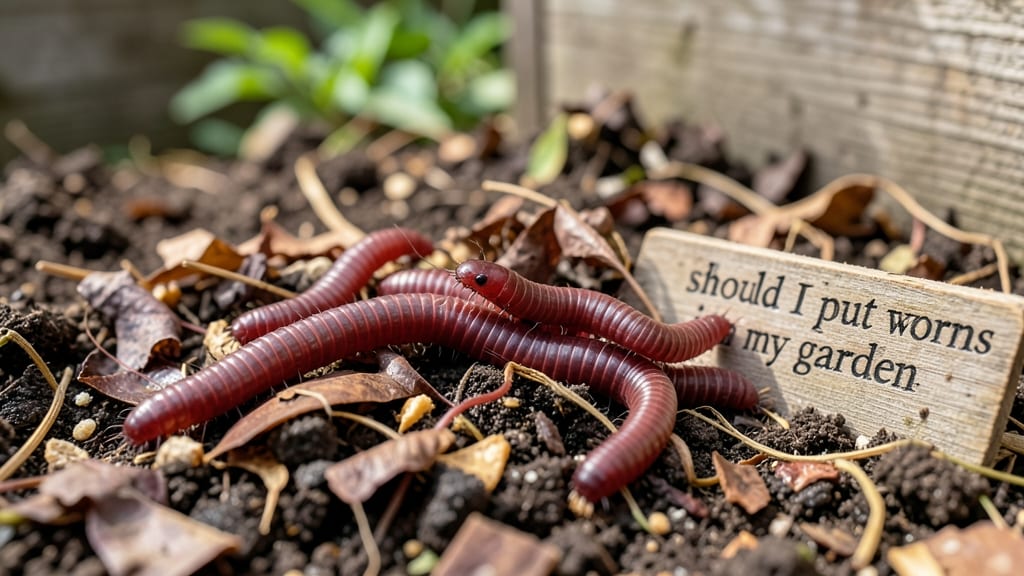
You should put worms in your garden if you want to boost soil fertility and structure, but it requires careful selection and management to avoid harming plants or disrupting your ecosystem. Start with 1-2 pounds of composting worms like red wigglers per 100 square feet in a shaded, moist area.
Worms act as natural soil engineers, creating tunnels that improve aeration while their castings release essential nutrients like nitrogen, phosphorus, and potassium. 🌱 This process enhances root development and microbial activity, but introducing the wrong species—such as nightcrawlers—can leave your garden without worms after they burrow deep.
I recommend starting small in a dedicated compost bin to monitor their activity before expanding to your entire garden.
For best results, maintain a moist but not soggy environment (think of a wrung-out sponge) and avoid chemical fertilizers, which can harm the worms. A thriving worm population will leave behind smooth, dark castings and small tunnels—signs your soil is getting a healthy upgrade.
💡 In This Article
- How Earthworms Transform Garden Soil Chemistry
- Best Practices for Introducing Worms to Your Garden
How earthworms transform garden soil chemistry
Earthworms act as tiny soil scientists, constantly mixing and enriching the earth through their digestive processes. When they consume organic matter like fallen leaves or kitchen scraps, their gizzards grind it into a nutrient-rich paste called castings.
These castings contain 50-70% more nitrogen, phosphorus, and potassium than regular soil, along with beneficial microbes that help break down complex compounds into plant-available forms. 🌱 The worms' burrowing also creates channels that improve water infiltration by up to 30%, reducing runoff and helping roots access moisture more efficiently.
The chemical transformation doesn't stop there—worms release enzymes that accelerate the decomposition of cellulose and lignin, compounds that would otherwise remain locked away in plant debris. Their activity increases soil pH stability, making nutrients more accessible to plants.
For example, in studies comparing worm-infested soil to regular soil, researchers found 25% higher microbial diversity and 40% more available calcium, an essential nutrient for strong cell walls.
The worm tunnels also create tiny air pockets that boost oxygen levels in compacted soil, which is particularly beneficial for root respiration.
What makes this process so remarkable is how worms create a self-sustaining nutrient cycle. Their castings contain growth hormones that stimulate seed germination and root growth, while their burrowing mixes fresh organic material with deeper mineral-rich layers.
This vertical mixing redistributes nutrients that would otherwise remain concentrated near the surface. 🔥 In organic farming, fields with active worm populations often show 30-50% higher crop yields compared to conventional plots, thanks to this natural soil conditioning.
However, not all worms provide equal benefits. Surface-dwelling species like red wigglers (Eisenia fetida) specialize in breaking down organic matter, while deep-burrowing nightcrawlers (Lumbricus terrestris) primarily improve soil structure.
The key difference lies in their casting composition—red wiggler castings contain 10 times more nitrogen than nightcrawler castings, making them far more effective for nutrient cycling. This explains why gardeners focusing on plant growth typically prefer red wigglers over nightcrawlers, which are better suited for lawns and pasture soils.
The physical transformation goes hand-in-hand with chemical changes. Worm tunnels create a network that resembles a sponge, allowing water to penetrate 10 times faster than in compacted soil. This improved drainage prevents waterlogging while maintaining moisture retention—critical for drought-prone gardens.
The tunnels also create ideal conditions for beneficial microbes to thrive, which further enhances nutrient availability. 💫 What most gardeners don't realize is that worms actually "farm" these microbes, consuming them as part of their diet and redistributing their nutrients through their castings.
To visualize this process, imagine a single red wiggler processing about half its body weight daily—that means a medium-sized worm (2 inches long) can convert 0.5 grams of organic matter per day into nutrient-rich castings.
Over a year, just 100 worms could process 180 grams of organic waste while producing enough castings to fertilize a small garden bed. This natural recycling system is why worm castings are often called "black gold" in gardening circles.