
Tools
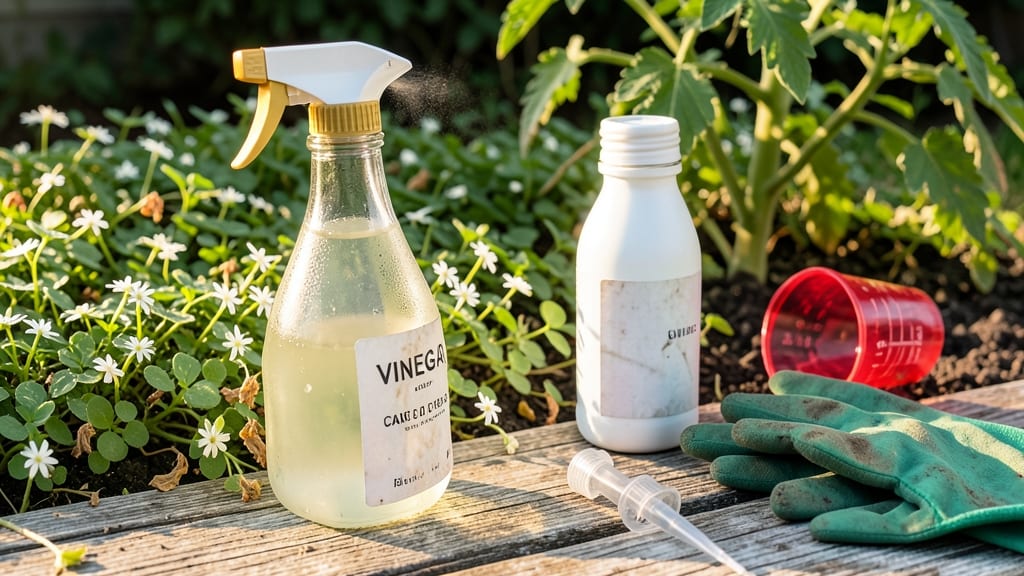
Using vinegar as a weed killer in the garden effectively eliminates unwanted plants by leveraging acetic acid to break down cell structures and dehydrate foliage. Apply full-strength white vinegar (5-10% acidity) on sunny days to young weeds, avoiding contact with desirable plants.
Vinegar's acetic acid acts like a natural herbicide, dissolving the outer layer of weeds and preventing photosynthesis. 🔥 For maximum impact, I always apply it midday when weeds are actively growing—this ensures the sun intensifies the drying effect.
Unlike chemical herbicides, vinegar breaks down quickly, making it safer for organic gardens once fully decomposed, though it won't prevent weed regrowth from roots.
This method works best on broadleaf weeds like dandelions and clover, where the vinegar's acidity can penetrate thin leaves effectively. For tougher invaders like nutgrass or crabgrass, you may need to repeat applications every few days until the plant is completely browned.
Always wear gloves and avoid spraying windy days to prevent accidental drift onto your prized plants.
💡 In This Article
- How Vinegar Kills Weeds: The Science Behind Acetic Acid
- Best Vinegar Weed Killer Methods for Different Garden Weeds
How vinegar kills weeds: the science behind acetic acid
Vinegar's weed-killing power comes from its acetic acid content, which acts as a natural herbicide by disrupting cellular processes in plants. When applied, the acid penetrates the waxy cuticle layer of weed leaves, breaking down cell membranes and causing rapid dehydration.
This process is called protein denaturation, where the acid disrupts the hydrogen bonds that maintain protein structure, effectively "cooking" the plant cells from the inside out. 🔥
The concentration of acetic acid makes all the difference—standard white vinegar contains 5-10% acidity, while higher concentrations (up to 20%) are available in hardware stores. At 5% acidity, vinegar works well for young weeds but may require multiple applications.
A 10% solution delivers faster results, often killing weeds within 24-48 hours by accelerating desiccation. The acid also blocks photosynthesis by clogging stomata (pores on leaves), starving the plant of energy.
Timing is critical because vinegar works best under direct sunlight. The sun's heat amplifies the drying effect by increasing evaporation rates, which pulls moisture out of the weed's cells faster.
This is why I always apply vinegar between 10 AM and 4 PM—the combination of acid penetration and solar magnification creates a two-pronged attack on weed vitality. Without sunlight, the process slows dramatically, reducing effectiveness by up to 50%.
However, vinegar's effectiveness varies by weed type. Broadleaf weeds like dandelions and chickweed respond quickly because their thin leaves absorb the acid easily. Grassy weeds such as crabgrass have thicker cuticles, requiring 2-3 applications spaced 3-5 days apart.
The acid doesn't penetrate roots, so persistent weeds may regrow from underground stems unless you use a digging tool to remove them afterward.
One fascinating detail is how vinegar affects soil pH. While it temporarily lowers pH (making soil more acidic), it breaks down completely within 1-2 weeks, leaving no harmful residues. This makes it ideal for organic gardens, though it won't prevent future weed growth—only the current plants it contacts.
For best results, I recommend combining vinegar with a 1% dish soap (like Dawn) to help the solution stick to leaves and improve absorption.
For tough perennial weeds like creeping Charlie, you'll need to repeat treatments every 7-10 days until the foliage turns completely brown. The key is persistence—the acid works, but it requires patience to fully eradicate deep-rooted invaders.
Always spot-test on a small area first to ensure your desired plants can tolerate any potential acid drift.