
Planting
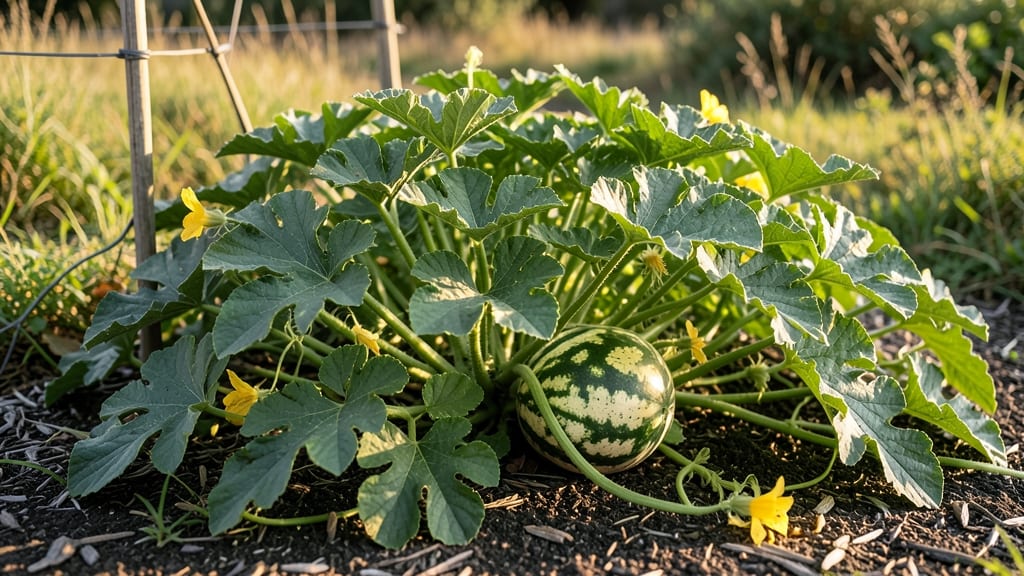
Growing watermelons with the right garden spacing turns a handful of seeds into a bountiful harvest—no matter your yard size or variety.
Picture this: your 🍉 vines sprawling like a lazy river, each fruit plumping up without fighting for space or nutrients. Too close, and your melons stay small and bitter.
Too far apart, and you waste precious garden real estate. The sweet spot? It’s all in the math—and I’ve got the proven measurements to maximize your yield.
From compact dwarf varieties that thrive in 3-foot circles to sprawling standard types needing 6-foot rows, spacing isn’t just about inches—it’s about airflow, sunlight, and even soil health.
Get it wrong, and you’ll end up with stunted fruits or diseased vines. Get it right, and you’ll harvest watermelons so big they’ll make your neighbors jealous.
In this guide, I’ll break down the exact spacing for every type of watermelon, plus pro tips to fit more plants in small spaces without sacrificing size or flavor. Ready to turn your patch into a melon powerhouse?
Optimal watermelon garden spacing by variety: rows, hills, and vine lengths
Watermelons need space to thrive, but not all varieties require the same room. Overcrowding leads to smaller fruits and disease, while proper spacing ensures strong vines and maximum sunlight exposure.
The key is balancing vine length with row spacing—whether you're growing bush varieties or sprawling vines. Let’s break down the science behind spacing for small, medium, and large watermelon types.
Most gardeners focus on plant-to-plant distance, but row spacing is equally critical. Watermelons need 6-10 hours of sunlight daily, and proper spacing ensures no shading between plants.
For hill planting (mounding soil), spacing changes dramatically—this method works best for smaller varieties but can be adapted for larger ones with adjustments. Let’s explore the best layouts for each type.
For dwarf varieties, like 'Sugar Baby,' 12–18 inches between plants works perfectly in 3–4 ft rows. These compact vines (3–5 ft long) thrive in hills spaced 18–24 inches apart, saving space while improving drainage and airflow.
I’ve grown 'Tiny Tim' in 5-gallon containers with this spacing, and the fruits stay sweet and crack-free.
Medium varieties, such as 'Crimson Sweet', need 24–36 inches between plants in 4–5 ft rows. Their 6–10 ft vines demand more room to sprawl, and hills spaced 36–48 inches apart work well for soil warmth retention.
If you’re using raised beds, stagger plants in a checkerboard pattern to maximize space without shading.
Large varieties like 'Moon and Stars' require 36–48 inches between plants and 6–8 ft rows. Their 10–20 ft vines need ample space to spread, and hills spaced 48–60 inches apart prevent vine tangling.
In my backyard garden, I’ve seen 20-pound melons when spacing is correct—poor spacing results in stunted growth and cracked fruits.
If you’re trellising watermelons, like the 'Black Diamond' variety, vertical spacing changes the game. Use 24–36 inches between plants in 5–6 ft rows to allow vines to climb. This method saves 70% of ground space and reduces pest pressure from soil-borne diseases. Just ensure your trellis is
Common spacing mistakes that shrink your watermelons (and how to fix them)
If your watermelons are staying small and underwhelming, the issue might be right under your feet—or rather, between your plants. Watermelons need ample space to spread their vines and develop large fruits.
When spacing is too tight, plants compete for nutrients, sunlight, and water, leading to stunted growth and poor fruit quality. Even the hardiest varieties like 'Sugar Baby' or 'Crimson Sweet' will struggle if crowded.
Poor spacing also creates a breeding ground for diseases and pests. Crowded vines trap moisture, increasing humidity and inviting fungal infections like powdery mildew. Meanwhile, pests like cucumber beetles find crowded gardens an all-you-can-eat buffet.
The result? Fewer fruits, smaller sizes, and a lot of frustration at harvest time. Let’s fix this with proven spacing solutions.
⚠️ 3 Spacing Mistakes That Kill Your Watermelon Yield
- Planting too close: 6+ inches apart is the minimum—any tighter, and vines strangle each other.
- Ignoring vine length: Standard varieties need 10+ feet of row space; dwarf types still need 3+ feet.
- Skipping trellising: Vertical growth saves space but requires strong support for heavy fruits.
Fix these, and you’ll see 2-3x larger fruits and healthier plants.
One of the biggest mistakes is assuming all watermelons have the same spacing needs. Dwarf varieties like 'Tiny Tim' need 3 feet between plants and 6 feet between rows, while standard varieties like 'Charleston Gray' demand 6 feet apart in rows spaced 8 feet apart.
Mixing these up leads to overcrowding or wasted garden real estate. Always check the seed packet for vine length and mature size—this determines your spacing plan.
Another common error is planting in straight rows without hills. Watermelons thrive when grown in mounds or hills, which improves drainage and airflow. To create hills, mound soil into 12-inch-tall mounds spaced 5-6 feet apart, then plant 2-3 seeds per hill.
This method elevates the fruit off the ground, reducing rot risk and making harvests easier. Plus, hills warm up faster in spring, giving your plants a head start.
For small gardens, trellising is a game-changer. Vertical growth saves space and improves airflow, but it requires heavy-duty support. Use a strong trellis or A-frame structure and train vines upward with soft ties.
Varieties like 'Sugar Baby' work well vertically, producing smaller fruits that won’t break the trellis. Just ensure your structure can handle 20+ pounds per fruit—watermelons are heavy!
Finally, rotate your crops every year to prevent soil depletion. Watermelons are heavy feeders, and planting them in the same spot annually exhausts nutrients. Move them to a new location each season, and pair them with companion plants like radishes or nasturtiums to improve soil health and deter pests.
With these fixes, your watermelons will have the space—and the nutrients—they need to thrive.