
Plants
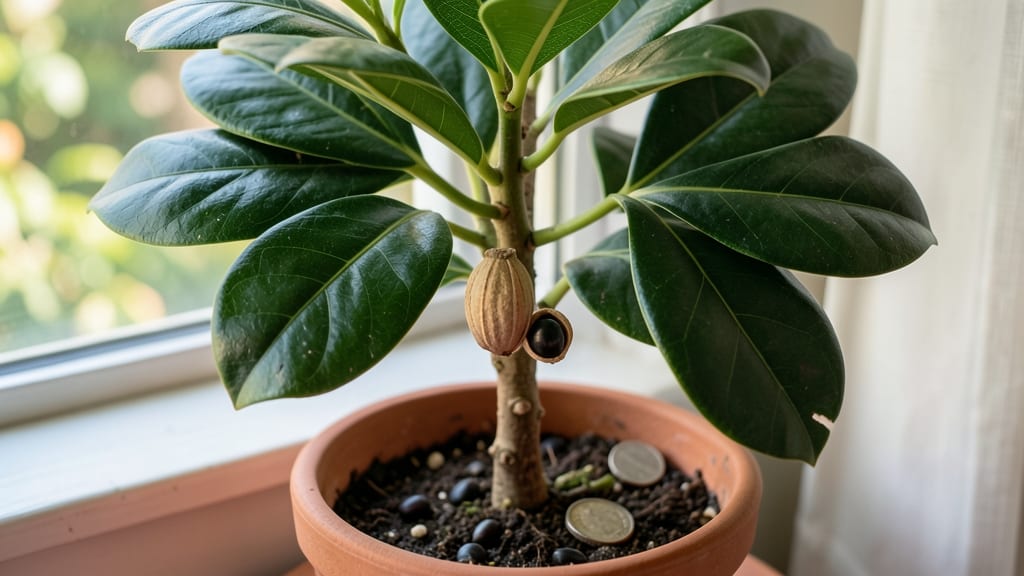
Gardenia seeds look like tiny, flat, elongated brown pods resembling small beans, roughly 1/4 to 1/2 inch long, with a leathery texture that splits open when mature to release seeds inside. They’re often found in clusters after flowering.
These seed pods start green when young and gradually darken to a rich brown as they mature, signaling they're ready for seed extraction. 🌱 The leathery exterior protects the seeds inside until the pod naturally splits open—this process can take several weeks after the flowers fade.
If you're growing gardenias from seed, timing this transition is key, as harvesting too early means immature seeds that won't sprout.
Once mature, each pod contains several flat, dark seeds arranged in a neat row. These seeds resemble tiny coffee beans but are slightly wider and more elongated. Unlike many ornamental plants, gardenia seeds don't require special treatment to germinate—they just need consistent moisture and warmth to break dormancy.
💡 In This Article
- Identifying Mature Gardenia Seed Pods and Their Structure
- Successful Gardenia Seed Germination Tips and Challenges
Identifying mature gardenia seed pods and their structure
Gardenia seed pods undergo a dramatic transformation as they mature, starting as bright green, firm capsules about 1/8 inch in diameter. The key to identifying ripe pods lies in their color shift—when fully mature, they turn a deep, leathery brown, almost like weathered wood.
This color change occurs over 4-6 weeks after flowering, signaling the interior seeds have reached full viability. The texture also evolves from smooth and slightly rubbery when young to rough and papery when ripe, making them feel almost like dried parchment.
The pods grow in clusters of 3-7 along the plant's stems, typically where white flowers once bloomed. Each mature pod measures roughly 1/4 to 1/2 inch long and 1/8 inch wide, resembling elongated coffee beans but with a flatter profile.
Inside, you'll find 3-5 flat, dark brown seeds arranged in a single row, each about 1/8 inch long and 1/16 inch thick.
Unlike many seed pods that contain a single large seed, gardenia pods store multiple seeds in this neat linear formation, which is a distinctive feature compared to pods like okra or milkweed.
What sets gardenia pods apart visually is their natural opening mechanism. As they dry completely, the pods develop a faint seam along one side that splits open like a tiny door, revealing the seeds inside.
This process is triggered by the pod's moisture content dropping below 20%, causing the cellulose fibers to contract and crack. 🌿 The seeds themselves have a glossy, slightly oily surface that helps them adhere to the pod walls until release, which is why they often appear slightly sticky when freshly extracted.
When comparing gardenia seed pods to other common seed pods, their size and shape most closely resemble those of the cassia plant, but with a key difference: cassia pods are more cylindrical and contain round seeds, while gardenia pods are distinctly flattened.
The leathery texture also differentiates them from softer pods like those of the hibiscus, which remain pliable even when mature. This structural uniqueness helps gardeners quickly identify gardenia pods in mixed plantings or when foraging for seeds.
One fascinating aspect of gardenia seed pods is their role in the plant's survival strategy. The pods' slow maturation period ensures seeds are released only when environmental conditions are optimal for germination—typically during warm, humid seasons.
This delayed release mechanism gives gardenia seeds a head start in establishing roots before the onset of cooler weather, which is why gardeners often see the best germination rates when starting seeds in late spring or early summer.
For those new to identifying gardenia seed pods, a helpful trick is to gently squeeze the pod between your fingers. A ripe pod will feel hollow inside with just a slight resistance, while an unripe pod remains solid and firm.
This simple test can save you from harvesting seeds that won't sprout, as immature seeds often fail to break dormancy even with proper care. 💡 The pods' natural splitting also provides a clear visual cue—once you see that characteristic seam opening, you know the seeds inside are ready for propagation.