
Planting
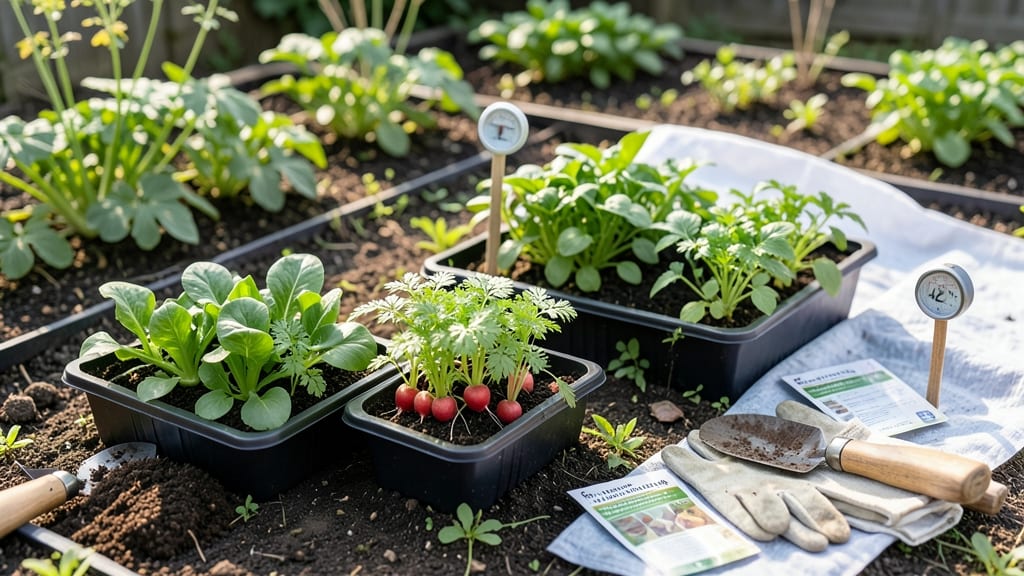
Planting your garden in Minnesota after the last frost is the key to a bountiful harvest 🌱—but guessing the timing can leave you with wilted seedlings or wasted seeds.
Minnesota’s unpredictable frost dates can turn a gardener’s excitement into frustration—unless you know exactly when to plant for a thriving harvest. Timing is everything, especially in Zone 4-5 climates where last frosts can linger well into May.
Most Minnesota gardeners wait until soil temperatures hit 50°F and the risk of frost has passed, but the right window depends on whether you’re planting cool-season crops like spinach or warm-season favorites like tomatoes.
Below, I’ll break down the exact frost-free dates by zone, how to adjust for microclimates, and which crops to start indoors for a longer growing season—so you can finally stop second-guessing and start planting with confidence.
Minnesota frost-free dates by Zone: when to plant cool vs warm season crops
Minnesota gardeners face one of the biggest challenges in the U.S.: unpredictable frost dates that can delay planting by weeks. In USDA Zones 4-5, last frosts typically range from late April in southern MN to mid-June in the north.
Knowing your exact frost-free date helps you time cool-season crops (like peas and spinach) for early planting and warm-season crops (like tomatoes and peppers) for safe outdoor placement.
While the MN DNR tracks historical averages, your local microclimate—whether you're in a urban heat island or a rural valley—can shift frost dates by 1-3 weeks.
I’ll show you how to adjust planting times using the 10-day rule and where to find real-time frost predictions for your county.
The comparison table below breaks down average last frost dates by Minnesota zone, along with the best cool-season vs warm-season planting windows. Use this as your starting point, then fine-tune based on your yard’s unique conditions.
Cool-season crops like spinach, peas, and lettuce can handle light frosts (down to 20°F for some varieties), so I plant these 4–6 weeks before your average last frost. For example, in Zone 5, I start peas in early March under row covers to beat the rush. These crops thrive in cool soil (40–50°F), so don’t wait for warm weather—they’ll bolt if it gets too hot.
Warm-season crops, including tomatoes, peppers, and cucumbers, need soil temperatures above 50°F and consistent warmth. I use a soil thermometer to confirm the ground is ready—60°F+ is ideal for tomatoes. In Zone 4, this often means waiting until mid-June, while Zone 5 gardeners can plant as early as late May in sheltered microclimates.
The 10-day rule is my secret weapon for avoiding frost damage. After your average last frost date, wait 10 more days before planting heat-loving crops like eggplants or okra. This buffer accounts for late-season frosts that can still hit in May.
For extra protection, I use black plastic mulch to warm the soil faster and floating row covers for early plantings.
Microclimates play a huge role in Minnesota gardening. A south-facing slope or urban pavement can create a 5–10°F warmer zone than your general area. For instance, Minneapolis’ downtown often sees last frosts 2 weeks earlier than nearby suburbs. Observe
5 Critical factors that change your planting timeline in Minnesota
Minnesota’s frost dates are just the beginning—your planting timeline depends on more than just the calendar. Soil temperature, elevation shifts, and even your urban vs rural location can push your schedule weeks earlier or later.
I’ve learned the hard way that planting tomatoes too early in a cold soil pocket can stunt their growth, while delaying spinach in a warm microclimate means bolting before harvest. Let’s break down what truly moves the needle for Minnesota gardeners.
First, forget relying solely on last frost dates. Warm-season crops like peppers and eggplants need soil temperatures of at least 50°F (10°C) to thrive—something frost dates alone won’t tell you. I use a soil thermometer (just $10 at garden centers) to confirm readiness.
Meanwhile, cool-season crops like kale and carrots can handle cooler soils, often planting 2-3 weeks before warm crops. This mismatch is why my early spring lettuce always succeeds while my tomatoes sometimes struggle.
🌱
Elevation plays a sneaky role too. For every 1,000 feet you gain, expect frosts to arrive 3-5 days later in spring and earlier in fall. That’s why my friends in the North Shore (Zone 4) plant zucchini 2 weeks after me in the Twin Cities (Zone 4b).
I’ve mapped my garden’s elevation shifts using free tools like Google Earth—it’s surprising how much a 50-foot slope can alter planting zones.
Don’t overlook urban vs. rural differences either. Concrete and pavement in cities create "heat islands," where temperatures can be 5-10°F warmer than surrounding areas. This means my downtown tomato plants often ripen 2 weeks before my rural neighbors’.
To check your microclimate, place a minimum-maximum thermometer in your garden for a week—you might be surprised by the variance.
For real-time adjustments, bookmark the MN DNR’s frost prediction tools (mn.gov/dnr). Their 10-day frost risk alerts help me time pepper transplants perfectly—no more bolting or frost damage.
Pair this with a row cover checklist: use them for early spring (spinach, lettuce) and late fall (kale, radishes) to extend your season by 3-4 weeks. Last year, I harvested bush beans until October 15th using row covers—something I’d never attempted before!
🌿