
Light Requirements
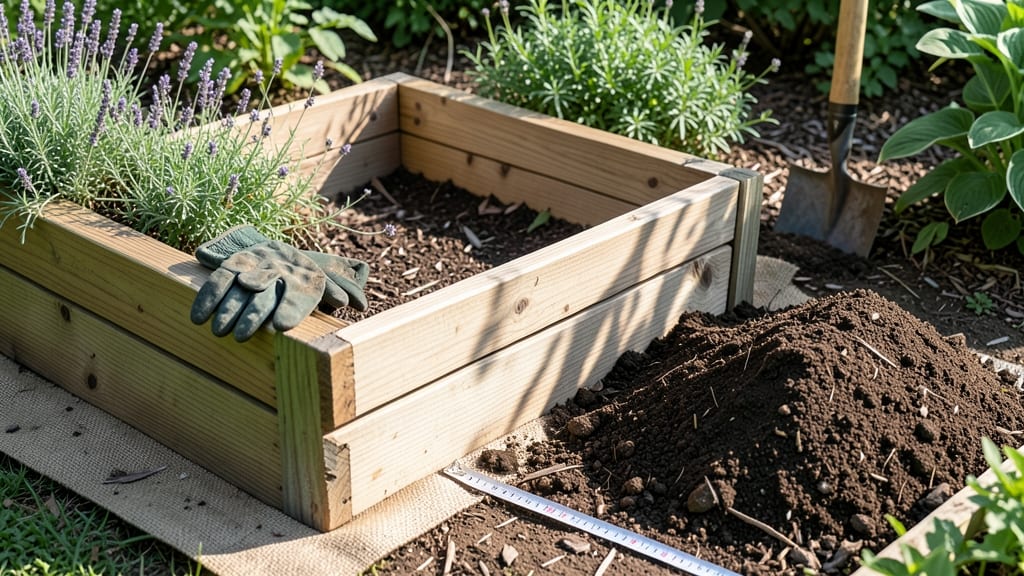
For a 4 x 8 raised garden bed, you'll need 16 cubic feet of soil for a standard 6-inch depth, or 32 cubic feet for 12-inch depth. Always account for existing soil and amendments when calculating your top-fill requirements.
Figuring out how much soil to buy for your raised bed starts with simple math: multiply the bed's length, width, and depth.
A 4-foot by 8-foot bed at 6 inches deep (0.5 feet) equals 16 cubic feet, while doubling the depth to 12 inches (1 foot) doubles the volume to 32 cubic feet. 🌱 The deeper the bed, the more room your plants have to grow roots, but don't overdo it—most vegetables thrive in 6-12 inches of soil.
If you're working with existing soil, subtract its volume to avoid overfilling, and consider adding compost or organic matter to improve drainage and fertility.
Pro tip: Buy soil in bulk to save money, and mix in 25-30% compost by volume to boost nutrient content. For a 4x8 bed, that means about 4-5 cubic feet of compost for a 6-inch depth.
Always use a high-quality, well-draining soil blend designed for raised beds to prevent compaction and ensure healthy plant growth.
💡 In This Article
- Calculating Soil Volume for 4x8 Raised Beds
- Best Soil Mixes and Top-Fill Strategies for Raised Beds
Calculating soil volume for 4x8 raised beds
The volume calculation for your raised bed is straightforward: multiply the length, width, and depth in feet. For a 4-foot by 8-foot bed, that's 4 × 8 × 0.5 = 16 cubic feet at 6 inches (0.5 feet) deep.
This measurement accounts for the total space your plants will occupy, including the air pockets between soil particles that roots need to explore. 🌱 Think of it like filling a shoebox—if you double the height, you need twice as much soil, even if the footprint stays the same.
Depth plays a critical role in plant health. A 6-inch soil depth works for shallow-rooted plants like lettuce or radishes, while deeper-rooted crops like tomatoes or peppers need 12 inches (32 cubic feet) to thrive. The extra depth improves drainage and prevents root competition for nutrients.
For example, a tomato plant's root system can spread 18-24 inches deep, so the deeper bed gives it room to establish without crowding neighbors.
Existing soil matters too. If your bed sits on grass or hardpan, subtract that volume from your total.
For instance, if you're adding 6 inches of new soil over 4 inches of existing grass, you only need to calculate for the 2-inch difference (4 × 8 × 0.167 = 5.33 cubic feet).
This adjustment prevents overfilling and saves money on bulk purchases. 💰 Always measure the depth of what's already there before buying soil.
Proper soil volume also affects moisture retention. A 12-inch bed holds about 2x the water of a 6-inch bed due to increased surface area and deeper root zones. This matters for drought-prone areas or plants like strawberries, which need consistent moisture.
However, too much depth can lead to waterlogging—always include 10-20% perlite or sand to improve drainage in heavier soils.
For precision, use a tape measure and mark depth levels on the bed's sides. A 1-inch error in depth across a 4x8 bed adds or subtracts 3.2 cubic feet—enough to throw off your entire order.
For example, a 7-inch bed would require 18.7 cubic feet, not 16. Double-check your math to avoid shortages or waste.
Consider the weight too. A cubic foot of soil typically weighs 40-60 pounds, so a 12-inch bed could tip 1,280-1,920 pounds.
This load requires sturdy framing—cedar or redwood lumber with 2x8 or 2x10 boards to prevent sagging. 🏗️ Always distribute weight evenly and anchor the bed if placed on slopes.