
Pests
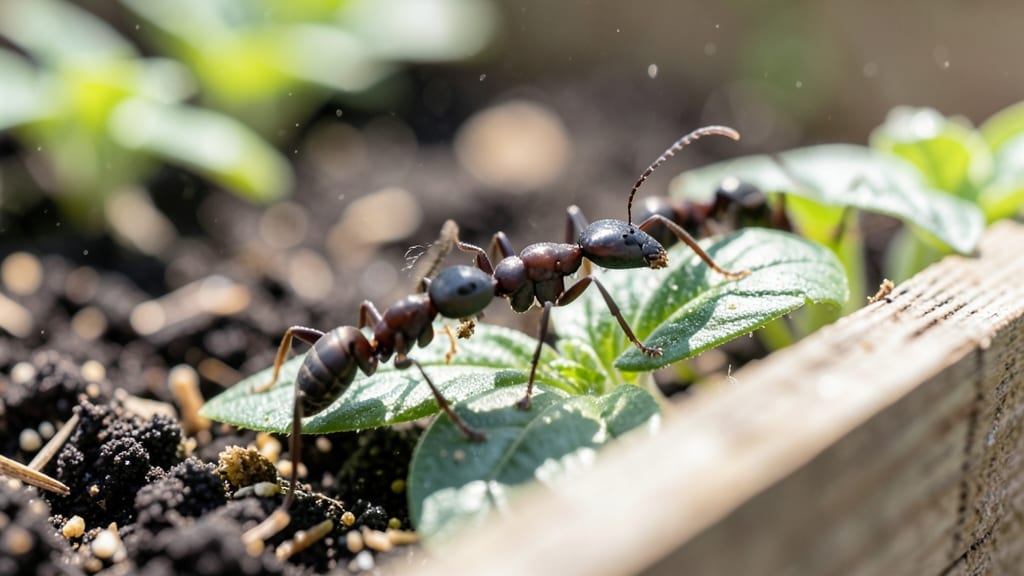
Ants in raised garden beds appear because they seek food, moisture, and nesting spaces, though they don't typically damage plants. Try organic solutions like diatomaceous earth, vinegar sprays, or citrus peels to keep them away without harming your garden ecosystem.
These tiny invaders usually arrive following aphids or other garden pests, which ants "farm" for their honeydew secretions. 🔥 The raised bed's warm soil also attracts them as a nesting spot, especially during dry spells when moisture is scarce.
While they don't eat your plants, their trails can become unsightly, and they may indirectly harm roots by disturbing soil structure. The good news? Their foraging habits make them easy to redirect using simple, chemical-free barriers and repellents.
My go-to method is creating a 1-inch barrier of diatomaceous earth around the bed's perimeter—it dehydrates ants without affecting plants. For existing trails, a 1:1 vinegar-water spray disrupts their scent markers while being completely safe for soil microbes.
Citrus peels scattered near entry points work too, thanks to their natural limonene compounds that ants find repellent.
💡 In This Article
- Why Ants Invade Raised Garden Beds
- 4 Organic Ant Control Methods for Raised Beds
Why ants invade raised garden beds
Ants treat raised garden beds like all-you-can-eat buffets because they're drawn to three key resources: food, moisture, and shelter. 🔥 The most common food source is aphids—these tiny sap-sucking insects produce honeydew, a sugary liquid that ants "farm" like dairy cows.
A single aphid colony can produce up to 100 times its weight in honeydew daily, creating a feast that ants can't resist. Even without aphids, decaying plant matter, fallen fruit, and compost provide ample protein and carbohydrates to sustain ant colonies.
The soil in raised beds offers perfect nesting conditions, especially during dry spells when ants seek moisture. Raised beds warm up faster than ground soil, creating ideal temperatures for ant larvae development—typically between 70-90°F.
Some species like pavement ants and fire ants specifically target the loose soil structure of raised beds, where they can excavate tunnels with minimal effort.
Interestingly, their tunneling actually aerates the soil and breaks down organic matter, though this benefit is often outweighed by their unsightly trails and potential to disrupt plant roots.
Ants also follow scent trails left by their colony members, which explains why you might suddenly see hundreds of ants marching in straight lines. These trails contain pheromones that create a chemical highway—once established, they can persist for weeks unless disrupted.
The scent comes from glands in the ants' abdomens that secrete compounds like 4-methyl-3-heptanone, which other ants follow instinctively. This is why vinegar, with its strong acetic acid, becomes such an effective disruptor—it masks these scent trails and confuses the colony.
While ants don't typically eat plants, their presence often signals other problems. For example, carpenter ants (which have segmented bodies and no waist) may indicate wood decay in nearby structures, while harvester ants (with large heads) often mean your soil lacks nitrogen.
The key distinction is their behavior: worker ants (small, uniform) focus on foraging, while queen ants (larger, winged) establish new colonies. Most garden ants fall into the worker category, making them easier to manage through targeted organic methods.
Moisture plays a surprisingly critical role in ant attraction. After rain, you'll often see ant activity spike as they take advantage of damp soil for hydration and nesting. In arid climates, ants will even raid your garden beds to access water from irrigation systems.
This explains why diatomaceous earth—made from fossilized algae—works so well: it creates a 1-inch barrier that dehydrates ants while allowing water and air to penetrate the soil below. The microscopic particles cut through their exoskeletons, causing fatal water loss within hours.
Here's what most gardeners don't realize: ants actually perform some beneficial functions in your raised beds. Their tunneling improves soil drainage and incorporates organic material into the soil profile. However, their foraging habits can become problematic when they protect pests like aphids or disturb young seedlings.
The balance lies in managing their numbers without eliminating them entirely—this is where organic methods shine by creating living barriers that redirect rather than eradicate these tiny ecosystem engineers. 🌱