
Vegetables
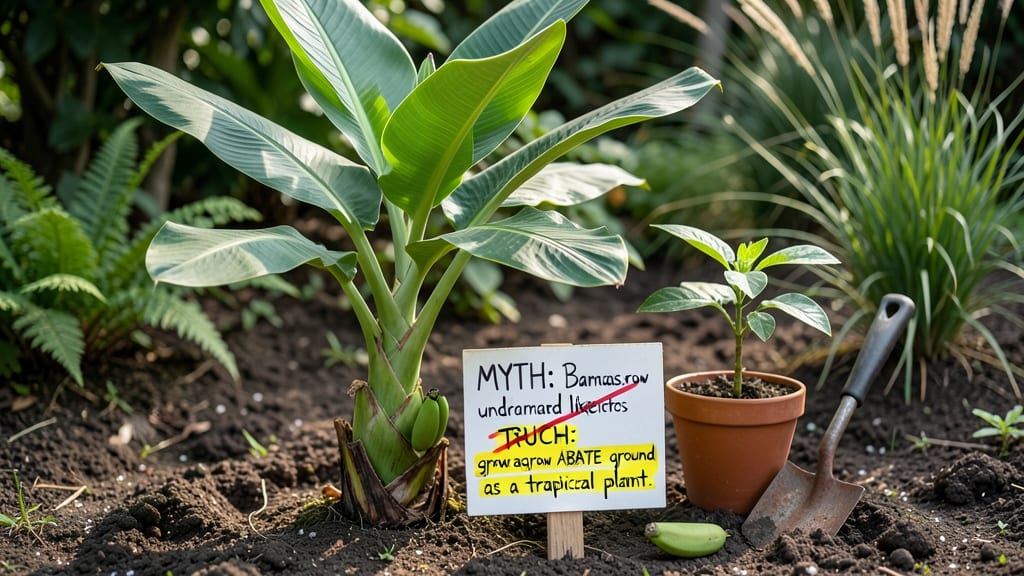
The myth about planting banana peels in the garden to boost growth is misleading—while they contain potassium, they lack the nitrogen and phosphorus plants truly need. However, their nutrient-rich water makes an excellent compost tea for soil health.
This common gardening myth stems from the misconception that banana peels are nutrient powerhouses. 🌱 While they do contain potassium (about 0.4 grams per peel), they lack the nitrogen and phosphorus that plants actually require for robust growth.
The real value lies in their decomposition process—when broken down, they contribute to soil organic matter, which indirectly supports plant health. I’ve found that using banana peels as compost tea (soaking them in water for a few days) provides a more effective nutrient boost than burying them directly.
For best results, blend peels into compost piles or use the leftover water to water plants. This approach maximizes their limited benefits while avoiding the frustration of waiting for peels to decompose in the soil.
The key takeaway? Banana peels aren’t magic fertilizers, but they’re still a useful garden resource when used strategically.
💡 In This Article
- Why Banana Peels Don’t Fertilize Soil Like the Myth Claims
- Smart Ways to Use Banana Peels in Gardening (Beyond the Myth)
Why banana peels don’t fertilize soil like the myth claims
The gardening myth about banana peels acting as instant fertilizers stems from their potassium content—about 0.4 grams per peel—but this is a drop in the bucket compared to what plants actually need.
For context, a single ripe banana contains roughly 422 milligrams of potassium, while the peel holds only a tiny fraction. Plants require three primary macronutrients: nitrogen (for leaf growth), phosphorus (for root development), and potassium (for overall health).
Banana peels contain negligible amounts of nitrogen and phosphorus, making them far less effective than commercial fertilizers or compost.
The real issue lies in how these nutrients are bound within the peel. Potassium in banana peels exists in an organic form that plants can't absorb directly—it must first decompose into inorganic compounds through microbial action in the soil.
This process takes weeks or even months, during which the peel may simply rot without releasing usable nutrients. 🌱 What’s more, the peel’s thick, fibrous texture resists breakdown, leaving it to decompose slowly and unevenly.
Unlike balanced fertilizers or well-aged compost, which provide immediate and sustained nutrition, banana peels offer minimal, delayed benefits.
Another misconception is that burying banana peels near plant roots will encourage rapid growth. In reality, the peel’s decomposition releases carbon dioxide and consumes oxygen as microbes break it down, which can temporarily deplete soil oxygen levels around roots.
This anaerobic environment stresses plants, particularly those with shallow root systems like lettuce or herbs. The myth also ignores the fact that plants absorb nutrients through their root hairs, which require direct contact with dissolved minerals—not chunks of organic matter.
To put it into perspective, a single 10-10-10 fertilizer granule (a balanced NPK fertilizer) contains about 10 milligrams of potassium per gram, while a banana peel provides only 0.04% of that amount per gram.
This means you’d need to bury roughly 2,500 peels to match the potassium in a single teaspoon of fertilizer—a practical impossibility. The science is clear: banana peels are not a shortcut to lush gardens but rather a minor contributor to soil organic matter when properly composted.
However, the potassium in banana peels isn’t entirely wasted. When used as part of a compost pile or brewed into a nutrient tea, their minerals become accessible to plants.
The key difference is that these methods allow microbial activity to convert the organic potassium into a form that roots can absorb.
For example, soaking peels in water for 2-3 days creates a "banana peel tea" that can be diluted and used to water plants, providing a gentle potassium boost without the drawbacks of direct burial.
So why does the myth persist? Partly because gardening advice often relies on anecdotal evidence rather than measurable science. People notice when they compost banana peels and see healthier plants, but they overlook the fact that compost itself is a complex mix of materials—banana peels are just one small part.
The real magic happens when they’re combined with nitrogen-rich greens (like grass clippings) and phosphorus sources (like bone meal), creating a balanced nutrient profile that plants can actually use.
The takeaway? Banana peels aren’t the garden superfood they’re cracked up to be, but they’re not useless either. Their value lies in how you use them—not by planting them directly, but by integrating them into a broader composting strategy.
This approach turns their limited nutrients into a meaningful contribution to soil health. 💫