
Vegetables
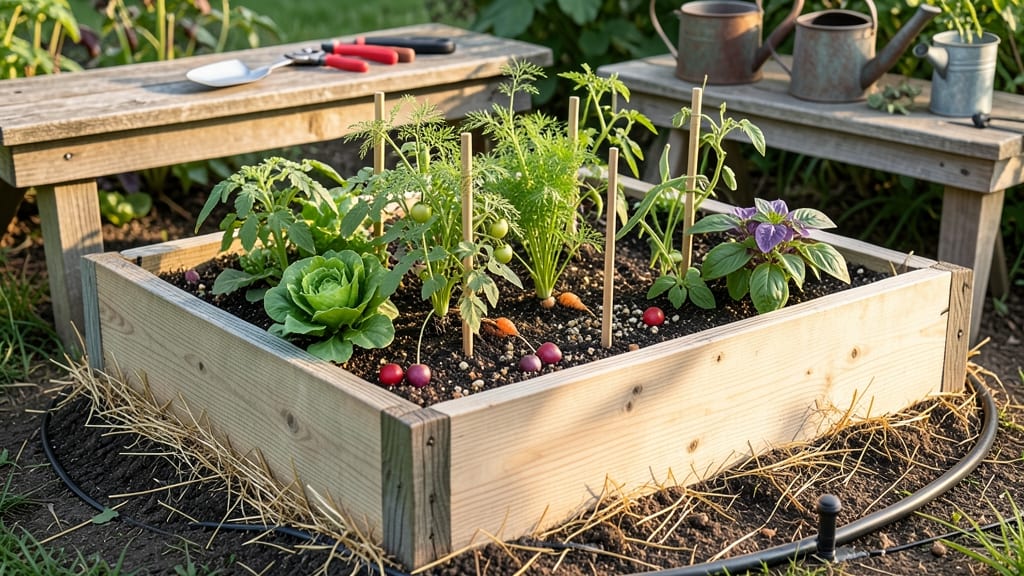
The best soil for vegetable garden raised beds creates a nutrient-rich, well-draining loam mix using equal parts topsoil, compost, and coarse sand or perlite, with a target pH of 6.0–7.0 for optimal plant growth. Avoid pure clay or sand unless heavily amended.
This balanced blend ensures roots get both air circulation and moisture retention, which is critical for healthy growth. 🌱 I’ve found that adding worm castings (20% of the mix) boosts microbial activity, while coconut coir helps retain moisture in hot climates.
For heavy feeders like tomatoes, I mix in extra compost—about 30%—to support their vigorous growth.
Testing your soil’s pH before planting saves headaches later. Most vegetables thrive in that 6.0–7.0 range, but acid-loving plants like blueberries need a different approach. If your soil tests too alkaline, sulfur amendments can help adjust it over time.
The key is consistency—once you establish your mix, top-dress with compost annually to maintain fertility.
💡 In This Article
- Ideal Raised Bed Soil Composition by Vegetable Type
- DIY Raised Bed Soil Mix Recipes for Maximum Yield
Ideal raised bed soil composition by vegetable type
Different vegetables have unique soil needs based on their root structure and nutrient demands. Root crops like carrots and potatoes thrive in a looser mix with only 20% compost to prevent deformities, while leafy greens such as lettuce and spinach prefer a finer texture with 30% compost to retain moisture.
Fruiting plants like tomatoes and peppers need a nutrient-dense blend with 40% compost to support heavy yields. The key difference lies in the particle size—root crops benefit from 30% coarse sand to prevent soil compaction, whereas leafy greens can handle 20% perlite for better moisture retention.
Texture matters just as much as composition. For carrots, a mix of 50% topsoil, 20% compost, 20% coarse sand, and 10% peat moss creates the ideal crumbly structure that allows roots to grow straight and long.
Tomatoes, however, do better with 40% topsoil, 40% compost, and 20% perlite to balance drainage and nutrient availability.
The difference in sand versus perlite also affects water retention—sand drains faster but can dry out quickly, while perlite holds moisture longer but still improves aeration. 🌿 This is why adjusting your mix based on the vegetable ensures healthier plants and higher yields.
pH levels play a critical role in nutrient uptake. Most vegetables prefer a neutral to slightly acidic range of 6.0–7.0, but exceptions exist. Blueberries, for instance, require 4.5–5.5 pH to access aluminum and iron, while broccoli and cauliflower perform best in 6.0–7.0.
Testing your soil before planting is non-negotiable—you can use a simple home test kit or send a sample to a local extension office for precise readings. If your soil tests too alkaline, adding elemental sulfur gradually (about 1 pound per 100 square feet) can lower the pH over time.
Organic matter content directly impacts soil structure and fertility. A well-composted mix should contain 10–20% organic matter, which improves water retention and microbial activity. For example, adding 20% worm castings to your blend introduces beneficial bacteria and fungi that break down nutrients into forms plants can absorb.
This is especially important for heavy feeders like peppers, which deplete soil nutrients quickly. Over time, the organic matter decomposes, so replenishing it annually with compost or aged manure keeps your raised beds productive.
Consider the climate where you garden. In hot, dry regions, adding 10% coconut coir to your mix helps retain moisture, while in cooler climates, extra compost (up to 50%) can provide warmth for early spring planting.
The goal is to mimic the natural loam found in forests—rich in organic material, well-aerated, and capable of holding moisture without becoming waterlogged. This balance is what turns a good raised bed into an exceptional one, where plants grow vigorously and produce abundantly. 🌱
For advanced gardeners, experimenting with biochar—a charcoal-like substance—can further enhance soil fertility. Mixing 5–10% biochar into your blend increases cation exchange capacity, meaning it holds onto nutrients longer and makes them more available to plants.
It also improves drainage in heavy clay soils while retaining moisture in sandy mixes. The result? A soil that not only supports growth but actively promotes it.